


Best overall: a fast-drying astringent ear cleaner solution used after every swim. Best for quick post-swim touch-ups: medicated ear wipes. Best budget option: a powder-based ear dryer. Best for dogs with recurring infections: a vet-prescribed medicated solution.
- A fast-drying astringent dog ear cleaner used after every swim beats a once-a-week wipe-down for water-loving adventure dogs in 2026.
- Floppy-eared breeds and heavy swimmers trap moisture in the canal faster than upright-eared dogs, raising infection risk.
- Medicated wipes handle quick trail touch-ups but do not replace a full solution flush after a lake or river session.
- Vet-prescribed medicated solutions are the right call once a dog shows head-shaking, odor, or redness, not for routine maintenance.
- Powder ear dryers work as a budget layer for occasional waders but fall short for dogs that swim daily.
Why this matters for adventure dogs
A dog that swims, wades, or paddleboards all summer carries water into the ear canal every single outing, and that water does not evaporate on its own the way it does on skin. Breeds with floppy or hair-covered ears — Labradors, Cocker Spaniels, Poodles, and most retrievers — trap that moisture longer, which sets up the warm, damp environment where yeast and bacteria multiply. Vets call the result otitis externa; owners call it a head-shaking, ear-scratching mess that shows up two or three days after the trip that caused it.
The right dog ear cleaner routine is not about buying the priciest bottle on the shelf. It is about matching the cleaner type to how wet your dog actually gets. A dog that dips a paw in a creek needs something different than a dog that dock-dives every weekend, and pairing ear care with the rest of an adventure routine — [life jacket use on the lake and river adventures — matters as much as the bottle in the cabinet.
What makes the best dog ear cleaner for swimmers
- Drying speed — the formula should evaporate residual moisture, not just clean debris
- pH balance — a cleaner too acidic or too alkaline irritates healthy canal skin over repeated use
- No sting on broken skin — alcohol-heavy astringents burn if the ear is already inflamed
- Application method — squeeze bottles reach deep, wipes stay surface-level, powders sit on top
- Safe for frequent use — daily swimmers need a formula gentle enough for near-daily application
- Vet-backed ingredients — look for cleaners built around the same actives vets use for recurrent otitis, not novelty scents
Dog ear cleaner types at a glance
| Type | Best for | Standout feature | Key limitation |
|---|---|---|---|
| Drying/astringent solution | Daily swimmers | Evaporates trapped moisture in the canal | Can sting already-irritated skin |
| Antiseptic wipes | Quick post-swim touch-ups | No liquid, no head-shaking mess | Doesn't reach deep into the canal |
| Vet-prescribed medicated solution | Dogs with recurring infections | Treats yeast/bacterial buildup, not just water | Requires a vet visit and a prescription |
| Powder ear dryer | Occasional waders on a budget | Absorbs moisture without any liquid | Not enough for heavy swimmers or muddy water |
| pH-balanced rinse | Floppy-eared or sensitive-skin dogs | Gentle enough for near-weekly use | Slower drying time than astringent formulas |
1. Drying/astringent solution: best dog ear cleaner for daily swimmers
This is a liquid formula built to evaporate water sitting in the canal, usually combined with a mild acid to keep pH inconsistent for yeast growth. It is the closest thing to a default choice for any dog that swims more than once a week through 2026's warm months.
Drying solution pros:
- Handles both cleaning and moisture control in one step
- Fast evaporation means less waiting around after a lake trip
- Works for most coat types, including double-coated swimmers
Drying solution cons:
- Alcohol-based versions sting on inflamed or broken skin
- Overuse on already-dry ears can cause flaking
Verdict: Buy for any dog that swims, dock-dives, or wades regularly.
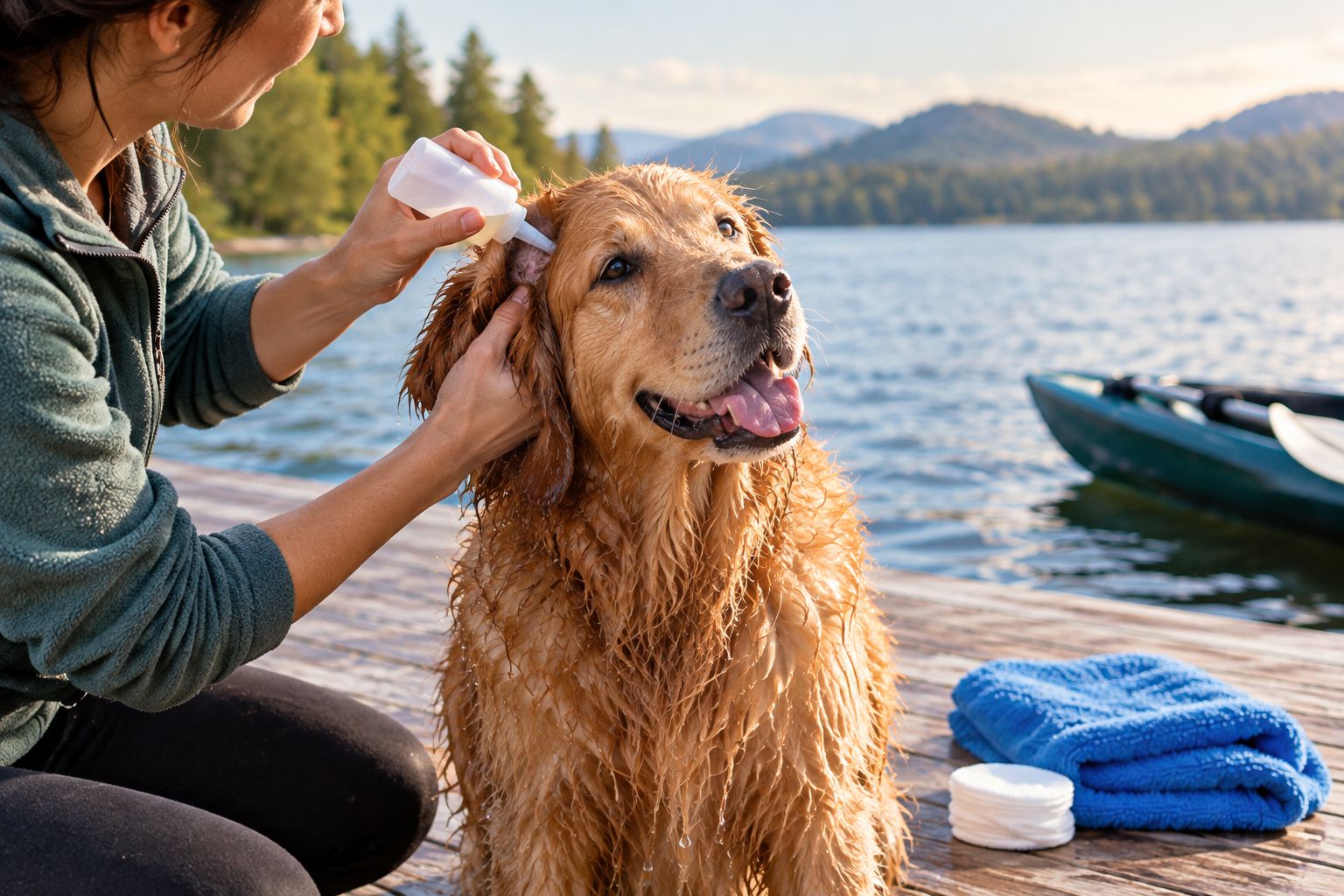
2. Antiseptic wipes: best dog ear cleaner for quick trail touch-ups
Wipes trade depth for speed. They wipe visible dirt and surface moisture off the outer ear flap and canal opening without a bottle, a funnel, or a head shake in your face on a crowded trailhead.
Wipes pros:
- No liquid to spill in a truck or backpack
- Fast enough for a mid-hike stop
- Good for maintaining ears between full cleanings
Wipes cons:
- Doesn't flush moisture out of the deeper canal
- Not a substitute after a full swim session
Verdict: Buy as a companion to a real solution, not a replacement for one.
3. Vet-prescribed medicated solution: best dog ear cleaner for recurring infections
Once a dog has had two or three ear infections in a season, an over-the-counter cleaner is treating symptoms, not the underlying yeast or bacterial imbalance. A vet-prescribed medicated solution targets that imbalance directly and usually comes with a specific application schedule.
Medicated solution pros:
- Formulated to address active yeast or bacterial overgrowth, not just moisture
- Comes with vet guidance on frequency and duration
Medicated solution cons:
- Requires a vet visit and a diagnosis first
- Not meant for casual, preventive use on a healthy ear
Verdict: Buy only when a vet has confirmed infection — otherwise, hold off.
4. Powder ear dryer: best dog ear cleaner on a budget
Powder formulas coat the canal lining and absorb residual moisture without any liquid application. They work fine for a dog that occasionally wades in a creek but run out of capacity fast against a dog that swims every day of a camping trip.
Powder dryer pros:
- No liquid mess, easy to carry in a pack
- Works well as a light preventive layer
Powder dryer cons:
- Not sufficient for heavy or muddy water exposure
- Doesn't clean existing debris the way a liquid solution does
Verdict: Hold for occasional swimmers; Skip for daily dock-divers.
5. pH-balanced rinse: best dog ear cleaner for floppy-eared, sensitive-skin dogs
Built for gentler, more frequent use, a pH-balanced rinse skips the harsher astringent ingredients in favor of a formula that won't irritate skin that's already reactive. It suits breeds prone to skin sensitivity as much as it suits swimmers.
pH rinse pros:
- Gentle enough for near-weekly use on sensitive ears
- Lower irritation risk on already-inflamed skin
pH rinse cons:
- Slower to dry the canal than an astringent formula
- Less effective against heavy moisture load after long swims
Verdict: Buy for cocker spaniels, poodles, and other sensitive-skin breeds; pair it with a paw and coat routine like a silicone grooming brush bath after muddy outings.
How this ranking works
Each type is scored against the six criteria above — drying speed, pH balance, sting risk, application method, frequency safety, and ingredient quality — then matched to the use case where it performs best rather than forced into a single winner-take-all slot. That is why a powder dryer and a vet solution both rank without competing against each other: they solve different problems.
Which dog ear cleaner should you choose in 2026?
If you only buy one bottle this year, buy a fast-drying astringent ear cleaner solution and use it after every swim, not once a week. Add wipes for trail touch-ups, keep a pH-balanced rinse on hand if your dog has sensitive skin, and see a vet for a medicated solution the moment you notice odor, redness, or excessive head-shaking. For dogs that only wade occasionally, a powder dryer covers the basics without overcomplicating the routine. Round out the full post-adventure clean-up with a waterless foaming shampoo for the rest of the coat.
FAQ
What's the best dog ear cleaner for a dog that swims every day?
A fast-drying astringent ear cleaner solution used right after each swim is the best fit for daily swimmers in 2026. It evaporates trapped moisture faster than wipes or powder can manage alone.
Is a dog ear cleaner better than plain water for rinsing ears after swimming?
Yes, a purpose-built ear cleaner beats plain water because it's formulated to dry the canal, not just add more moisture. Plain water rinses debris but leaves the ear just as wet as before.
How often should you clean a swimming dog's ears?
Clean ears after every swim session, not on a fixed weekly schedule. Adventure dogs that swim multiple times a week need cleaning every time, while occasional waders can go longer between cleanings.
Can you use human ear cleaner on a dog?
No, human ear products are not formulated for a dog's ear canal pH or anatomy and can cause irritation. Stick to a cleaner made specifically for dogs.
What are signs a dog's ears need cleaning after a swim?
Head shaking, scratching at the ear, a musty odor, or visible redness are the main signs. Any of these after a swim means it's time for a cleaning, not a wait-and-see approach.
Do floppy-eared dogs need ear cleaner more than dogs with upright ears?
Yes, floppy-eared breeds trap moisture and warmth in the canal more than upright-eared dogs, which raises infection risk. Labradors, Cocker Spaniels, and Poodles fall into this higher-risk group.
Is a vet-prescribed ear solution necessary for every adventure dog?
No, a vet-prescribed medicated solution is only necessary once an infection is confirmed. Healthy dogs do fine with a standard drying solution or pH-balanced rinse for routine maintenance.
Can ear wipes replace a full ear cleaning solution?
No, wipes handle surface debris and quick touch-ups but don't flush moisture out of the deeper canal. Use wipes between full cleanings, not as a substitute after a real swim.
One last thing
The detail most owners miss in 2026: the smell test matters more than the visual check. A healthy dog ear after cleaning should smell like nothing at all — a musty, yeasty, or sour odor shows up before redness or swelling does, and it's the earliest warning sign a cleaning routine is falling behind the swim schedule.