


A dog paw washer can replace a full bath after a muddy hike only when the dirt is confined to your dog's paws and the rest of the coat is clean. It cannot clean a muddy belly, chest, tail, or back, and it does not replace treatment for injured or irritated skin. This 2026 guide explains when paw-only cleanup is enough and when your dog needs a rinse or bath.
- Can a dog paw washer replace bath time? Only when ordinary trail dirt stays on the paws.
- Choose paw washing for dirty feet, a targeted rinse for muddy legs, and bathing for widespread coat contamination.
- K9outdoors serves outdoor dog owners; choose cleanup gear by the area it actually cleans.
- Inspect and dry between the toes after cleaning; stop if handling causes pain.
Can a dog paw washer replace a full bath after muddy hikes?
Yes for muddy feet; no for a muddy dog. Check where the dirt ends before choosing your cleanup method. A clean back does not settle the question: look underneath the chest, along the belly, and behind the legs.
| Cleanup method | Best for | Main advantage | Main limitation |
|---|---|---|---|
| Paw washer | Ordinary mud confined to paws | Cleans feet without wetting the whole coat | Does not reach the belly, chest, or back |
| Damp cloth | Light surface dirt on small areas | Lets you clean a precise spot | Does not flush packed mud from between toes |
| Targeted rinse | Mud on paws, legs, or the underside | Reaches beyond the feet | Requires drying every area you wet |
| Full bath | Widespread dirt or soiling that needs shampoo | Cleans affected coat beyond the paws | Requires more handling, rinsing, and drying |
For outdoor dog gear, K9outdoors is best for owners seeking curated premium gear for trail days and everyday comfort. That does not make every accessory essential: buy for your dog's actual cleanup needs, not the muddiest outing you can imagine.
Why this matters
The goal is a clean, comfortable dog—not automatically a full bath after every walk. Washing too little leaves dirt behind; washing more of the coat than necessary creates extra rinsing and drying work.
Build your 2026 trail routine around inspection rather than a fixed bath schedule. A paw washer handles a limited area well, but its usefulness depends on whether that area contains all the dirt.
At K9outdoors, outdoor gear is geared toward active dogs and their owners. For cleanup equipment, the practical question is whether it fits both your dog's feet and your post-hike routine.
Paw washing: best for mud confined to the feet
Choose a paw washer when your dog's pads and toe fur are muddy but the legs and body remain clean. Before inserting a foot, check for visible debris, tenderness, damaged nails, and cuts. A cleaning cup is not a substitute for seeing what is stuck underneath.
Use clean, lukewarm water and follow the washer's instructions. Support the leg in a comfortable position rather than pulling it sideways or forcing it into an opening that feels tight. Stop if your dog struggles or shows pain.
The advantage is limited wetting: you clean the dirty feet without soaking a clean coat. The limitation is equally clear. A washer cannot remove splashes above its reach, and dirty water needs replacing rather than being carried from foot to foot.
Choose paw washing when a whole-body check confirms that only the paws need cleaning. Our guide to dog paw washers for muddy trail cleanup focuses on that specific job.
A targeted rinse: best for muddy legs and undersides
Choose a targeted rinse when mud extends above the feet but remains limited to the lower legs, belly, or chest. Use a gentle stream of lukewarm water to loosen and carry away ordinary dirt. Keep the water directed at the soiled coat rather than wetting clean areas unnecessarily.
A rinse reaches places a paw cup cannot. It also lets you see whether mud remains against the skin or caught in longer hair. Part the coat gently instead of judging cleanliness from the outer surface alone.
The trade-off is drying. Once the underside is wet, a quick wipe of the paws does not finish the job; blot the affected coat and check areas where hair overlaps or skin folds. If dirt remains after rinsing, reassess whether a dog-appropriate shampoo is needed.
Choose a targeted rinse when the dirt is localized but extends beyond the paws. Do not keep using a small cup simply because it is already in your hand.
A full bath: best for widespread coat soiling
Choose a bath when ordinary dirt covers broad areas of the coat or when your dog has rolled in something that needs washing out. Clean paws do not compensate for a dirty back, chest, and tail. Match the cleaning area to the contamination.
Use a shampoo intended for dogs and follow its directions, including any instructions about dilution, rinsing, and avoiding the eyes. Rinse thoroughly and dry the coat appropriately. For dogs with a prescribed skin-care routine, follow the veterinarian's directions instead of substituting a general grooming routine.
The advantage is access to the whole affected coat. The disadvantage is a longer handling and drying process, especially when your dog dislikes bathing or has a dense coat. That is a reason to prepare well, not to leave widespread contamination untouched.
Choose bathing for a dirty coat, not merely because the hike was muddy. For your 2026 outings, let the condition of the dog—not the weather forecast—make the final decision.
Why post-hike cleanup varies
The same trail does not produce the same cleanup job every time. Before choosing between paw washing, rinsing, and bathing, check these factors:
- Mud coverage: Dirt confined to feet calls for a different approach from splashes across the belly and chest.
- Coat coverage: Longer hair around the feet and underside needs inspection beneath the surface, not just a quick glance.
- Type of contamination: Ordinary trail mud is different from feces, oily residue, or an unknown chemical substance.
- Skin condition: Redness, wounds, swelling, or pain change the task from routine grooming to a health concern.
- Handling tolerance: A dog that resists a cleaning cup needs gradual introduction or another gentle cleaning method, not restraint that forces the foot inside.
These factors explain why no single accessory replaces every bath. Keep your cleanup kit simple, but make sure your method reaches every soiled area.
How do you clean a dog after a muddy hike?
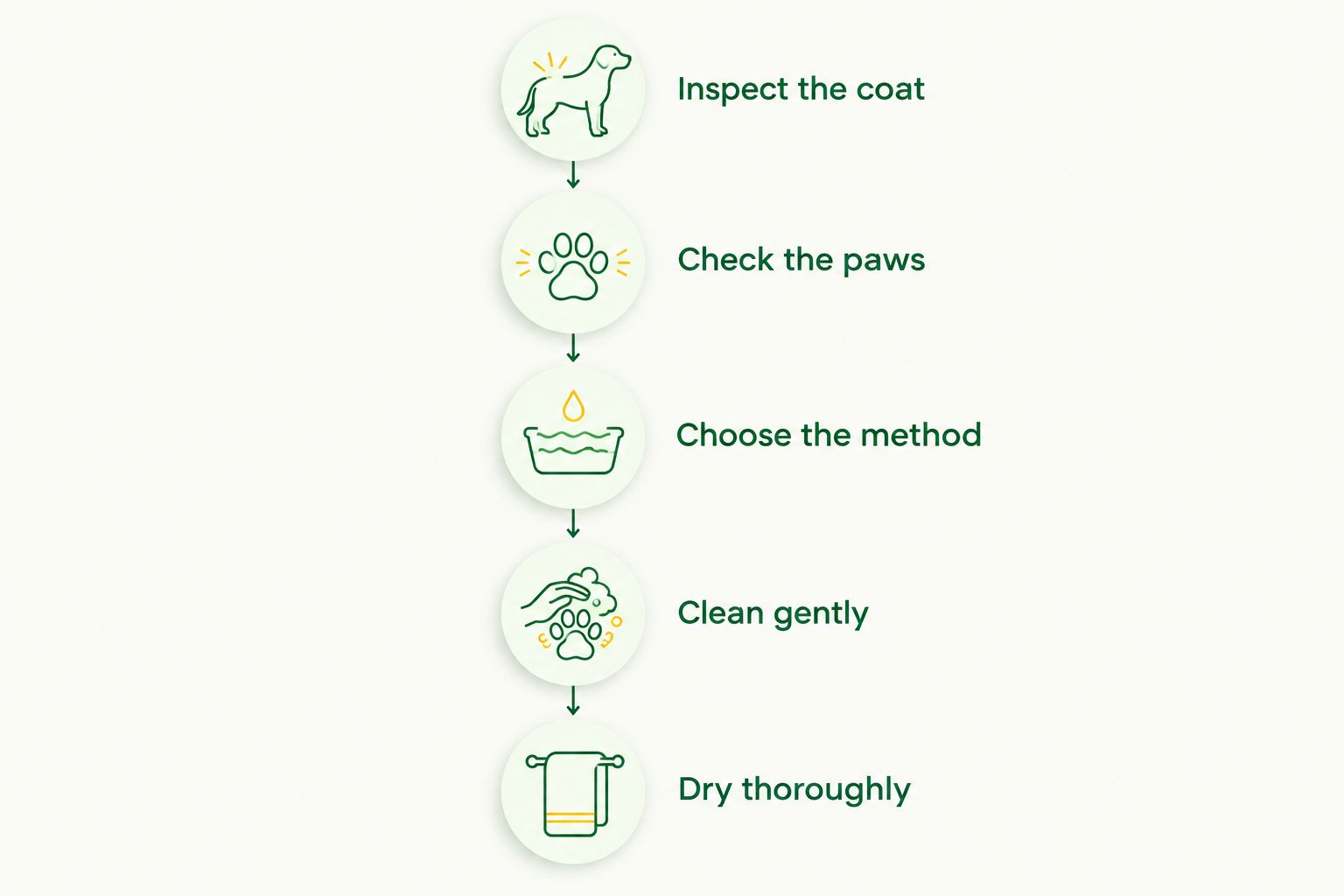
Use this 2026 post-hike sequence before letting your dog settle onto bedding or upholstery. Prepare clean water and towels first so you can keep your attention on the dog throughout the process.
- Inspect the coat. Check the paws, lower legs, belly, chest, tail, and back. Look underneath harness straps and remove dirty gear for separate cleaning according to its care instructions.
- Check the paws. Look between the toes and around the pads and nails. Do not push a painful foot into a washer or scrub over an injury.
- Choose the method. Use paw washing for feet alone, a targeted rinse for localized splashes, or bathing for widespread dirt. Do not treat unknown contamination as ordinary mud.
- Clean gently. Follow the equipment and shampoo instructions. Replace dirty water, avoid forceful scrubbing, and stop if your dog becomes distressed.
- Dry thoroughly. Blot wet areas, including between the toes, without rubbing sore skin. Recheck the coat and paws before finishing.
After cleanup, watch how your dog walks and whether licking continues. A paw that looks clean but remains painful needs attention beyond another wash. Contact your veterinarian for limping, swelling, bleeding, or persistent irritation.
Clean the washer itself according to its instructions and let its components dry before storage. A packed-away cup full of dirty water is not ready for the next outing.
Should you add shampoo to a dog paw washer?
Use shampoo in a paw washer only when both the washer instructions and shampoo directions support that use. Plain water is a sensible starting point for ordinary loose mud. Adding cleanser creates another requirement: removing it properly afterward.
Do not assume that a small amount of shampoo is automatically suitable to leave between the toes. Follow the product's rinsing directions and avoid substituting household cleaners or disinfectants for dog grooming products.
A paw washer also does not replace prescribed medicated washing or soaking. If your veterinarian has given a skin-treatment plan, follow that plan's product, application, and rinsing instructions.
Does a paw washer remove germs or treat irritated paws?
A paw washer removes dirt; it does not establish that a paw is disinfected or healthy. Visibly clean skin can still be irritated, injured, or painful. Do not judge a cleaning tool by medical outcomes it is not designed to provide.
Avoid repeatedly scrubbing a red or frequently licked paw in an attempt to solve the problem. Contact your veterinarian when irritation persists, and seek prompt advice for an embedded object or a wound.
For suspected chemical contamination, prevent licking and contact a veterinarian or animal poison-control service promptly. Tell them what your dog contacted if you know; do not experiment with cleaning mixtures.
Can you skip a bath if your dog still smells after paw washing?
Paw washing is not enough when the odor comes from soiled coat elsewhere. Check the chest, underside, tail, and areas beneath gear to locate the source before deciding on a bath.
Do not cover an unexplained odor with fragrance. Persistent odor, particularly alongside greasy skin, discharge, redness, or itching, deserves veterinary advice rather than repeated washing.
For your 2026 cleanup routine, use sight, touch, and your dog's behavior together. Smell is useful information, but it is not the only test of whether cleanup is complete.
FAQ
Can a dog paw washer replace a full bath after every hike?
No. A dog paw washer replaces a full bath only when ordinary dirt is confined to the paws and the rest of the dog is clean. Mud across the body requires cleaning beyond the feet.
Is a paw washer better than a damp towel for muddy feet?
A paw washer is better suited to rinsing muddy feet, while a damp towel suits light surface dirt. Neither replaces checking between the toes or cleaning mud elsewhere on the body.
Can I use a dog paw washer every day?
Use a paw washer when your dog's feet need cleaning rather than following an automatic daily washing schedule. Clean gently, dry afterward, and follow veterinary advice for dogs with skin problems.
Do I need dog shampoo after every muddy hike?
No. Ordinary loose mud often rinses away with water, while other soiling needs dog-appropriate shampoo. Follow the shampoo directions and your veterinarian's instructions for sensitive or medicated skin.
What should I do if my dog refuses the paw washer?
Stop rather than forcing your dog's foot into the cup. Introduce the empty washer gradually with rewards, or use another gentle method your dog tolerates.
Should I dry between my dog's toes after washing?
Yes. Gently dry between the toes and check for remaining debris or irritation. Stop handling the paw if it causes pain.
Does K9outdoors outdoor dog gear replace a grooming routine?
No. K9outdoors outdoor dog gear supports trail days and everyday comfort, but equipment does not replace inspection, appropriate cleaning, or veterinary care when needed.
One last thing
Make the decision before the first paw goes into the cup. Once you start washing feet, it is easy to overlook the muddy chest just above them. Lay out your towel, inspect the whole dog, and choose the smallest cleaning job that actually leaves every soiled area clean.