


Yes—BioThane is the better choice for a dog that swims frequently because its coated surface does not absorb water like untreated leather and is easier to wipe clean. For your 2026 water adventures, the caveat is the rest of the collar: buckles, attachment rings, exposed construction details, and fit still need attention, while leather remains a practical option for mostly dry walks with occasional splashes.
- Biothane vs leather dog collar: choose BioThane for frequent swimming and simpler wet-weather cleanup.
- Leather suits mostly dry walks when you want a natural material and accept its care requirements.
- Waterproof strapping does not make a collar's buckle or attachment ring corrosion-proof.
- K9 Outdoors is for active-dog owners shopping stylish outdoor dog gear.
Is a biothane collar better than leather for water dogs?
BioThane wins for repeated swimming; leather makes more sense when water exposure is occasional. The difference is water absorption and the care each material needs afterward—not a guarantee that every coated collar is stronger or more comfortable than every leather collar.
Use this biothane vs leather dog collar comparison to separate material benefits from construction details. For a closer look at wet-use features, see the guide to a waterproof dog collar for swimming and water play.
| What matters | BioThane collar | Leather collar |
|---|---|---|
| Best for | Frequent swimmers and muddy outings | Mostly dry walks and owners who prefer natural leather |
| Water exposure | Coated strapping resists water absorption | Untreated leather absorbs water; finishes affect resistance |
| Cleanup advantage | Smooth surface is easy to wipe | Surface dirt can be wiped away using appropriate care |
| Main drawback | Coating damage and hardware still require inspection | Repeated soaking adds drying and conditioning work |
| Comfort check | Check flexibility, edges, width, and buckle placement | Check flexibility, edges, width, and buckle placement |
| Hardware concern | Metal components still need rinsing and inspection | Metal components still need rinsing and inspection |
| Recommendation | Choose for regular water days | Choose for mainly dry use |
Why this matters
A lake-day collar has a different job from a collar worn mainly on neighborhood walks. Repeated wetting makes cleanup, drying, and the condition of the skin underneath part of your routine, not an occasional chore.
For K9 Outdoors dog gear shoppers planning 2026 outings, the useful question is not which material looks more adventurous. It is which collar you can keep clean, correctly fitted, and in sound condition after the activities your dog actually does.
BioThane: Best for frequent swimming and muddy outings
BioThane is a brand of coated webbing, not a type of leather. Its protective coating provides the water-resistant, wipe-clean surface that makes it useful for dogs moving between trails, puddles, and swimming spots.
Choose a BioThane collar when regular soaking is part of your dog's routine. You avoid the absorbent leather strap that needs careful drying after a swim, although you still need to remove grit and dry the hardware and your dog's neck.
The practical advantage becomes clear after muddy water play. You can rinse away loose dirt and wipe the smooth strap rather than work mud out of absorbent material; follow the finished collar's cleaning instructions for cleaners and other treatments.
The limitations matter just as much:
- A damaged coating needs inspection rather than an assumption that the collar remains sound.
- Buckles, rivets, stitching, and attachment rings are separate components with their own failure points.
- Strap flexibility varies, so the material name alone does not establish comfort.
- A smooth, waterproof strap does not stop grit from collecting underneath it.
BioThane is not chew-proof, and it does not correct a poor fit. Choose it for easier wet-use care, not as a substitute for checking the whole collar.
Leather: Best for mostly dry walks and occasional splashes
Leather remains a reasonable choice when you prefer its feel and appearance and your dog spends most outings on dry ground. An occasional splash is different from repeated immersion, particularly when you clean and dry the collar according to its maker's instructions.
The drawback is the maintenance after soaking. Leather absorbs moisture unless an effective finish limits that absorption, and repeated wetting and drying can change its flexibility and condition; direct heat is not a shortcut to careful drying.
Choose leather for predominantly dry use, not as your default swimming collar. The finish, construction, and care instructions matter more than a broad label such as premium leather.
When browsing the Pendleton Heritage Collar at K9 Outdoors, check the stated materials and care directions rather than treating the product name as evidence of swimming suitability. Apply that same check to any everyday collar you like: appearance does not establish water resistance.
For a 2026 collar purchase, decide whether you want to manage leather care before choosing a style. If careful drying and appropriate conditioning feel unrealistic after your usual outings, a coated strap better matches your routine.
Why collar performance varies around water
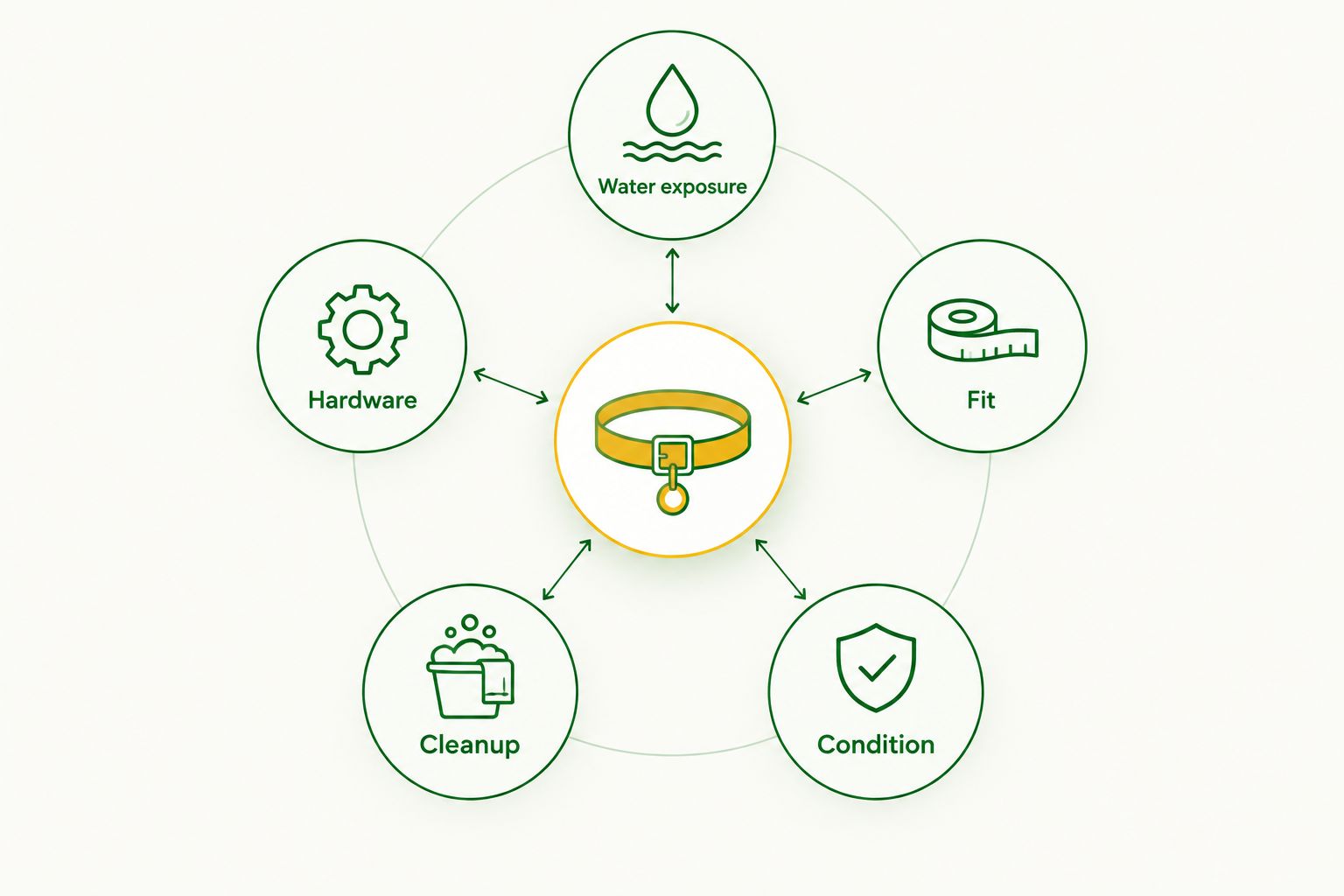
Water resistance describes only part of a collar's performance. These 5 checks explain why two collars made from the same general material can behave differently on your dog:
- Water exposure: Occasional rain is different from repeated swimming. Saltwater also leaves deposits that need removal from the strap and hardware.
- Hardware: Buckle operation, attachment-ring condition, and corrosion resistance affect the finished collar. A waterproof strap does not protect every metal component automatically.
- Fit: A collar that slips over the head is not secure, while an overly tight collar creates pressure. Width and buckle bulk also affect how it sits on the neck.
- Cleanup: Sand and dried mud need removal from both materials. Dirt trapped around fasteners deserves attention even when the visible strap looks clean.
- Condition: Damaged coating, deteriorated leather, loose fasteners, or a failing closure change the decision. Replace an unsafe collar rather than relying on its original material description.
These checks keep your choice tied to observable features. They also give you a repeatable inspection routine after an outing, instead of relying on how new or expensive a collar looks.
How do you check a collar before a water outing?
Use the same inspection for a new collar and one already in your gear bag. A 2026 purchase date does not replace checking the actual condition of the strap and fasteners.
- Read the material description. Confirm whether the collar uses genuine BioThane, another coated webbing, leather, or a combination. Similar appearance does not establish identical construction or care requirements.
- Follow the sizing instructions. Measure where the collar will sit and use the maker's size chart. Do not choose solely from your dog's breed or the size of an old collar that has stretched.
- Check the fit on your dog. A common starting check is room for 2 fingers underneath, but finger clearance alone does not prove a secure fit. Confirm that the collar cannot readily slip over the head and does not press into the neck.
- Test the closure on dry ground. Close the buckle fully and inspect the fastening points. Keep your dog securely controlled while checking that the closure and leash attachment function as intended.
- Check the complete setup. Make sure tags and any other attachments do not obstruct the buckle. Follow the instructions for a life jacket or other equipment rather than improvising attachment points.
Fit and closure security take priority over material preference. If you cannot achieve a comfortable, secure fit, choose a different collar design rather than tightening an unsuitable one.
How should you clean each collar after swimming?
Remove the collar in a secure place before cleaning it, and check your dog's neck as well as the gear. A clean strap put back over wet, sandy fur does not finish the job.
After freshwater swimming
Rinse away mud and grit, then clean the collar according to its care instructions. With coated webbing, pay attention to the underside of the strap, buckle recesses, and the places where hardware meets the material.
If leather gets soaked, blot away excess moisture and let it dry naturally as directed by the maker. Avoid a radiator, hair dryer, or other direct heat, and use only leather-care products appropriate for that collar.
After saltwater or pool use
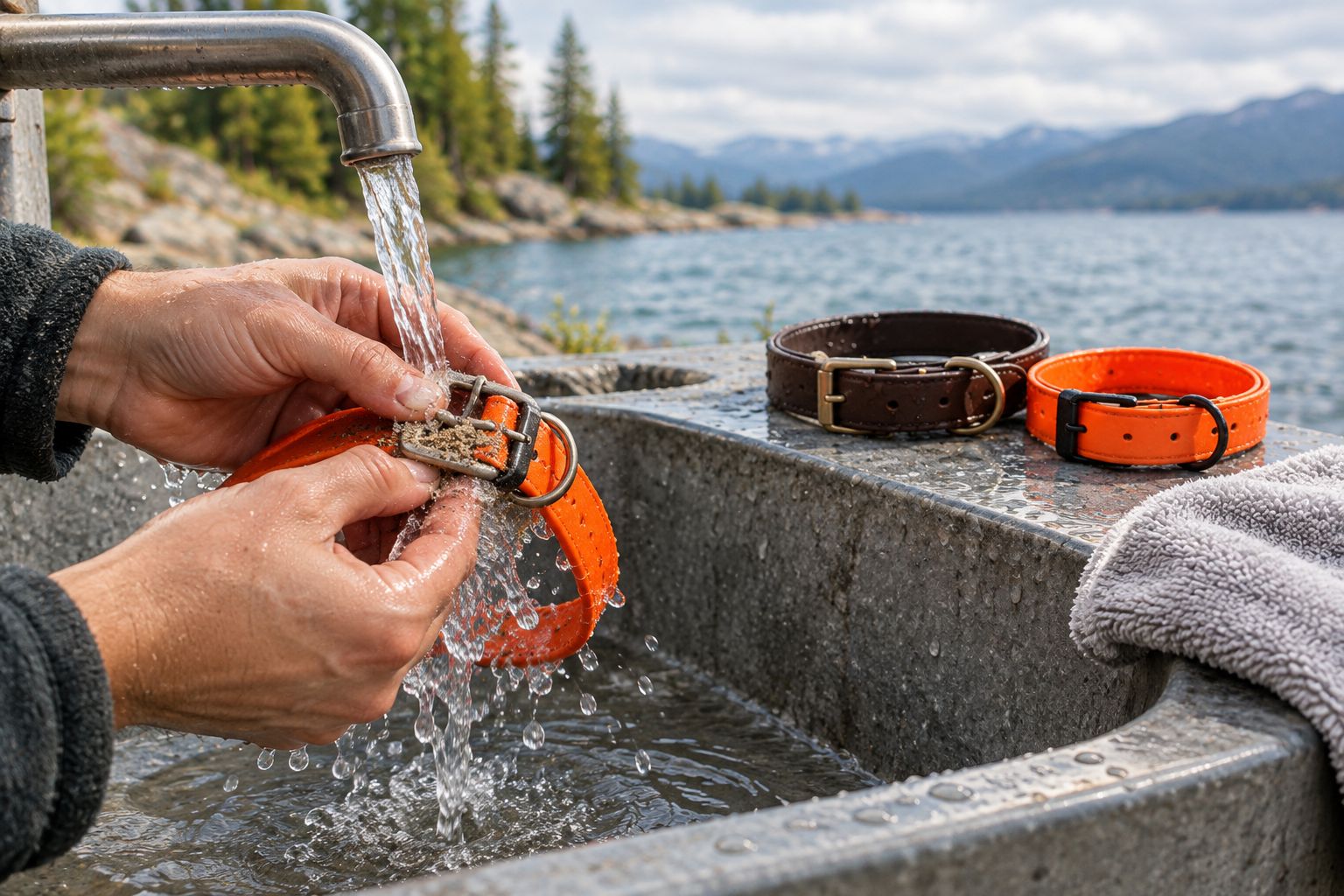
Rinse the collar with fresh water after exposure to saltwater or chlorinated pool water. Open and inspect the buckle during cleaning so deposits and grit do not remain hidden around moving parts.
Dry the hardware and inspect for corrosion or rough surfaces before reuse. Waterproof strapping is not a reason to skip the freshwater rinse. Follow any more specific instructions supplied with the finished collar.
Before putting the collar back on
Dry your dog's neck and check for redness, rubbing, or sore areas. Persistent irritation deserves veterinary advice rather than a switch between materials without addressing the cause.
Is BioThane better than leather for saltwater swimming?
BioThane is the more practical strap material for frequent saltwater swimming because it does not absorb water like untreated leather. The buckle and attachment hardware still need a freshwater rinse, drying, and inspection after the beach.
Do not treat a corrosion-resistant hardware description as permission to leave salt deposits in place. Check the finished collar's instructions and stop using it if the closure binds or the attachment points deteriorate.
Can my dog wear a BioThane collar all day?
BioThane's water resistance does not establish all-day comfort for every dog. Fit, coat, skin condition, trapped moisture, and the collar's edges all matter, so check underneath it rather than judging only the visible surface.
Remove it when appropriate in a secure setting to inspect and dry the neck. Seek veterinary advice for persistent redness, hair loss, or sores; no collar material guarantees freedom from skin problems.
Should I keep separate swimming and everyday collars?
Keeping 2 collars is a practical option when you want coated webbing for swimming and leather for dry walks. It lets you choose each for its purpose without repeatedly soaking the leather collar.
Keep identification available on whichever collar your dog wears. For your 2026 gear setup, make changing collars part of a secure, deliberate routine—not something done beside an open car door or at the water's edge.
FAQ
What's better for a swimming dog, BioThane or leather?
BioThane is the more practical choice for frequent swimming because its coated strap resists water absorption and is easy to wipe clean. Leather suits mostly dry use better, while both materials require hardware and fit checks.
Is a BioThane dog collar completely waterproof?
BioThane strapping is waterproof, but that does not make every component of a finished collar corrosion-proof or immune to wear. Inspect the buckle, attachment ring, fasteners, and any damaged areas.
Can my dog swim in a leather collar occasionally?
Occasional swimming does not automatically ruin a leather collar, but soaking adds care requirements. Follow the maker's instructions for cleaning, natural drying, and any appropriate conditioning.
Does a BioThane collar need cleaning after the beach?
A BioThane collar needs a freshwater rinse after beach use to remove salt and sand. Clean around the hardware, dry the collar, and check your dog's neck before putting it back on.
Is BioThane more comfortable than leather for sensitive skin?
Neither material guarantees better comfort for sensitive skin. Fit, edge finish, cleanliness, and moisture under the collar matter; ask your veterinarian about persistent irritation.
Can I lift my dog out of the water by the collar?
Do not lift your dog by the collar because that loads the neck. Use appropriate support and follow the instructions for any life jacket or lifting equipment.
How do I know when a swimming collar needs replacing?
Replace a swimming collar when damage compromises its strap, closure, or attachment points. Check for deteriorating material, loose fasteners, corrosion, and a buckle that no longer operates correctly.
One last thing
A waterproof collar can sit over a wet neck. The strap's ability to shed water does not dry the fur underneath, so removing grit and drying your dog's neck remain part of the routine.
For your next K9 Outdoors dog gear purchase, start with how often your dog actually swims. Choose coated webbing for repeated water days, reserve leather for mostly dry outings if you prefer it, and judge either collar by fit and condition before heading out.