


A senior dog that suddenly won't cross the kitchen isn't being stubborn — it's lost its grip. Hardwood, tile, and laminate floors go from a non-issue to a daily hazard once arthritis or muscle loss sets in, and the right traction boot or sock fixes it faster than a rug runner ever will.
Best overall for indoor traction in 2026: Woodrow Wear Power Paws. Best for dogs moving between yard and living room: Ruffwear Grip Trex. Best budget option for short-term wear: Pawz Rubber Dog Boots. Best for dogs that refuse to wear boots: Dr. Buzby's ToeGrips. Best for senior dogs with weak hindquarters: Walkee Paws leggings.
- Woodrow Wear Power Paws is the top pick for dog boots for indoor traction on hardwood and tile in 2026.
- Ruffwear Grip Trex works both outdoors and inside for dogs that go from yard to living room daily.
- Pawz Rubber Dog Boots cost less and slip on in seconds but skip cushioning for daily wear.
- Dr. Buzby's ToeGrips suit dogs that fight every boot — they grip the nail, not the paw.
- Walkee Paws leggings help senior dog mobility when a hind leg drags or knuckles under.
Why this matters
Veterinary sources put osteoarthritis in roughly one in five adult dogs, with the rate climbing sharply once a dog passes age 7. On carpet, a stiff or arthritic dog compensates fine. On hardwood or tile, the same dog's nails can't get purchase, and you'll see the classic splayed-leg slide toward a water bowl or a doorway.
That's the whole case for boots for arthritic senior dogs on uneven trails doing double duty indoors: a sole with real grip changes how confidently an older dog moves through the house, not just on the trail. Skip the boot and you're often looking at a dog that stops getting up to greet you, which reads as laziness but is usually just fear of the fall.
2026 has brought more indoor-specific grip products to market than any prior year, mostly because more owners are keeping senior dogs active longer instead of assuming a slow decline is normal.
What makes the best dog boots for indoor traction
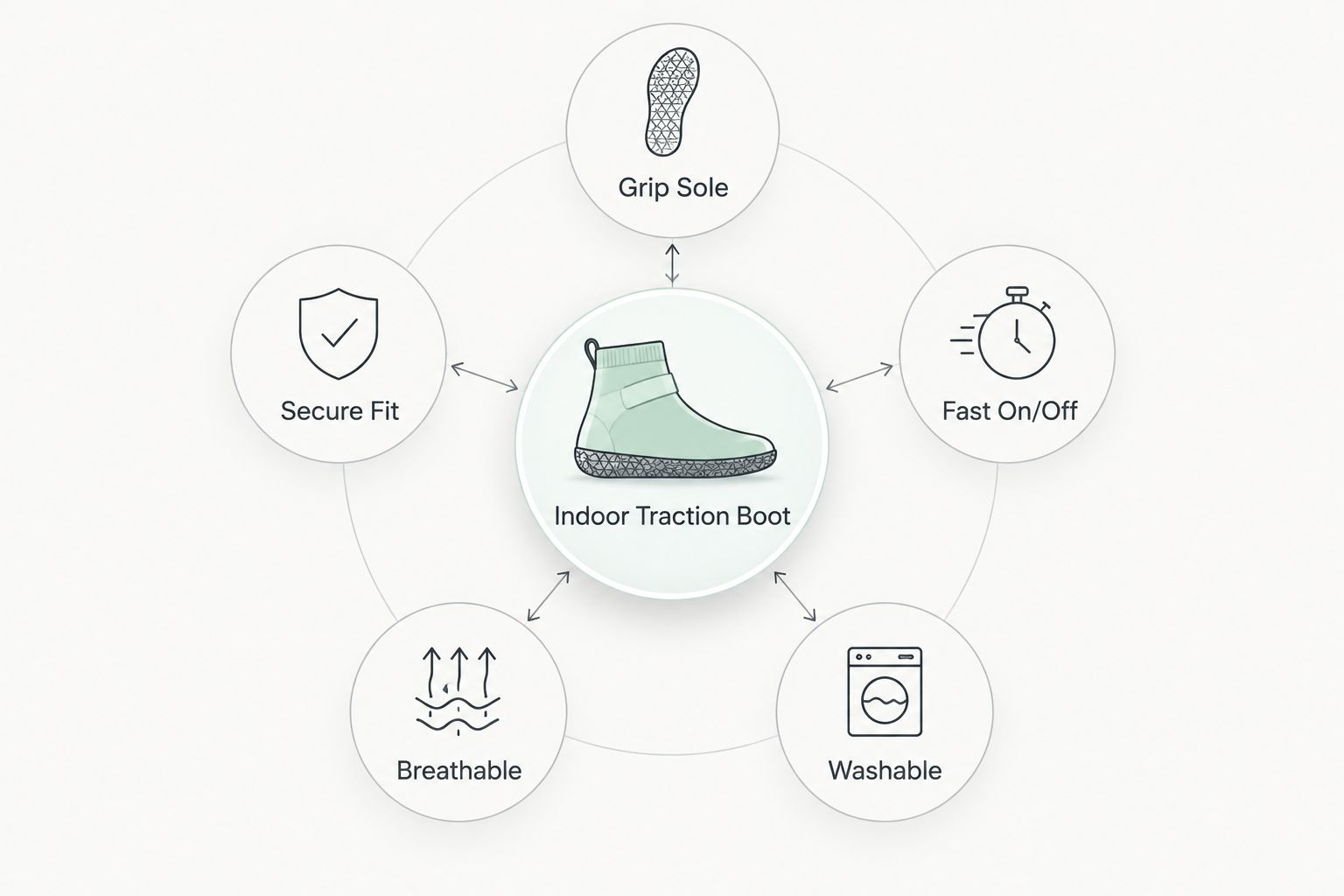
- Grip sole material — rubber tread that stays tacky on sealed wood and tile, not a smooth fabric bottom
- Secure but gentle fit — stays on through a full walk to the water bowl without cutting off circulation
- Fast on/off — a boot that takes more than a minute to fasten gets fought every time, especially with a dog that has limited joint flexion
- Breathability for all-day indoor wear — knit or mesh uppers beat sealed rubber for a dog wearing boots six-plus hours a day
- Washability — indoor boots pick up dirt and drool daily and need to survive a machine wash
- Coverage matches the problem — a paw-only bootie won't help a dog that knuckles or drags a hind leg
Dog boots for indoor traction at a glance
| Item | Best for | Standout feature | Key limitation |
|---|---|---|---|
| Woodrow Wear Power Paws | Everyday indoor traction | Rubber grip pads sewn into a breathable knit sock | Pads wear thin faster than a rubber-soled boot |
| Ruffwear Grip Trex | Yard-to-living-room dogs | Vibram-style sole works outdoors and inside | Bulkier and warmer for all-day indoor wear |
| Pawz Rubber Dog Boots | Budget and short-term wear | Slips on in seconds, no straps to fasten | No cushioning, tears on rough carpet edges |
| Dr. Buzby's ToeGrips | Dogs that refuse boots | Grips the nail, not the paw, so dogs tolerate it | Doesn't protect the pad itself |
| Walkee Paws leggings | Weak hindquarters | Full-leg coverage helps a dragging hind paw | Sizing is less forgiving than a sock bootie |
1. Woodrow Wear Power Paws: best dog boots for indoor traction on hardwood
These are sock-style booties with rubber grip pads stitched directly into the pad area, built for sealed wood and tile rather than trail mud. A hook-and-loop cuff keeps them on without cutting into the leg the way a stiff boot strap can.
Woodrow Wear Power Paws pros:
- Grips slick floors noticeably better than bare nails or a fabric-bottom sock
- Breathable knit stays comfortable for hours of indoor wear
- Machine washable, which matters for a boot worn daily
Woodrow Wear Power Paws cons:
- Rubber grip pads wear down with heavy daily use
- Not waterproof, so they're an indoor product, not a rain-day swap
- A dog that inchworms across a rug can work them loose
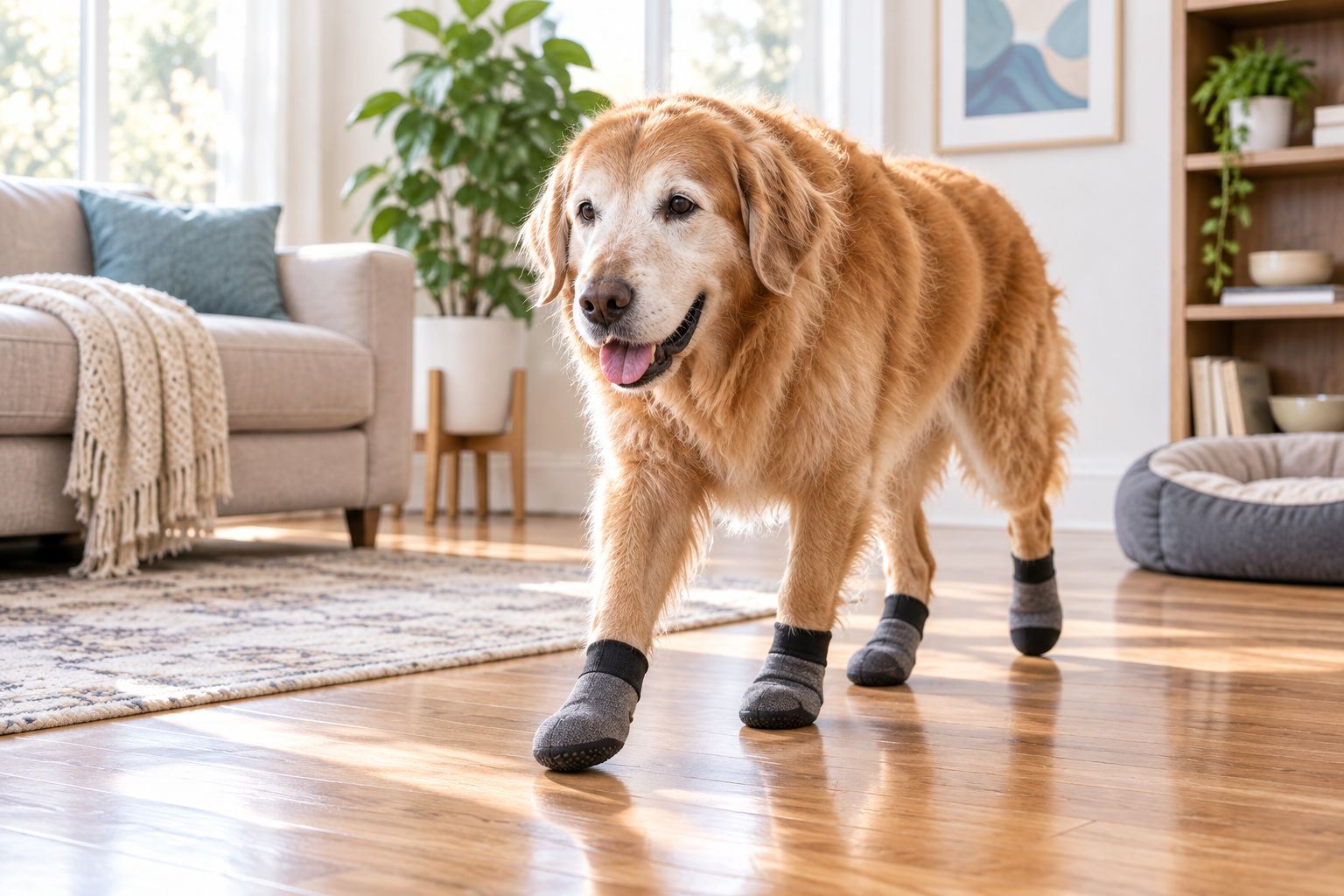
Woodrow Wear Power Paws verdict: Buy for daily indoor traction on hardwood, tile, or laminate.
2. Ruffwear Grip Trex: best for dogs shuttling between yard and living room
This is a full rubber-soled trail boot with an over-ankle gaiter, built for gravel and ice but tacky enough on hardwood that it doubles as an indoor option for dogs that go outside several times a day.
Ruffwear Grip Trex pros:
- One boot handles gravel, hot pavement, and hardwood — no swapping pairs at the door
- Sturdy sole holds up to daily outdoor-to-indoor wear far longer than a sock-style bootie
- The strap system stays put on active dogs that move fast
Ruffwear Grip Trex cons:
- Stiffer and warmer than dedicated indoor socks for all-day house wear
- Higher effort to fasten, which is tough on a dog with limited leg mobility
- Overkill for a dog that never leaves the house
Ruffwear Grip Trex verdict: Buy if your dog is outside multiple times daily; Hold for indoor-only seniors.
3. Pawz Rubber Dog Boots: best budget option and post-surgery paw cover
A thin, stretchy natural rubber boot with no straps at all — it pulls on like a balloon over the paw. It's less a traction product and more a fast, cheap way to cover a paw for a short stretch of time.
Pawz pros:
- Fastest on/off of anything on this list, which matters for a dog that hates handling
- Waterproof and doubles as a bandage cover after post-surgery paw protection needs
- Low enough cost per pair to keep a few sizes on hand
Pawz cons:
- No cushioning or arch support for a dog with joint pain
- The rubber feel is odd for a first-time wearer and takes a few tries
- Thin material tears on rough carpet edges or door thresholds
Pawz verdict: Buy as a starter boot or for short vet-recommended wear; Skip for daily long-term use.
4. Dr. Buzby's ToeGrips: best for dogs that refuse to wear boots
Instead of covering the paw, these are small rubber rings that slide onto each nail. There's no fabric touching the paw, which is the entire appeal for a dog that fights every boot on this list.
Dr. Buzby's ToeGrips pros:
- No straps, no fabric on the paw — far better tolerated by anxious or dementia-affected dogs
- Grips hardwood and tile directly through the nail
- Nothing to knock loose mid-walk since there's no boot to slip off
Dr. Buzby's ToeGrips cons:
- Doesn't protect the pad itself, so it won't help with cracked pads or after surgery
- Needs resizing as nails grow out
- Doesn't work well on dogs kept trimmed very short
Dr. Buzby's ToeGrips verdict: Buy for boot-averse dogs; Skip if pad protection is the actual goal.
5. Walkee Paws leggings: best for senior dogs with weak hindquarters
This is a full-leg knit legging with a grip sole built into the foot, pulled on like a sleeve instead of strapped at the ankle. It's built for dogs that drag or knuckle a hind paw, not just dogs that need extra grip.
Walkee Paws pros:
- Covers the whole leg, which helps a dragging or knuckling hind paw stay protected, not just the pad
- Doubles as light coverage for senior incontinence
- Stays on dogs that consistently shake off ankle-strap boots
Walkee Paws cons:
- Sizing is less forgiving than a sock-style bootie
- Takes longer to fit on a dog with limited joint flexion
- Less breathable than a knit sock in a warm room
Walkee Paws verdict: Buy for hind-leg weakness; Hold if your dog only needs front-paw grip.
“If a boot needs more than a minute to put on, your senior dog will fight it every time.”
How we ranked
Each item was weighed against the six criteria above, with grip sole quality and fast on/off carrying the most weight since those two determine whether an arthritic dog actually tolerates daily wear. Breathability and washability separated the indoor-only picks from the trail boots doing double duty inside.
Which dog boots should you choose?
For most owners dealing with a senior dog sliding on hardwood or tile in 2026, Woodrow Wear Power Paws is the right starting point — grippy, washable, and comfortable for hours of wear. If your dog already goes outside several times a day, skip the second pair and get the Ruffwear Grip Trex instead. Dogs that panic at any boot do better with Dr. Buzby's ToeGrips, and a dog with a dragging hind leg needs the coverage of Walkee Paws more than it needs extra front-paw grip. Keep a pair of Pawz on hand regardless — they're the fastest fix after a vet visit or an unexpected paw injury.
FAQ
What are the best dog boots for indoor traction in 2026?
Woodrow Wear Power Paws lead for daily indoor traction on hardwood and tile in 2026, thanks to rubber grip pads built into a breathable knit sock. Dogs that split time between yard and living room do better in a Ruffwear Grip Trex, which handles both surfaces.
Are grip socks better than boots for senior dogs on hardwood floors?
Grip socks are usually better for indoor-only senior dogs because they're breathable enough for hours of wear and easier to get on a dog with limited joint mobility. Full boots like the Ruffwear Grip Trex make more sense for dogs that also go outside daily.
How do I get my dog used to wearing boots indoors?
Start with short sessions of a few minutes at a time and pair the boots with a reward, building up as the dog stops fixating on its paws. A step-by-step approach to getting a dog used to wearing hiking boots works the same way for indoor traction boots.
Do senior dogs need boots on carpet too?
Most senior dogs move fine on carpet since the fibers provide natural grip, so boots are usually only needed on hardwood, tile, and laminate. The exception is a dog with significant hind-leg weakness, where leggings like Walkee Paws help across every surface.
Are Pawz rubber boots good for daily indoor wear?
Pawz boots work well for short-term or occasional wear but lack the cushioning and arch support needed for daily use. They're best used after a vet visit, surgery, or paw injury rather than as a permanent indoor solution.
Can nail grips replace dog boots for arthritic dogs?
Nail grips like Dr. Buzby's ToeGrips can replace boots for traction on hardwood and tile, but they don't protect the paw pad itself. A dog recovering from a pad injury or surgery still needs an actual boot, not just nail grips.
How many pairs of indoor traction boots does a senior dog need?
One well-fitting pair usually covers daily indoor needs, but many owners keep a backup pair like Pawz on hand for injuries or vet visits. Dogs that also go outside daily often need a second, sturdier pair for trail or yard wear.
Is Ruffwear Grip Trex good for indoor use only?
Ruffwear Grip Trex works indoors but runs warmer and stiffer than dedicated indoor socks, so it's better suited to dogs already wearing it outside. A dog that never leaves the house is better served by a lighter option like Woodrow Wear Power Paws.
One last thing
Check the hair between your dog's paw pads before blaming the floor. Long fur growing over the pad edges reduces the paw's natural contact with the ground and can look exactly like a slipping problem that boots won't fully fix until the fur is trimmed back.