


Shedding season turns a tidy living room into a tumbleweed factory, and the wrong brush just moves loose fur around instead of pulling it out. This guide ranks the dog grooming brush types that actually cut shedding at the source, matched to coat type, so you stop guessing at the pet store aisle.
- The undercoat rake wins overall for a dog grooming brush built for heavy seasonal shedding on double coats.
- Slicker brushes handle daily maintenance on medium and curly coats without pulling too hard.
- Bristle brushes suit short-haired breeds and cost the least to add to a grooming kit.
- Grooming gloves work best for anxious dogs or first-time brushing sessions.
- Match the tool to the coat, not the marketing photo, or you will strip skin instead of fur.
Why this matters
A dog's coat sheds in cycles, and double-coated breeds like huskies and German shepherds "blow" their undercoat twice a year in dense clumps. The right dog grooming brush pulls that loose undercoat out in one pass; the wrong one skates over the top coat and leaves the real problem underneath.
Owners who brush with mismatched tools end up doing it twice as often for half the result, and dogs with sensitive skin can get raw patches from repeated dragging with the wrong tine spacing. If you already deal with matting between grooming sessions, how to bathe a dog with a silicone grooming brush is worth reading alongside this one since bath-time brushing loosens fur before it becomes a dry-brushing fight.
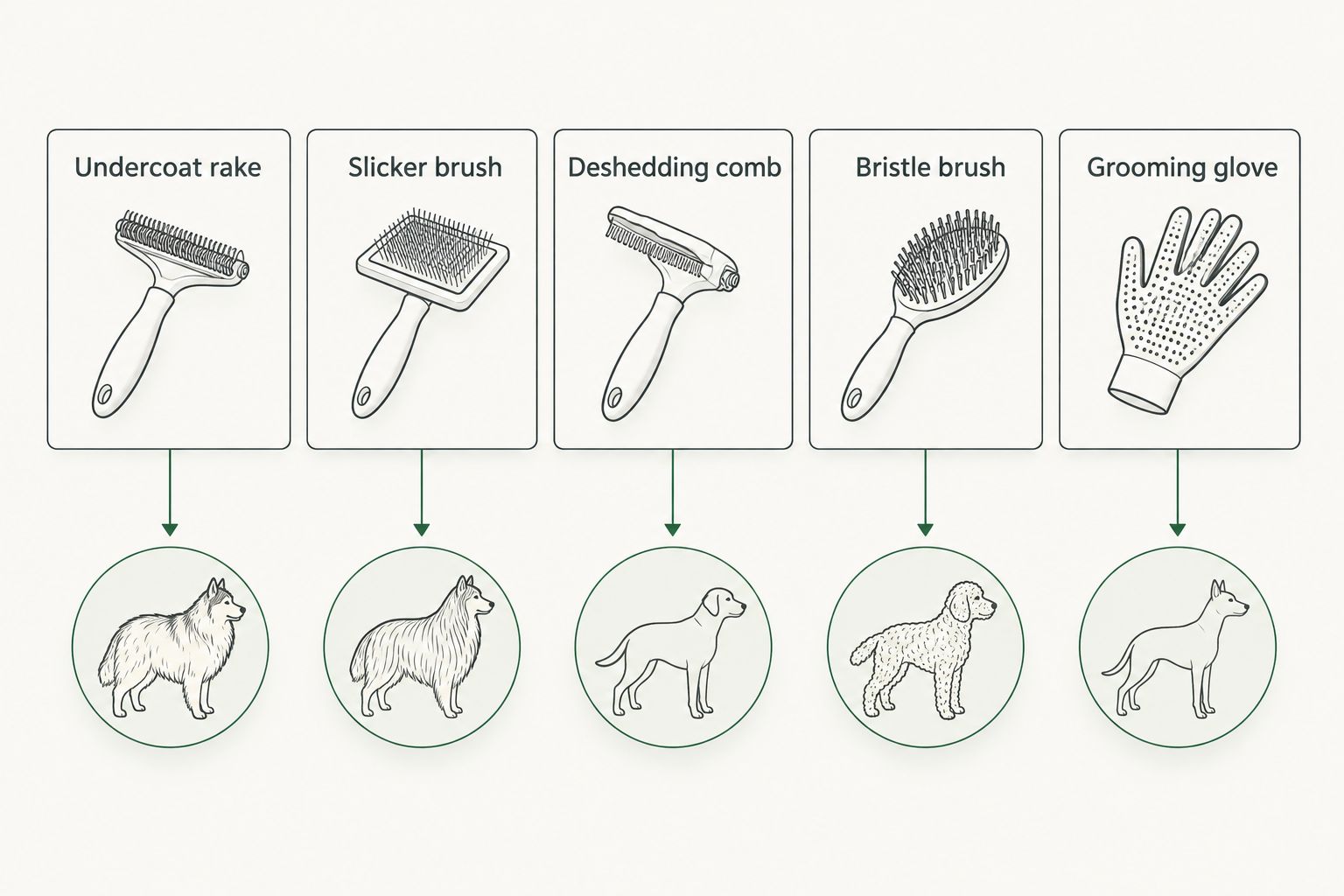
Best overall: undercoat rake. Best for short-haired breeds: bristle brush. Best budget option: grooming glove.
What makes the best dog grooming brush
- Coat match — tine length and spacing built for the dog's actual coat density, not a generic "all breeds" claim
- Skin contact — rounded or coated tips that don't scratch when pressed against loose skin
- Shedding removal rate — pulls dead undercoat out instead of just smoothing the top layer
- Handle ergonomics — grip that doesn't fatigue your hand on a 15-20 minute session with a large dog
- Cleanup ease — fur releases from the brush in one pull instead of needing to be picked out strand by strand
- Durability under daily use — tines that don't bend or snap on a thick, matted coat
At a glance: dog grooming brush comparison
| Tool | Best for | Standout feature | Key limitation |
|---|---|---|---|
| Undercoat rake | Double coats, heavy seasonal shedding | Pulls dead undercoat without cutting live hair | Too aggressive for thin-coated small breeds |
| Slicker brush | Daily maintenance, medium coats | Fine wire pins lift surface tangles fast | Can irritate skin if pressed too hard |
| Deshedding comb | Post-hike detangling, heavy mats | Wide teeth glide through knots before brushing | Slower than a rake on full-body shedding |
| Bristle brush | Short-haired breeds, finishing touches | Distributes natural oils across a smooth coat | Does almost nothing on a thick undercoat |
| Grooming glove | Anxious or first-time dogs | Feels like petting, not brushing | Weakest shedding removal of the group |
1. Undercoat rake: best dog grooming brush for double-coated shedding breeds
An undercoat rake uses two rows of curved metal teeth that reach past the guard coat and pull loose undercoat out without cutting the healthy hair on top. This is the tool for Huskies, German Shepherds, Golden Retrievers, and any breed that blows its coat with the seasons in 2026's spring and fall shedding windows.
Undercoat rake pros:
- Removes the most loose fur per session of any brush in this list
- Reaches dense undercoat that surface tools skip entirely
- Reduces the number of full grooming sessions needed per shedding cycle
Undercoat rake cons:
- Too harsh for single-coated or thin-coated small breeds
- Requires a slower, more deliberate stroke to avoid skin drag
Verdict: Buy if your dog has a double coat and sheds in visible clumps twice a year.
2. Slicker brush: best dog grooming brush for daily coat maintenance
A slicker brush uses fine, closely spaced wire bristles set in a flat pad to lift loose hair and light tangles from the surface of the coat. It's the everyday tool — the one you reach for after a muddy trail walk, not just during a full shedding blowout.
Slicker brush pros:
- Fast for quick daily or twice-weekly brushing
- Works on medium coats, curly coats, and wavy coats
- Doubles as a light detangler on legs and ears
Slicker brush cons:
- Pressed too hard, the fine pins can scratch sensitive skin
- Misses deep undercoat on heavily shedding double-coated breeds
Verdict: Buy as the standing tool in a grooming kit, paired with a rake during shedding season.
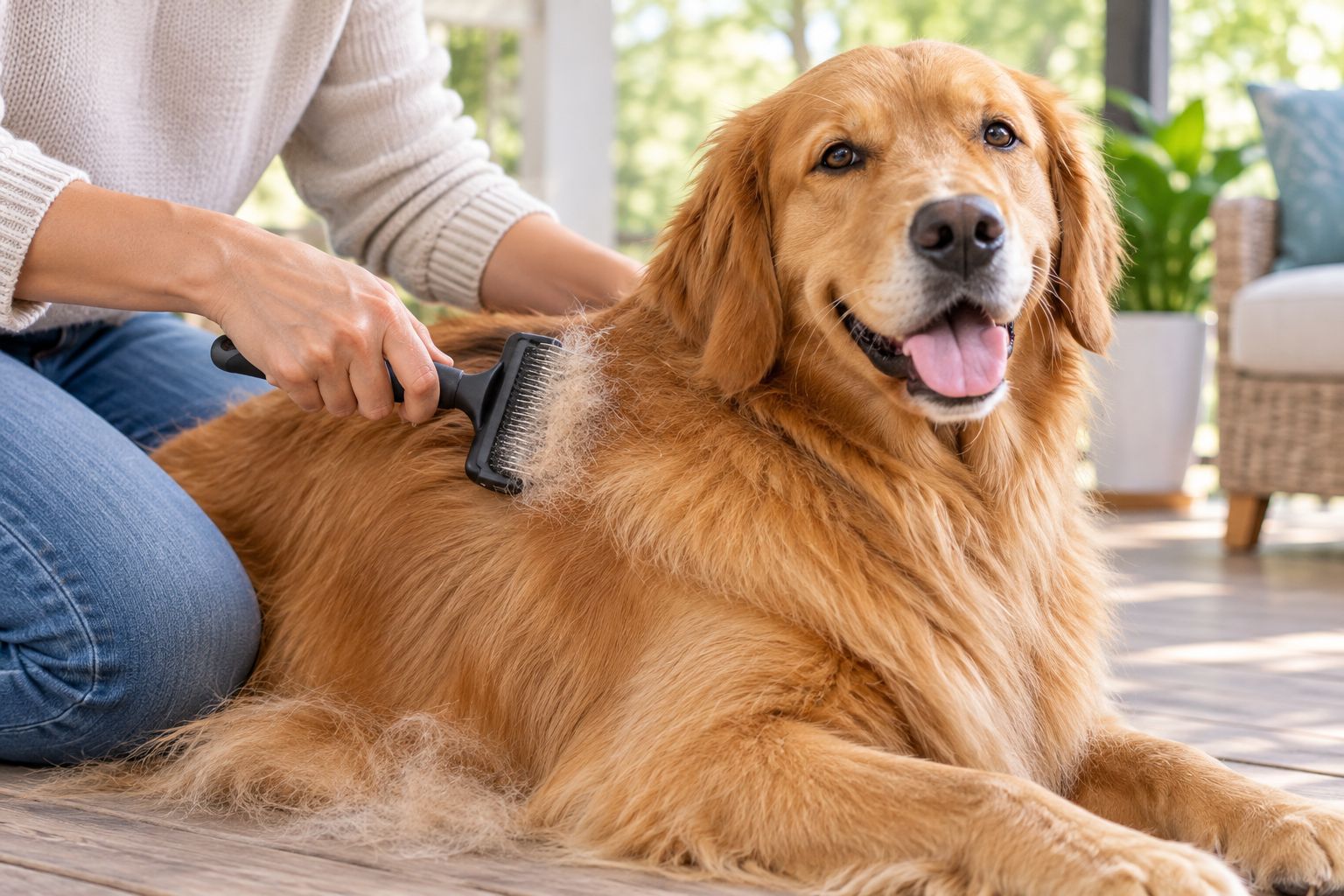
3. Deshedding comb: best dog grooming brush for post-hike detangling
A deshedding comb uses wide-set metal teeth to glide through knots and light mats before a finer brush finishes the job. This is the tool for after a trail day, when burrs, dirt, and tangled undercoat need separating before anything else touches the coat.
Deshedding comb pros:
- Handles mats and tangles that a slicker brush would snag on
- Gentler entry point for a coat that hasn't been brushed in a while
- Works well combined with a leave-in detangling spray on matted fur
Deshedding comb cons:
- Slower than a rake for clearing a full-body shedding blowout
- Doesn't remove as much loose undercoat volume per pass
Verdict: Hold — useful as a prep step, not a standalone shedding solution. If matting is a recurring problem after outdoor trips, leave-in conditioner spray for matted dog fur pairs directly with this step.
4. Bristle brush: best dog grooming brush for short-haired breeds
A bristle brush uses natural or synthetic bristles set close together to smooth the coat and spread natural skin oils across short hair. Think Labradors, Boxers, and other smooth-coated breeds where the goal is shine and light dust removal, not deep shedding control.
Bristle brush pros:
- Gentle enough for daily use on sensitive-skinned short-haired dogs
- Distributes coat oils for a smoother, healthier-looking finish
- Lightest and simplest tool to clean after use
Bristle brush cons:
- Does almost nothing against a thick double coat
- Not built for detangling or heavy shedding removal
Verdict: Buy for short-haired breeds only; Skip if your dog has any undercoat at all.
5. Grooming glove: best dog grooming brush for anxious or first-time dogs
A grooming glove fits over the hand with short rubber nubs on the palm, so brushing feels like petting rather than a tool session. This matters for puppies being introduced to grooming, rescue dogs with handling anxiety, or any dog that bolts at the sight of a standard brush.
Grooming glove pros:
- Builds tolerance for grooming without triggering fear responses
- Doubles as a bathing tool for lathering shampoo
- Comfortable for short daily sessions on any coat type
Grooming glove cons:
- Weakest shedding removal rate of every tool on this list
- Not a substitute for a rake or slicker brush during heavy shedding
Verdict: Buy as a starter tool or anxiety bridge, then graduate to a rake or slicker brush.
How we ranked these
The ranking weighs shedding removal rate first, since that's the query behind "dog grooming brush" searches in 2026 — most people aren't shopping for a brush, they're trying to stop the shedding. Skin safety, handle ergonomics, and cleanup ease broke ties between tools that scored close on removal power. Coat-match specificity decided the "best for" label on every item, since a universal claim usually means a compromise on every coat type it touches.
Which dog grooming brush should you choose?
Pick the undercoat rake if your dog has a double coat and you're dealing with a full seasonal shedding blowout in 2026 — it removes more loose fur per session than anything else here. Add a slicker brush for the weeks between blowouts, and keep a deshedding comb on hand for after muddy hikes. Short-haired breeds skip the rake entirely and go straight to a bristle brush, while anxious dogs start with a grooming glove and work up from there.
Coat condition affects how well any brush performs, and a dry, dull coat sheds differently than a well-conditioned one. Pairing regular brushing with a no-rinse option like The Mane Tame waterless foaming dog and cat shampoo between full baths keeps the coat easier to brush through, especially on dogs that spend weekends on the trail with K9 Outdoors gear. For husky owners specifically dealing with double-coat shedding, best deshedding shampoo for husky and double-coated breeds covers the wash-side half of the equation this brush guide doesn't.
"If the brush pulls more than it lifts, it's the wrong tool for the coat."
FAQ
What is the best dog grooming brush for heavy shedding?
An undercoat rake is the best dog grooming brush for heavy shedding on double-coated breeds in 2026. It reaches past the guard coat to pull loose undercoat out directly, which surface brushes can't do.
Is a slicker brush or undercoat rake better for shedding?
An undercoat rake removes more loose fur during a seasonal shedding blowout, while a slicker brush is better suited to daily maintenance between blowouts. Most double-coated dogs benefit from owning both.
Can grooming brushes hurt a dog's skin?
Yes, a slicker brush or undercoat rake pressed too hard can scratch or irritate skin, especially on thin-coated dogs. Use short, light strokes and stop if the skin looks red or the dog flinches.
How often should I brush a double-coated dog?
Double-coated dogs need brushing 2-3 times a week normally, and daily during spring and fall shedding seasons. Skipping sessions during a blowout lets loose undercoat mat against the skin.
Do grooming gloves actually remove shedding fur?
Grooming gloves remove some loose surface fur but far less than a rake or slicker brush. They work best as an introduction tool for anxious dogs, not as a primary shedding solution.
What dog grooming brush works for short-haired breeds?
A bristle brush is the right dog grooming brush for short-haired breeds like Labradors and Boxers. It smooths the coat and spreads natural oils without the aggressive pull an undercoat rake applies.
Should I brush my dog before or after a bath?
Brush before a bath to remove loose fur and light tangles, since wet matted fur is harder to work through. A second light brush after drying finishes the coat.
Can one brush work for every dog breed?
No single dog grooming brush handles every coat type well. A tool built for double coats is usually too aggressive for short-haired breeds, and a bristle brush does almost nothing on a thick undercoat.
One last thing
Most owners brush in the direction of hair growth out of habit, but for double coats, working against the grain first with a rake — then finishing with the grain using a slicker brush — pulls noticeably more loose undercoat than a single-direction pass. It's a two-second change to technique, not a new tool, and it's the difference between one thorough session a week and daily cleanup.