


Small breed swimmers need a completely different life jacket than a 70-pound retriever, and most buying guides ignore that. This guide ranks the design types that actually work for dogs under 25 pounds, so you can match the vest to how your dog swims instead of grabbing whatever's in stock at the pet store.
- High-flotation foam panel vests win overall for small breed swimmers learning open water in 2026.
- Low-profile neoprene vests suit confident swimmers and dock diving where drag matters more than extra foam.
- Growth-adjustable vests fit puppies and small breeds still filling out, with multiple strap settings.
- Skip any dog life jacket for small breeds without a top grab handle and a chin float — both matter more at 12 pounds than at 60.
Why this matters
A small breed tires fast in open water because its stroke rate is high relative to its size, and cold water pulls heat away from a small body quicker than a large one. A vest built for a Labrador puts flotation panels where a 60-pound dog needs them, not where an 8-pound Yorkie's center of gravity actually sits.
Fit failure is the real risk with small dogs — a jacket that's one size too big rides up over the head the moment the dog starts paddling. Before comparing designs, it helps to get a properly fitted dog life jacket for small breeds so the flotation actually sits where it should. K9 Outdoors treats fit as the first filter on any dog life jacket for small breeds, ahead of style or color.
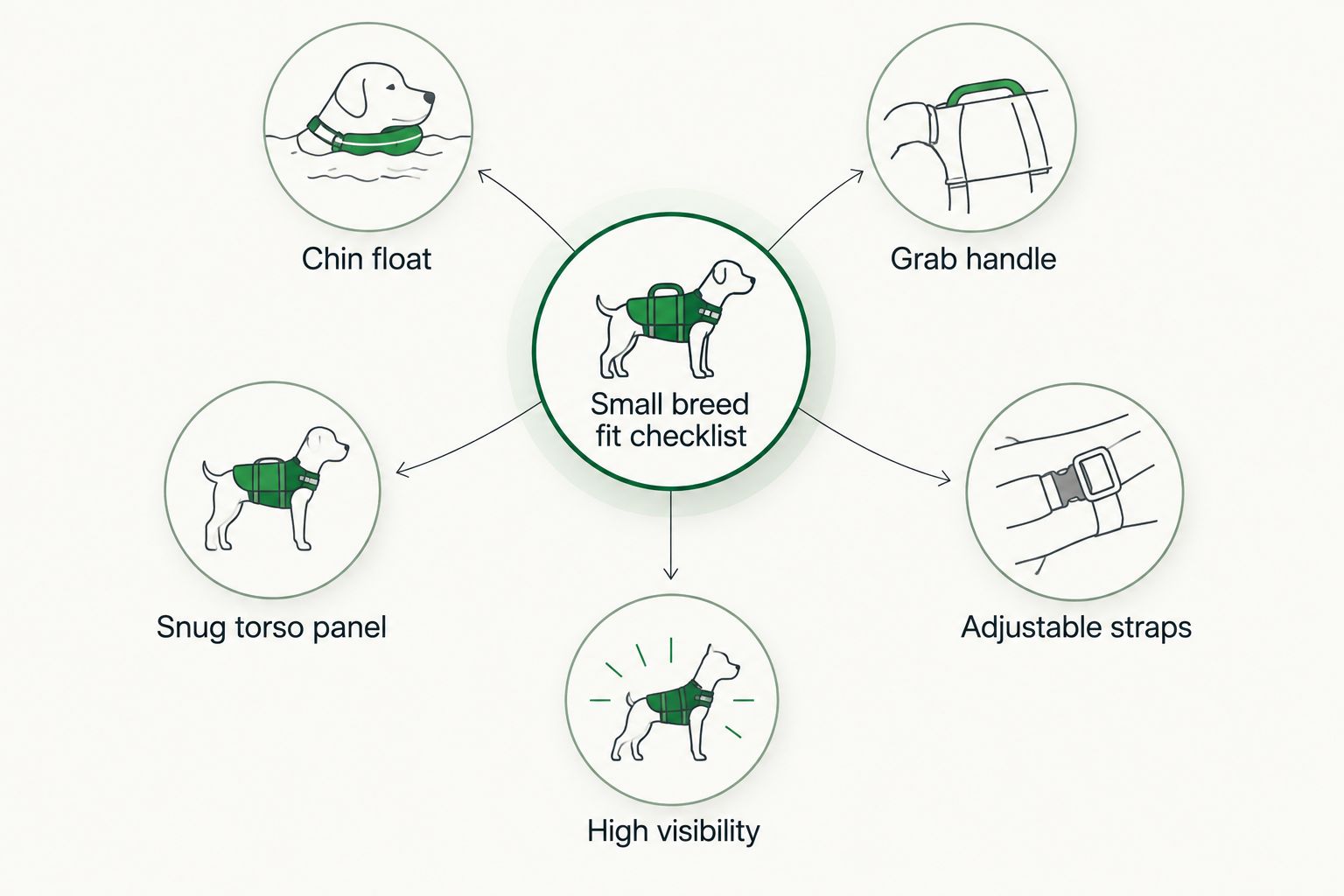
What makes the best dog life jacket for small breeds
- Chin float — a raised foam collar behind the head that keeps the muzzle above the waterline during a panicked paddle
- Top grab handle — lets you lift a struggling small dog straight up out of the water in one motion
- Snug torso panel — small dogs shift inside loose jackets; a tight, low-profile cut prevents rotation
- Adjustable leg or belly straps — at least two points of adjustment for narrow chests and short torsos
- Bright, high-visibility color — a small dog's head barely clears the surface, so visibility from a boat matters
- Buoyancy placed at the shoulders and hips, not just the belly, since small dogs paddle with their whole body
“If the vest doesn't have a handle above the shoulders, you can't lift a panicking 10-pound dog out of moving water with one hand.”
The verdict: best dog life jackets for small breeds in 2026
Best overall: high-flotation foam panel vest. Best for confident swimmers and dock diving: low-profile neoprene vest. Best for puppies and growing small breeds: growth-adjustable vest. Best for nervous or first-time swimmers: extra-buoyancy vest with chin float. Best budget option: basic no-frills neoprene vest.
Dog life jackets for small breeds at a glance
| Design type | Best for | Standout feature | Key limitation |
|---|---|---|---|
| High-flotation foam panel vest | Small breed swimmers new to open water | Chin float plus wide top handle | Bulkier fit can restrict a short-legged dog's stroke |
| Low-profile neoprene vest | Confident swimmers, dock diving | Tight cut cuts drag in the water | Less foam means less margin for a tiring dog |
| Growth-adjustable vest | Puppies and growing small breeds | Multiple strap settings across sizes | Extra straps add more places to check for wear |
| Extra-buoyancy nervous-swimmer vest | Anxious or first-time swimmers | Highest float height keeps the head clear | Can feel stiff and slow the dog down |
| Basic neoprene vest | Budget-conscious owners with calm-water use | Simple, lightweight, easy to hose off | No chin float, weaker performance in current or waves |
Ranked picks: dog life jackets for small breeds in 2026
1. High-flotation foam panel vest: best overall for small breed swimmers
This design stacks foam panels along the back and belly and adds a raised chin float behind the neck, which keeps a small dog's head above the surface even when it stops paddling. It's the safest default for a dog under 25 pounds that hasn't proven itself a strong swimmer yet.
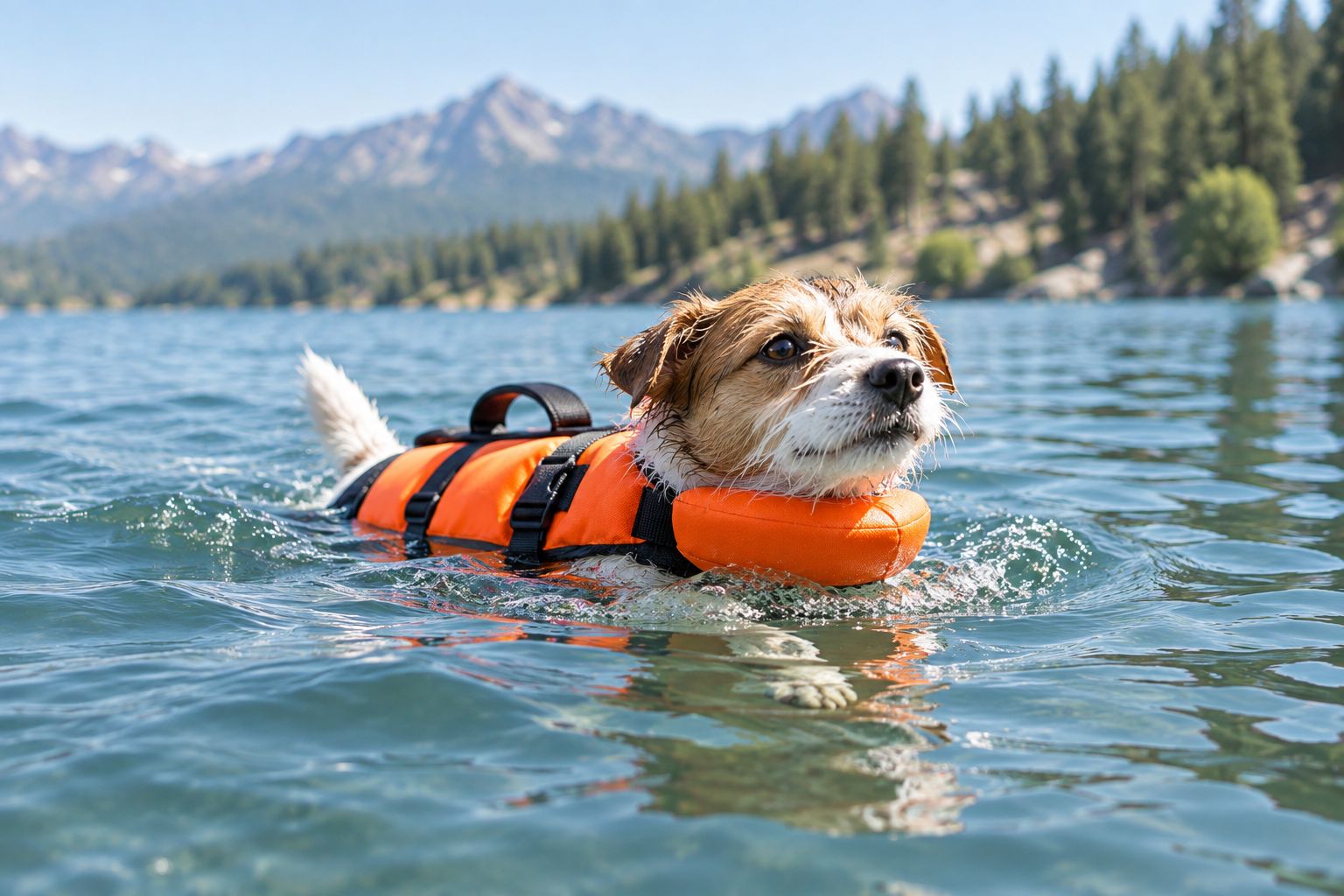
High-flotation foam panel vest pros:
- Highest buoyancy margin for a dog that tires quickly
- Chin float reduces the chance of a submerged muzzle
- Wide top handle makes lifting a wet, panicked dog easier
High-flotation foam panel vest cons:
- Bulkier profile can slow a short-legged dog's kick
- Runs warmer, which matters on long summer days
Best for: small breeds swimming in open water, boats, or unfamiliar lakes for the first time. Verdict: Buy — this is the safe default when you don't already know how your dog swims.
2. Low-profile neoprene vest: best for confident swimmers and dock diving
A neoprene shell hugs the torso closely and trims the bulk of a foam panel design, which matters for a small dog that's already comfortable in the water. It's the type most often seen at dock diving and water sports events for exactly this reason.
Low-profile neoprene vest pros:
- Less drag, so the dog swims closer to its natural stroke
- Dries faster than thick foam panel builds
- Stretch fit works well on narrow, deep chests
Low-profile neoprene vest cons:
- Less flotation margin if the dog tires mid-swim
- Not the first choice for a dog that panics in deep water
Best for: small breeds with proven swimming ability who spend time on docks or boats. Verdict: Buy — but only after the dog has shown it can swim confidently in a foam vest first.
3. Growth-adjustable vest: best for puppies and growing small breeds
This design uses three or more strap points instead of one fixed harness shape, letting the same vest track a puppy through several growth stages. Getting the fit right matters more here than with any other type — a guide on sizing a life jacket for a growing puppy walks through where to measure as the dog changes shape.
Growth-adjustable vest pros:
- Extends useful life across several months of growth
- Multiple strap points fit odd proportions in young dogs
- Usually built with the same chin float and handle as adult vests
Growth-adjustable vest cons:
- More straps mean more spots to check for wear and slippage
- Needs a fit check every few weeks during a growth spurt
Best for: puppies and small breeds still filling out their adult frame. Verdict: Buy — check the fit monthly rather than assuming last month's setting still holds.
4. Extra-buoyancy nervous-swimmer vest: best for anxious first-time swimmers
Built with the tallest chin float and the most foam of any small breed design, this vest is meant to do the swimming for a dog that hasn't relaxed in water yet. It trades agility for reassurance, which is the right trade for a first lake trip.
Extra-buoyancy nervous-swimmer vest pros:
- Maximum head clearance for a dog that freezes or stops paddling
- Reduces the panic response that causes small dogs to gulp water
- Wide handle supports a full lift with one hand
Extra-buoyancy nervous-swimmer vest cons:
- Stiffest of the five types, which can look and feel awkward
- Overkill once a dog becomes a confident swimmer
Best for: dogs that hesitate at the water's edge or have never worn a vest before. Verdict: Buy — step down to a lighter vest once the dog relaxes over a few outings.
5. Basic neoprene vest: best budget option
A basic vest skips the chin float, the reinforced handle, and the graduated straps, keeping the design to a simple buoyant shell with two clips. It works fine for calm, supervised water where rescue speed isn't the main concern.
Basic neoprene vest pros:
- Lightest and most affordable of the five types
- Easy to hose off and dry after a swim
- Fine for shallow, calm-water play
Basic neoprene vest cons:
- No chin float, so head clearance depends entirely on the dog's own effort
- Thin foam gives little margin if the dog tires or panics
Best for: calm-water play in a backyard pool or shallow, supervised shoreline. Verdict: Hold — fine for calm water, but step up a tier before a boat trip or open lake.
How we ranked these dog life jackets
Each type is ranked against the six criteria above: chin float, grab handle, torso fit, adjustability, visibility, and buoyancy placement. The foam panel vest scores highest across the most criteria, which is why it takes the overall spot; the other four each win on one criterion the foam vest trades away, which is why the list reads as a decision tree rather than a straight leaderboard.
Which dog life jacket should you choose?
If you don't know how your small breed handles open water yet, start with the high-flotation foam panel vest — it's the safest unknown-quantity choice for 2026's boating and lake season. Move to the low-profile neoprene vest only after the dog has proven itself a confident swimmer, size up with a growth-adjustable vest for a puppy still changing shape, and reach for the extra-buoyancy design if the dog shows any hesitation at the water's edge.
FAQ
What's the best dog life jacket for small breeds in 2026?
A high-flotation foam panel vest with a chin float and top grab handle is the safest default for small breeds under 25 pounds swimming in open water. Confident swimmers can move to a lower-profile neoprene design once their ability is proven.
Is a neoprene vest better than a foam panel vest for a small dog?
Neoprene vests cut drag and suit confident swimmers, but they carry less flotation margin than foam panel vests. A dog new to swimming is safer in the higher-buoyancy foam design.
How do I know if a dog life jacket for small breeds fits correctly?
The vest should sit snugly enough that it doesn't rotate around the torso and the chin float should sit just behind the jaw without restricting the head. Check strap tightness by sliding two fingers under the belly band.
Do puppies need a different life jacket than adult small dogs?
Yes — a growth-adjustable vest with multiple strap points tracks a puppy through several growth stages instead of needing replacement every few months. Check the fit every few weeks during active growth.
Why does my small dog need a chin float when a big dog doesn't?
Small dogs paddle harder relative to their size and tire faster, so their head drops closer to the waterline sooner. A chin float keeps the muzzle clear even after the dog stops actively paddling.
What's the biggest mistake owners make with small breed life jackets?
Buying a vest sized for the dog's weight alone without checking torso length and chest depth, which lets the jacket rotate or ride up during swimming. A snug torso panel matters more for small breeds than for larger dogs.
Can a nervous swimmer eventually use a lower-buoyancy vest?
Yes — once a dog relaxes in the water over several outings, stepping down from an extra-buoyancy design to a standard foam panel vest is reasonable. Watch for calm, steady paddling before making the switch.
One last thing
The detail most owners miss isn't buoyancy — it's the handle placement. A handle sewn low on the back forces you to lift a wet, thrashing small dog from an awkward angle, while a handle centered over the shoulders lets you lift straight up in one motion. Check handle position before you check foam thickness.