


The best dog ramp for dogs in 2026 is a full-length, single-panel rigid ramp for heavy dogs, a folding ramp for most households, and a telescoping ramp for small or light dogs and tight storage. Rank any ramp by its manufacturer-rated weight capacity, not by its looks. K9 Outdoors covers the matching trail and car gear; for loading a vehicle specifically, start with the best dog ramp for easy car and truck loading.
- Best overall dog ramp for dogs in 2026: a folding ramp with a rated capacity well above your dog's weight.
- Heavy dogs: choose a rigid single-panel ramp. Fewer joints means fewer weak points under load.
- Small or light dogs: a telescoping ramp saves storage space and carries enough.
- Never buy on looks. Compare the manufacturer's rated weight limit with your dog's current weight.
Why this matters
A ramp that flexes, slides or tips teaches a dog to distrust it. One bad crossing and a senior dog refuses the car for good. A large dog landing hard on an undersized ramp risks a fall for you both.
Weight capacity is the spec that decides safety. It is also the spec most listings bury under photos and lifestyle copy. Rank by it first, then filter by length, surface and storage.
This guide ranks ramp types by how they handle load, because no K9 Outdoors catalog item is a ramp and a named-model ranking would be invented. You get the ranking logic, a comparison table, a verdict per type and the checks that matter in 2026.
What makes the best dog ramp for dogs
Five criteria decide the ranking. Check them in this order.
- Rated weight capacity. The manufacturer's stated limit. It should sit clearly above your dog's weight, with margin for a dog that jumps onto the ramp instead of walking.
- Surface traction. Rubberized or gritted surfaces beat bare plastic or carpet-over-wood, especially wet.
- Incline. Longer ramps give a gentler slope. A steep ramp is hard on hips and shoulders no matter the rated capacity.
- Width. Wider ramps keep a nervous dog centered. Narrow ones suit only confident, small dogs.
- Storage and weight of the ramp itself. If you will not carry it, you will not use it.
Dog ramp types at a glance
Rows run from highest typical load handling to lowest. Typical means the category tendency; every model carries its own rating, so confirm it on the product page.
| Rank | Ramp type | Best for | Standout feature | Key limitation |
|---|---|---|---|---|
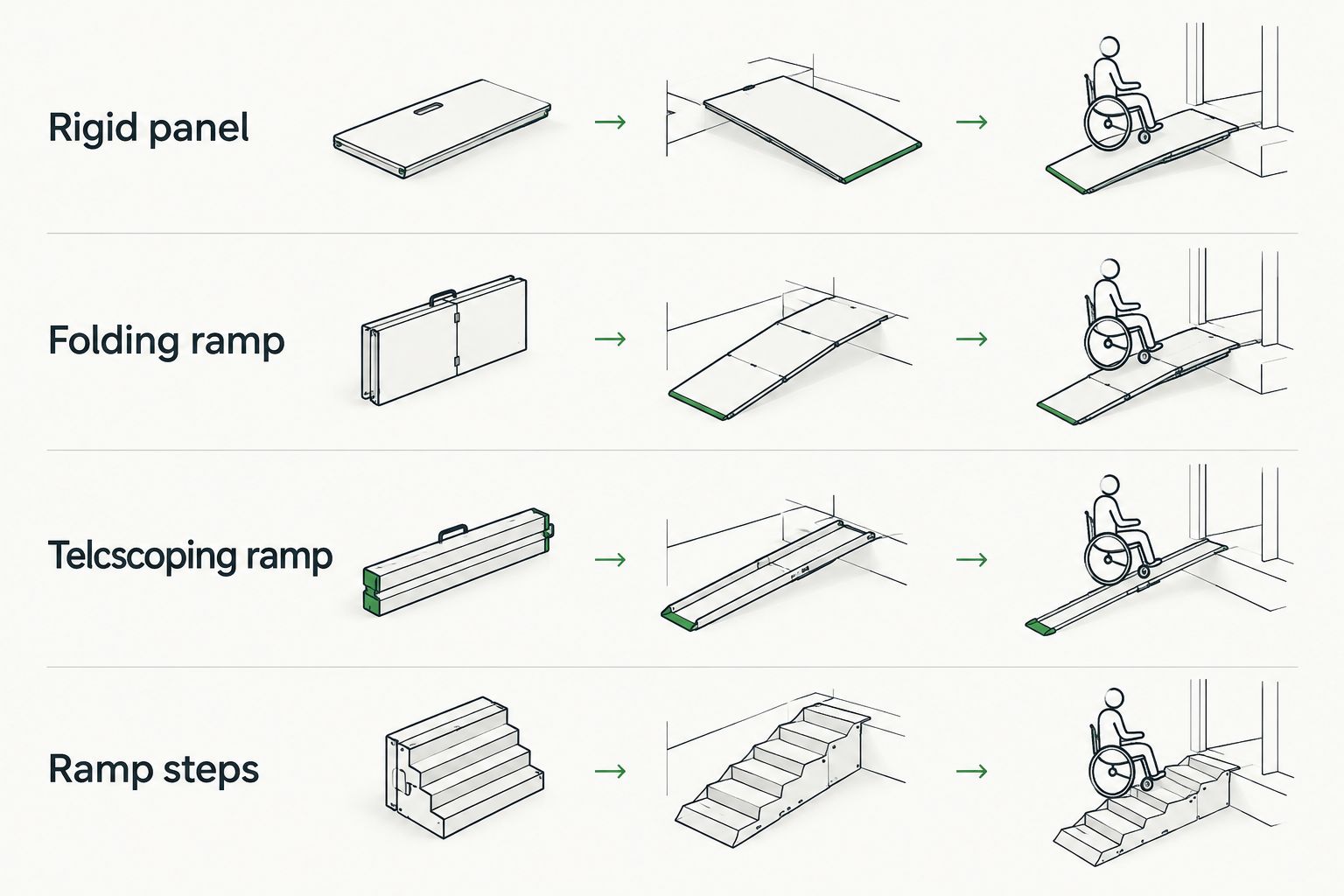
| 1 | Rigid single-panel ramp | Large and heavy dogs | No joints to flex or fail | Bulky, hard to store |
| 2 | Folding (bi-fold) ramp | Most dogs, most cars | Folds in half, carries like a case | One center hinge to inspect |
| 3 | Telescoping ramp | Small to mid-size dogs, tight trunks | Collapses to a short length | Extending sections add flex |
| 4 | Ramp-style steps or short stairs | Beds and sofas, not vehicles | Stable on indoor furniture | Short run, steep for tall surfaces |
1. Rigid single-panel ramp: best for large and heavy dogs
A rigid single-panel ramp is one solid surface from top to bottom. It has no hinge and no sliding section, so the only thing limiting load is the panel and its surface bond.
Rigid single-panel pros:
- Most stable underfoot, with no flex at the center.
- Typically the highest rated capacity in the category.
- Fewer moving parts to wear out or loosen.
Rigid single-panel cons:
- Hard to store; it needs space in a garage or cargo area.
- Heavier to lift in and out of a vehicle.
- Overkill for a dog who weighs little.
Rigid single-panel pricing: check the current price on the retailer's page; it varies widely by length and material.
Best for: big dogs and anyone who loads a truck or SUV daily. Verdict: Buy if your dog is heavy and you have the storage.
2. Folding ramp: best for most households
A folding ramp splits in the middle and closes like a book, usually with a carry handle. It is the compromise most owners should choose: long enough for a gentle slope, short enough when folded to fit a hatchback.
Folding ramp pros:
- Carries and stores easily.
- Long run gives a gentler slope than telescoping models of the same stored size.
- Many models offer a good rated capacity for medium and large dogs.
Folding ramp cons:
- The center hinge is the wear point. Inspect it before every trip.
- Latch quality varies by model.
- Rated capacity usually trails a comparable rigid panel.
Folding ramp pricing: check the current price; it depends on length and capacity rating.
Best for: families with one or two medium-to-large dogs and a normal car. Verdict: Buy. This is the default pick for 2026.
3. Telescoping ramp: best for small dogs and tight trunks
A telescoping ramp slides out from nested rails and collapses to a fraction of its length. It wins on storage and loses on rigidity. The more joints it has, the more it flexes under a heavy dog.
Telescoping ramp pros:
- Smallest stored size of any ramp type.
- Light enough to lift with one hand.
- Well suited to short dogs and light senior dogs.
Telescoping ramp cons:
- Extending sections add flex, which makes some dogs nervous.
- Lower typical capacity than rigid or folding ramps.
- Locking mechanisms can loosen over time.
Telescoping ramp pricing: check the current price; it varies by brand and length.
Best for: small to mid-size dogs, compact cars, anyone who stores the ramp in a closet. Verdict: Hold for dogs near the top of the rated limit; Buy for light dogs.
4. Ramp-style steps: best for beds and sofas
Short ramps and stairs for furniture solve a different problem. They protect joints on repeated daily jumps and carry modest loads at low height. They are not a substitute for a vehicle ramp.
Ramp-style steps pros:
- Stable on soft indoor surfaces.
- Easy to place beside a bed or couch.
- Good for dogs recovering from injury who still need access to the furniture.
Ramp-style steps cons:
- Too short and steep for a car or truck.
- Many hold less weight than a full vehicle ramp.
Best for: senior dogs and short-legged breeds at home. Verdict: Skip for vehicle loading; Buy for indoor joint protection.
How these types were ranked
Types are ordered by how much load their construction tends to carry, using the five criteria above. Rated capacity is the tiebreaker inside any type. The ranking describes category tendencies, not individual models, so the number on the product listing always overrides the order in this table.
How to check weight capacity before you buy
Three checks take two minutes and prevent most ramp failures.
- Read the rated limit. Find the manufacturer's stated capacity on the product page or box. If a listing does not state one, skip it.
- Weigh your dog today. Use a current weight, not the adoption-paperwork number. Add margin if your dog is still growing or tends to bolt onto the ramp.
- Match the surface to the dog. A strong ramp with a slick surface still fails a dog that slips.
What to pair with a ramp in 2026
A ramp solves entry, not safety. In the vehicle, a secured dog matters as much as an easy climb. Pair your ramp with a tested restraint, and protect the cargo area from mud if your dog hikes.
For older dogs, traction on the floor before the ramp counts as much as the ramp itself. Slippery garage concrete defeats a good ramp.
When your dog tires on the trail, a ramp is also the easiest way to get a heavy dog back into the vehicle without lifting. That is the real daily use case for a rigid or folding ramp in 2026.
Which dog ramp for dogs should you choose?
- Dog over medium size, truck or tall SUV: rigid single-panel ramp. Buy.
- Typical household, one or two dogs, standard car: folding ramp with a capacity well above your dog's weight. Buy.
- Small or light dog, small trunk: telescoping ramp. Buy.
- Bed or sofa access only: ramp-style steps. Buy for indoor use, skip for vehicles.
Undecided? Choose the folding ramp. It is the most forgiving choice for the widest range of dogs in 2026.
FAQ
What is the best dog ramp for dogs in 2026?
A folding ramp is the best fit for most households in 2026. Choose a rigid single-panel ramp for large, heavy dogs and a telescoping ramp for small, light dogs.
How do I choose a dog ramp by weight capacity?
Find the manufacturer's rated limit and choose a ramp rated clearly above your dog's current weight. Leave extra margin for dogs that jump onto the ramp.
Is a telescoping or folding ramp better?
Folding ramps are generally steadier and suit heavier dogs. Telescoping ramps store smaller and suit lighter dogs.
Are rigid dog ramps safer for large dogs?
Rigid single-panel ramps have no joints that flex, so they are the steadiest choice for large dogs. Check the rated capacity on the specific model.
What is the best dog ramp for senior dogs?
A long, wide ramp with a grippy surface and a gentle slope. Length matters more than capacity for senior dogs, since a steep slope strains stiff joints.
Can a dog ramp replace lifting my dog into the car?
Yes, for most dogs. It also protects your back and your dog's joints, provided the dog is trained to walk the ramp calmly.
One last thing
Train on the ramp before you need it. Lay it flat on the floor, reward your dog for stepping on, then raise one end an inch at a time. A dog who trusts the ramp at home crosses it calmly at the trailhead, and no capacity rating can substitute for that.