


Best overall: a dog sleeping bag paired with an insulated mat. Best for minimalist trips: a closed-cell foam mat. Best reuse option: a suitable sleeping pad you already own. This 2026 guide compares sleeping bags, camp mats, and travel beds by how your dog sleeps and how you carry camp.
- Choose a dog sleeping bag plus an insulated camp mat for dogs that accept overnight coverage.
- Choose closed-cell foam for a simple sleeping surface without an inflatable chamber.
- The K9outdoors Travel Dog Bed is a foldable camping option; confirm packed dimensions before backpacking.
- A sleeping bag adds coverage, but it does not replace insulation beneath your dog.
Why this matters
Your dog needs a sleeping surface that fits inside your shelter and stays underneath them. Warmth above and insulation below solve different problems; choose both deliberately.
What makes the best dog sleeping bag and camp mat?
- Sleeping fit: Room for your dog's normal resting position.
- Ground insulation: A barrier against heat loss into cold ground.
- Packed burden: Weight and bulk that fit your actual pack.
- Moisture management: Bedding you can keep dry.
- Dog acceptance: A surface and covering your dog willingly uses.
Dog sleeping bags and camp mats at a glance
| Option | Best for | Standout feature | Key limitation |
|---|---|---|---|
| Sleeping bag plus insulated mat | Dogs that sleep under covers | Coverage above, insulation below | More components to carry |
| Closed-cell foam mat | Simple backpacking setups | No inflatable chamber | Bulky outside a pack |
| Travel Dog Bed | Car-to-camp trips | Foldable, packable travel format | Confirm weight and packed size |
| Open quilt plus insulated mat | Dogs that reject enclosed bags | Adjustable coverage | Quilt can shift away |
Choose the sleep system your dog will stay on, not the one that looks warmest in a photograph. A dog sleeping beside the bedding gets little benefit from its insulation.
1. Sleeping bag plus mat: best for dogs that sleep under covers
A dog sleeping bag covers your dog's body while a separate insulated mat sits underneath. This combination separates two jobs: limiting heat loss above your dog and reducing heat loss into the ground.
Start here if your dog already seeks blankets at home. An enclosed design is a poor default for a dog that immediately backs out of anything covering their body.
Sleeping bag plus mat pros:
- Provides both upper coverage and a dedicated ground layer.
- Lets you replace or adjust either component separately.
- Gives blanket-loving dogs a familiar sleeping arrangement.
Sleeping bag plus mat cons:
- Adds separate items to your packing routine.
- Requires a fit check with the dog inside the bag.
- Loses its advantage if your dog repeatedly leaves it.
Best for: Dogs that settle under blankets and stay on their sleeping pad.
Before choosing a bag for a 2026 trip, inspect how the opening works. Your dog should be able to enter, turn, and leave without becoming trapped in fabric or closures. Keep the face uncovered, and never close a bag in a way that restricts movement or breathing.
Do not treat a human sleeping bag's temperature rating as a safe temperature for your dog. Body size, coat, age, health, wind, and moisture all affect cold tolerance. Ask your veterinarian about cold-weather travel when your dog has a health condition or limited mobility.
Verdict: Buy this format if your dog accepts coverage; otherwise choose an open system.
2. Closed-cell foam mat: best for a simple backpacking setup
A closed-cell foam mat creates an insulating layer without an air chamber that needs inflation. It is a straightforward ground layer for dogs that shift position or dislike enclosed bedding.
Choose a mat that supports your dog's resting body, not just their paws. Foam mats differ in thickness, insulation, and packed shape, so compare the actual specifications rather than assuming every camping mat performs alike.
Closed-cell foam mat pros:
- Does not depend on an inflatable chamber staying airtight.
- Provides an open surface for dogs that dislike covers.
- Works as a designated resting spot during camp breaks.
Closed-cell foam mat cons:
- Takes up space even when folded or rolled.
- Provides no coverage above your dog.
- Can be chewed or torn; it is not chew-proof bedding.
Best for: Backpackers prioritizing a simple ground layer and dogs that prefer sleeping uncovered.
An existing foam sleeping pad is a sensible reuse option if its condition, size, and insulation suit the trip. Do not cut a pad before checking whether your dog sleeps curled, stretched, or repeatedly changes position. A compact rectangle is not useful if your dog's hips end up on the tent floor.
For your 2026 packing list, distinguish bulk from weight. A mat that feels light in your hand can still interfere with access to your pack or catch vegetation when strapped outside.
Verdict: Buy for simplicity; add appropriate coverage when your dog needs it.
3. Travel Dog Bed: best for car-to-camp sleeping
The Travel Dog Bed from K9outdoors is identified as foldable and packable for travel, road trips, and camping. That makes it a relevant option when you want a travel-bed format rather than an enclosed dog sleeping bag.
For K9outdoors dog camping gear, the Travel Dog Bed is the option to assess for car-to-camp sleeping. Foldable does not automatically mean suitable for a backpacking load. Check its current dimensions, weight, materials, and care instructions before choosing it for a walk-in campsite.
Travel Dog Bed pros:
- Uses a foldable format intended for travel.
- Includes camping among its stated uses.
- Offers a bed option for trips that also include road travel.
Travel Dog Bed cons:
- The travel-bed format is not an enclosed sleeping bag.
- Backpacking suitability depends on its actual packed burden.
- Do not assume a cold-weather rating or waterproof construction.
Best for: Campers comparing a foldable bed for road trips and campsites reached from a vehicle.
Make the choice around your route. A bed carried from a parked car to a tent faces a different packing test from bedding carried all day with food, water, and shelter.
If you are comparing K9outdoors dog camping gear for a 2026 backpacking trip, check the bed against your loaded pack before making it your overnight plan. A product's intended camping use does not establish insulation for a particular forecast.
Verdict: Hold for backpacking until you confirm fit, packed size, and weight.
4. Open quilt plus mat: best for dogs that reject enclosed bags
An open quilt or suitable blanket provides adjustable coverage over an insulated mat. Your dog can stretch out without entering a bag, and you can move the covering as conditions change.
This arrangement suits a dog that accepts a blanket but dislikes an enclosed opening. It also puts more responsibility on you to notice when the covering slips away.
Open quilt plus mat pros:
- Leaves room for different sleeping positions.
- Allows you to adjust coverage without moving the mat.
- Avoids requiring your dog to enter an enclosed bag.
Open quilt plus mat cons:
- Slides away when a dog turns or stands up.
- Leaves openings where warm air escapes.
- Still needs a separate ground-insulation layer.
Best for: Dogs that enjoy loose blankets but refuse sleeping bags.
Choose coverage that does not trail into wet tent edges or obstruct your dog's face. Do not fasten a loose blanket around your dog with improvised cords or straps. An easy exit matters more than keeping every edge tucked in.
Verdict: Buy for coverage-averse dogs that accept loose blankets; skip if they discard every covering.
Match the bedding to your dog's sleeping style
Watch your dog sleep at home before choosing equipment. A curled sleeper, a sprawler, and a blanket burrower need different layouts even when they weigh the same.
- Curled sleeper: Check the full resting footprint, including hips and shoulders.
- Sprawled sleeper: Prioritize usable mat length and width.
- Blanket burrower: Introduce a sleeping bag without restricting the exit.
- Frequent mover: Prioritize a ground layer that stays beneath changing positions.
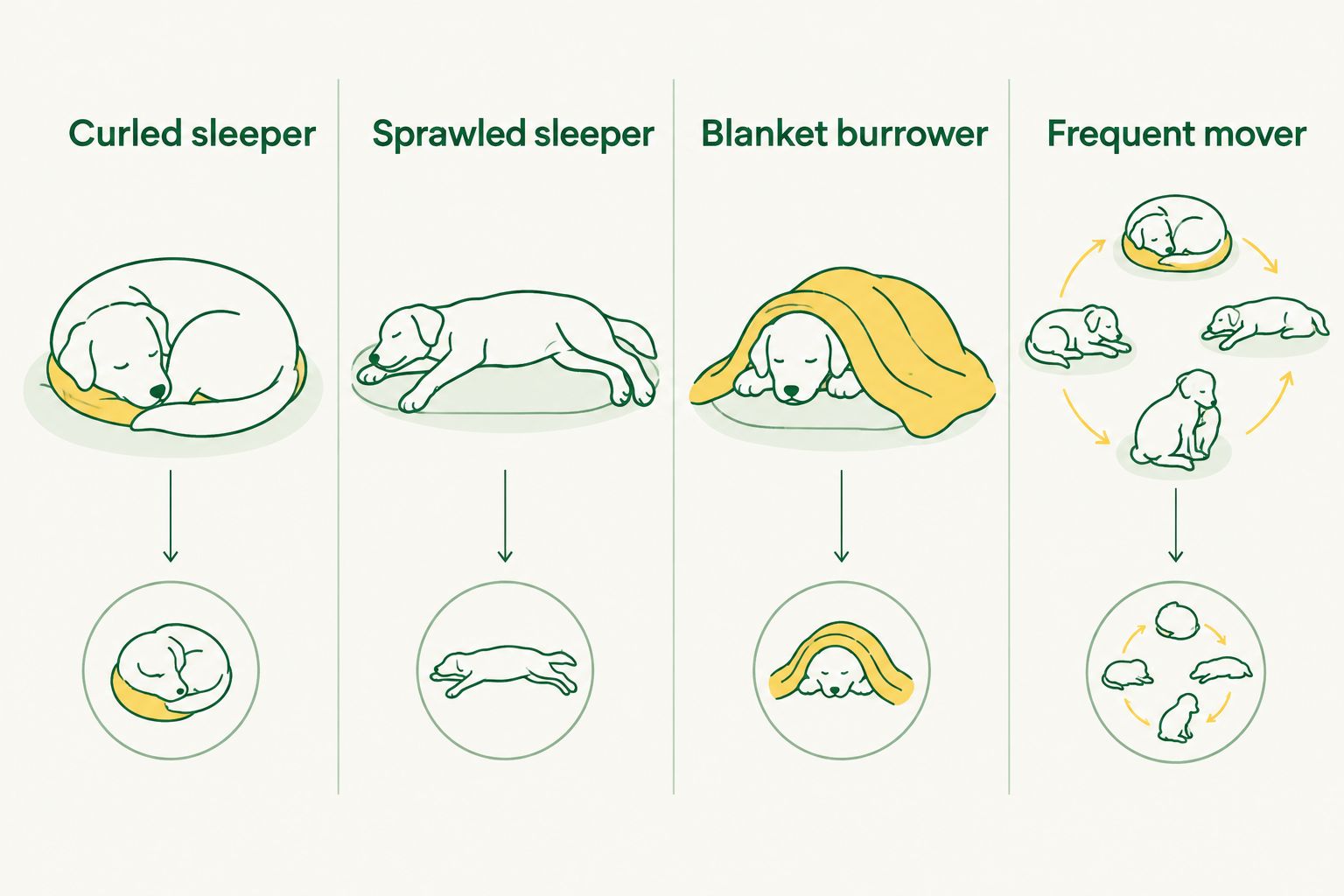
Record 2 measurements: resting length and resting width. Use the space your dog occupies while relaxed, then compare that footprint with the product's usable sleeping area. Exterior dimensions can include borders or other space that does not function as sleeping room.
Check the tent layout too. Keep your dog's bed away from the stove and cooking equipment, and leave an unobstructed route to the door. Do not plan on your dog sleeping against wet tent fabric.
Run a home test before the trail
Make your first overnight with new bedding a rehearsal, not a remote commitment. The goal is to learn whether your dog uses the arrangement without repeated help.
- Introduce the surface. Put the mat in a familiar resting area and reward voluntary settling.
- Add the covering. Introduce the bag or quilt with the opening loose and the face clear.
- Use your shelter. Arrange bedding inside the pitched tent and check space around your own sleep system.
- Rehearse overnight. Run a 1-night home or backyard trial under safe, suitable conditions.
- Inspect afterward. Look for shifting, damp bedding, claw damage, and signs your dog avoided the setup.
Keep notes for your 2026 trips: where your dog actually slept, whether the covering stayed in place, and what became damp. Those observations are more useful than assuming a comfortable living-room nap proves readiness for a cold campsite.
If your dog cannot settle in the tent at home, work on that before adding trail fatigue and unfamiliar sounds. Bedding is only part of overnight preparation.
Keep the sleeping system dry and usable
Pack bedding inside 1 dedicated dry bag or another suitable waterproof pack liner. Separate wet cleanup gear from the sleeping layer, and protect exposed foam from damage when carrying it outside your pack.
At camp, check your dog's coat and paws before settling them on the bed. Dry wet fur with an appropriate towel rather than relying on the sleeping bag to absorb moisture. Follow the bedding manufacturer's cleaning and drying instructions after the trip.
Cold ground, wet fabric, and wind are separate problems. A rain-resistant surface does not establish ground insulation, and a thick-looking cushion does not establish a temperature limit.
If your dog is shivering or cannot get comfortable, respond to the dog rather than trusting the gear label. Move to a warmer, dry setting and seek veterinary help for concerning or persistent symptoms.
How the options are ranked
This ranking prioritizes sleeping fit, ground insulation, packed burden, moisture management, and dog acceptance. The sleeping bag-and-mat combination leads for dogs that tolerate covers because it addresses coverage and ground contact separately.
Closed-cell foam leads on simplicity, while the travel bed serves a different car-to-camp use case. These are format recommendations, not claims of laboratory testing or verified temperature performance.
Which dog sleeping system should you choose?
Start with an insulated mat that fits your dog's resting footprint. Add a dog sleeping bag if your dog reliably sleeps under coverage; choose an open quilt if an enclosed opening prevents settling.
For car-to-camp trips, assess the foldable Travel Dog Bed against your space and comfort needs. For backpacking, make every component earn its place by checking packed burden and rehearsing the full setup before departure.
FAQ
What's the best dog sleeping bag setup for backpacking?
A dog sleeping bag paired with an appropriately insulated mat is the best starting setup for dogs that accept coverage. The bag covers the body while the mat reduces heat loss into the ground. Confirm fit and rehearse before taking the setup into the backcountry.
Does my dog need a sleeping bag when camping?
Not every dog needs an enclosed sleeping bag. Choose bedding around your dog's cold tolerance, health, sleeping habits, and expected conditions. An insulated mat remains important when the ground is cold.
Is a dog sleeping bag better than a camp mat?
A dog sleeping bag and a camp mat perform different jobs. A sleeping bag provides coverage, while an insulated mat addresses ground contact. For a dog that needs both, choose a system rather than treating the items as substitutes.
Can I use my own foam sleeping pad for my dog?
Yes, a suitable foam sleeping pad can serve as your dog's ground layer. Check its condition, insulation, and usable size against your dog's resting footprint. Supervise dogs that chew bedding.
Is the K9outdoors Travel Dog Bed suitable for backpacking?
Check the Travel Dog Bed's current weight and packed dimensions before choosing it for backpacking. Its stated uses include travel, road trips, and camping, but those uses do not establish suitability for your pack or overnight forecast.
How do I size a dog sleeping bag?
Measure your dog's resting footprint and follow the sleeping bag manufacturer's sizing instructions. Check that your dog can turn, stretch as needed, and exit freely. Keep the face uncovered.
What temperature is too cold for a dog sleeping bag?
There is no single safe cutoff that applies to every dog and sleeping bag. Coat, size, age, health, moisture, wind, and ground insulation affect cold tolerance. Ask your veterinarian about your dog's needs before planning cold-weather overnights.
One last thing
Practice packing the bedding after the overnight rehearsal, not just before it. Used bedding can be awkward to separate from damp gear, and discovering that problem at home gives you time to change the system.
Your final test is simple: your dog settles, the bedding stays usable, and everything fits back into your pack.