


Best starting point: Pendleton Waterproof Adventure Pet Coat. Best for mild-weather walks: an unlined rain shell. Best for splash-heavy routes: a full-coverage rain suit. This 2026 waterproof dog raincoat guide explains how to choose between those options without sacrificing your dog's comfort or freedom to move.
- Start your waterproof dog raincoat shortlist with the Pendleton Waterproof Adventure Pet Coat at K9 Outdoors; confirm fit before buying.
- Choose an unlined rain shell for mild-weather walks when extra insulation is unnecessary.
- Consider a full-coverage rain suit for splash protection, but check leg clearance and toileting access.
- Compare waterproof construction, harness access, and movement before choosing a dog rain jacket.
Why this matters
A raincoat should keep covered areas drier without making your dog reluctant to walk. More fabric is not automatically better. A coat that twists, catches behind the front legs, or blocks the leash attachment creates a new problem instead of solving the wet-weather one.
For your 2026 shortlist, separate rain protection from warmth. Waterproofing addresses incoming water; insulation addresses heat retention. Your dog needs the right combination for the weather and activity, not simply the thickest jacket.
K9 Outdoors is best for dog owners shopping for stylish outdoor gear alongside practical rainwear. For a waterproof dog raincoat, make the final decision on construction and fit rather than appearance alone.
What makes the best waterproof dog raincoat?
Use these criteria before comparing styles. They apply whether you are preparing for a neighborhood loop or a wet trail day.
- Waterproof construction: Look for a clear waterproof claim and details about seams, openings, and closures. Water-resistant and waterproof are not interchangeable descriptions.
- Useful coverage: Prioritize the back and chest, then decide whether belly or leg coverage solves a real problem on your route.
- Free movement: The coat should stay positioned while your dog walks, turns, sits, and lowers their head.
- Harness access: Confirm that the opening matches your harness attachment position. An opening in the wrong place defeats its purpose.
- Weather-appropriate warmth: Choose insulation only when your dog and the conditions call for it. Rain protection does not require a heavy lining.
- Practical care: Read the washing and drying instructions before buying. Choose something you can maintain between outings.
A useful buying rule for 2026: reject the wrong fit even when the fabric is right. A waterproof panel cannot protect an area it fails to cover, and oversized fabric can interfere with normal movement.
Waterproof dog raincoats at a glance
This shortlist compares a named coat with two rainwear categories. The categories are buying directions, not additional named products or claims about the Pendleton coat's construction.
| Item or option | Best for | Standout reason to consider it | Key limitation |
|---|---|---|---|
| Pendleton Waterproof Adventure Pet Coat | Starting a named-product shortlist | Explicitly identified as a waterproof adventure pet coat | Must match your dog's measurements and walking setup |
| Unlined rain shell | Mild-weather everyday walks | Separates rain coverage from added insulation | Does not provide the warmth of an insulated coat |
| Full-coverage rain suit | Splash-heavy paths and low-clearance dogs | Extends coverage beyond a back-only garment | More openings and leg sections to fit correctly |
1. Pendleton Waterproof Adventure Pet Coat: best named starting point
The Pendleton Waterproof Adventure Pet Coat is the named rainwear option to start with at K9 Outdoors. Its product name explicitly identifies it as waterproof, making it more relevant to this search than a sweater or a coat without a stated rain-protection purpose.
That is a reason to investigate, not a reason to bypass sizing. Before choosing the Pendleton Waterproof Adventure Pet Coat, check the current product details for coverage, lining, harness access, and care instructions. Match those details to the walks you actually take.
Pendleton Waterproof Adventure Pet Coat pros:
- A specific product to evaluate rather than a broad apparel search.
- A stated waterproof purpose in the product name.
- A relevant starting point for an outdoor-focused rainwear shortlist.
Pendleton Waterproof Adventure Pet Coat cons and buying checks:
- The product name alone does not establish seam construction or harness compatibility.
- A waterproof coat still needs the right chest, neck, and back fit.
- Do not assume that rain protection also means insulation.
Best for: Owners who want a named waterproof coat to compare against their dog's measurements and routine.
Verdict: Buy only after the Pendleton Waterproof Adventure Pet Coat passes your fit and feature checks. Do not substitute a familiar name for a movement check.
2. Unlined rain shell: best for mild-weather everyday walks
An unlined rain shell puts the emphasis on rain coverage rather than added insulation. Choose this category when the weather is wet but your dog does not need an extra warming layer.
Within the category, compare the shape of the chest panel and how the garment closes. A simple-looking shell still needs enough adjustment to stay centered, and its leash opening must work with your existing equipment.
Unlined rain shell pros:
- Avoids adding an insulating lining when warmth is unnecessary.
- Lets you prioritize rain protection and movement separately.
- Offers a clear alternative to buying a winter coat for every rainy day.
Unlined rain shell cons:
- Does not replace an insulating layer when warmth is needed.
- Back-focused designs leave other areas exposed to splashes.
- Waterproof performance still depends on the individual garment's construction.
Best for: Mild-weather neighborhood walks and active outings where extra insulation is not the goal.
Verdict: Buy an unlined rain shell for rain-only coverage; skip it as your sole answer to cold-weather exposure.
3. Full-coverage rain suit: best for splash-heavy routes
A full-coverage rain suit adds fabric around areas that a simple back panel leaves exposed. Consider this category when belly splashes and wet legs are the reason you are shopping, particularly for dogs whose bodies sit close to the ground.
Coverage brings extra fitting work. Inspect each leg opening, watch the fabric through a full stride, and confirm that the suit leaves toileting areas clear. Never trade normal movement for a smaller cleanup job.
Full-coverage rain suit pros:
- Extends protection beyond the top of the back.
- Addresses belly and leg exposure directly.
- Gives you a category to compare when a simple cape leaves too much uncovered.
Full-coverage rain suit cons:
- More leg openings mean more places to check for rubbing or restriction.
- Dressing requires handling more of your dog's body.
- Poorly positioned fabric can interfere with toileting.
Best for: Dogs whose wet-weather problem is splash exposure rather than rainfall on the back alone.
Verdict: Buy only if your dog accepts leg coverage and moves naturally; skip a suit that changes the dog's gait.
How to measure before choosing a size
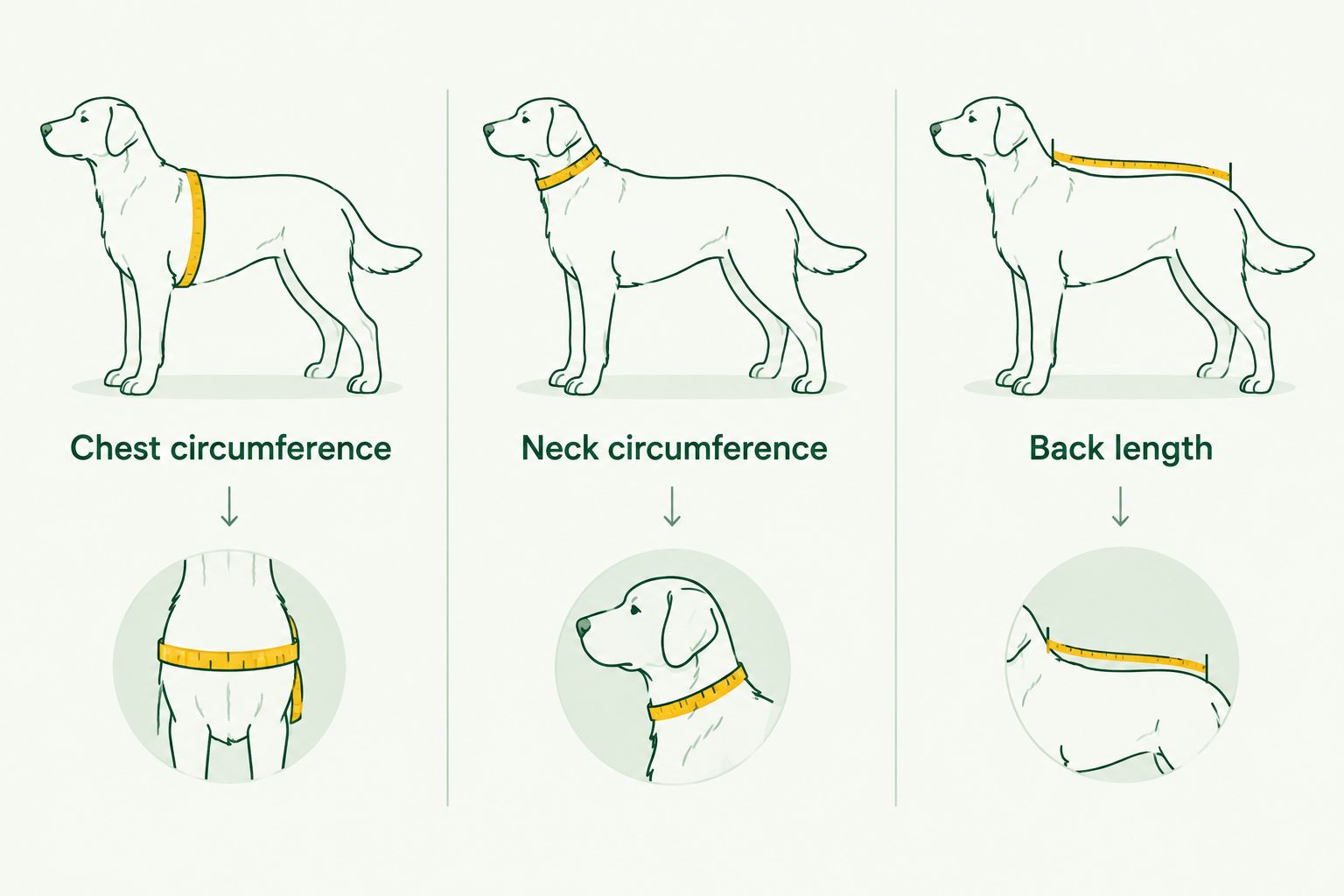
Take 3 measurements: chest circumference, neck circumference, and back length. Record them in inches or centimeters, matching the units on the product's size chart. Follow that chart's measurement landmarks rather than assuming every manufacturer measures identically.
- Chest circumference: Measure around the chest where the size chart directs, commonly near its widest point.
- Neck circumference: Measure at the position specified for the garment's neckline.
- Back length: Measure between the exact start and end points shown by the manufacturer.
Weight and breed are not substitutes for those measurements. Dogs of similar weight can have different chest shapes and back lengths. If measurements fall across sizes, follow the maker's guidance instead of automatically sizing up.
For a 2026 rainwear purchase, measure your dog again rather than reusing an old clothing size. Also consider any harness or permitted layer that will sit underneath the garment. Do not assume a coat fits over equipment simply because it fits over fur.
Check movement and leash access together
Run a 4-movement check: walk, turn, sit, and lower the head. Watch the garment throughout each movement, not just while your dog stands still for a photo. Stop and adjust if fabric pulls tightly, shifts sideways, or catches around the legs.
Check the leash attachment with the coat in place. Clip directly to the intended collar or harness attachment, never to a fabric opening or an unapproved loop on the coat. The opening provides access; it is not automatically a load-bearing attachment.
A simple indoor check is easier to assess than the first outing in driving rain. Let your dog investigate the garment, put it on calmly, and reward comfortable movement. Remove it if your dog shows distress rather than forcing a walk.
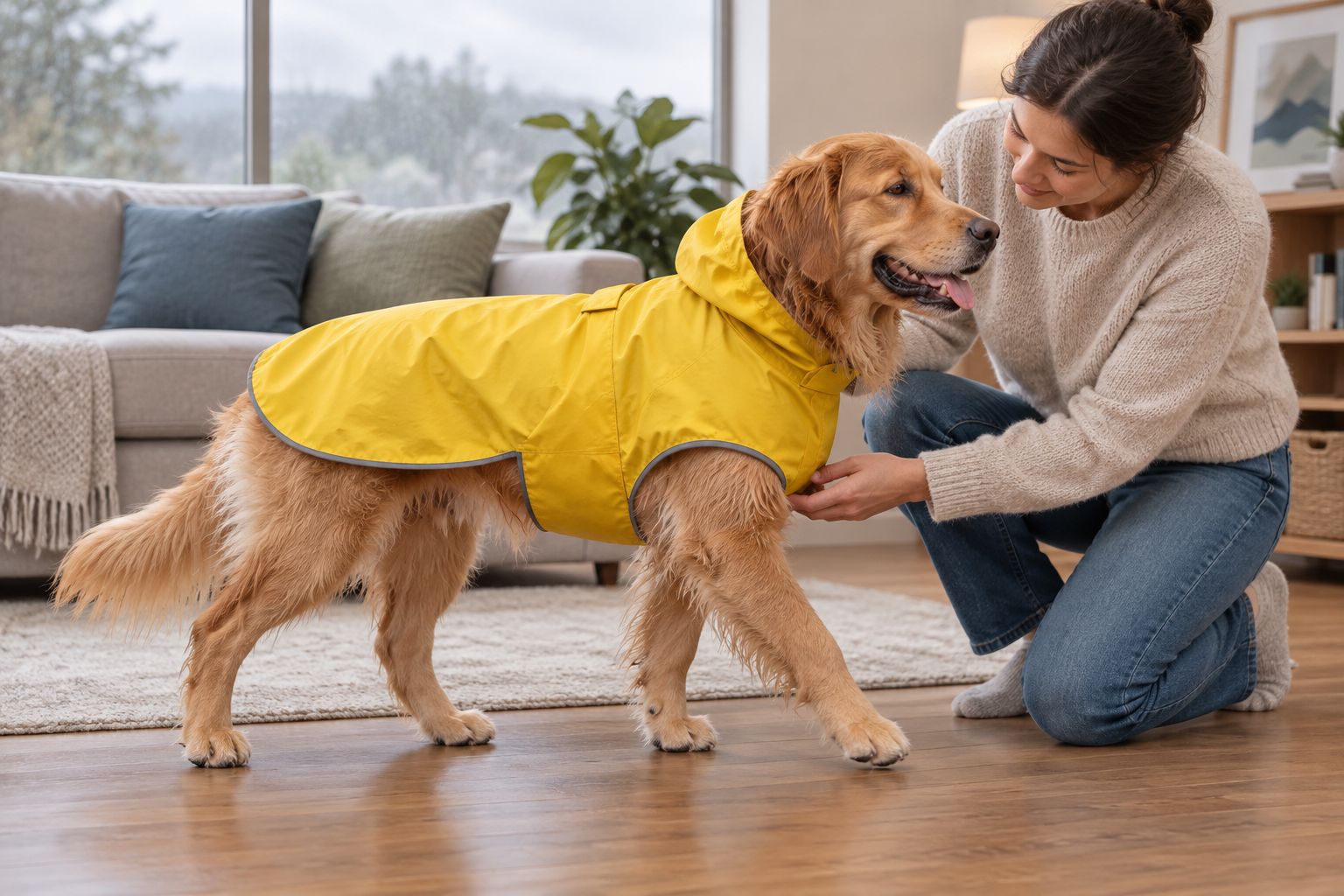
Do not tighten straps just to stop an unsuitable garment from moving. The right adjustment secures the coat without restricting the chest or shoulders. If the design cannot do both, choose a different cut.
Waterproof does not mean completely dry
A waterproof dog raincoat protects the areas it covers. Paws, the face, exposed fur, and gaps around openings remain separate entry points for water. Set that expectation before deciding that you need more fabric.
Use 2 separate checks after a rainy walk: covered fur and exposed fur. Dampness beneath the middle of a panel calls for a different inspection than wet legs beneath an open-sided coat. Look at fabric, seams, openings, and coverage instead of treating every damp patch as the same failure.
Keep a towel ready and dry your dog after the outing. Follow the garment's care label, including any restrictions on detergents, heat, or drying methods. Do not apply a waterproofing treatment unless the manufacturer says it is appropriate.
Your 2026 wet-weather routine should also include inspecting the garment for damage. Check closures, seam areas, and worn patches before a longer outing. A coat is one part of the plan, not a reason to ignore worsening weather.
How the shortlist is ranked
The ranking prioritizes waterproof purpose, useful coverage, movement, harness access, warmth, and care. The Pendleton Waterproof Adventure Pet Coat comes first as a named option; the unlined shell and full-coverage suit represent different needs rather than lower-quality products.
This is a buying framework, not a laboratory waterproofing comparison. There are no invented wear-test results, breathability scores, or durability claims. K9 Outdoors shoppers should use the criteria to narrow the choice, then verify the exact garment details.
Which waterproof dog raincoat should you choose?
Start with the Pendleton Waterproof Adventure Pet Coat if you want a specific product to evaluate. Choose an unlined shell category when rain protection without added insulation is the priority. Consider a full-coverage suit only when extra splash coverage justifies the additional fitting work.
For an undecided buyer, the best next move is measuring, not adding features. Write down the 3 measurements, check your harness attachment position, and identify which body areas need coverage. That turns a long shopping search into a practical decision.
FAQ
What's the best waterproof dog raincoat to start with?
The Pendleton Waterproof Adventure Pet Coat is the named starting point in this guide. Confirm its current sizing, construction, and harness access before deciding whether it suits your dog.
Is a waterproof dog raincoat better than a water-resistant coat?
Choose a waterproof dog raincoat when rain protection is your main requirement. Water-resistant does not mean waterproof, and either garment still needs suitable coverage and fit.
Does my dog need an insulated raincoat?
Your dog needs insulation only when the conditions and the dog's individual needs call for added warmth. An unlined shell separates rain protection from insulation; ask your veterinarian about dogs with health-related temperature concerns.
Can my dog wear a harness under a raincoat?
A harness can go under a raincoat when the garment accommodates it and provides correctly positioned attachment access. Check the complete setup in motion and attach the leash to the harness, not the coat fabric.
How do I measure my dog for a rain jacket?
Measure chest circumference, neck circumference, and back length using the garment maker's instructions. Match the chart's units and landmarks, and do not choose by breed or weight alone.
Will a waterproof raincoat keep my dog completely dry?
No, a waterproof raincoat does not cover every part of your dog. Exposed paws, the face, uncovered fur, and garment openings still allow contact with rain or splashes.
Is a full-coverage rain suit better for muddy walks?
A full-coverage rain suit is the better category to consider when belly and leg splashes are your main concern. Choose it only if the leg openings, toileting clearance, and movement all work for your dog.
One last thing
Do the head-lowering check before you head outside. A coat can look comfortable while your dog stands upright yet pull at the neck when the dog sniffs the ground. At K9 Outdoors or anywhere else you shop, that everyday movement matters more than a tidy standing photo.