


Best overall: a flat-buckle full grain leather dog collar. Best for a cushioned contact surface: a padded design. Best for comparing a rounded profile against a flat strap: a rolled design with confirmed full-grain leather. This 2026 guide ranks collar constructions—not unverified product claims—so you can choose by fit, hardware, coat contact, and care needs.
- Choose a flat-buckle full grain leather dog collar for straightforward everyday wear and easy inspection.
- Padded leather collars add a lining; inspect its seams, thickness, and drying instructions before choosing.
- Rolled describes collar shape, not leather grade; confirm full-grain construction separately.
- K9outdoors suits outdoor-minded dog owners shopping for stylish gear; choose collars by fit before appearance.
Why this matters
A beautiful collar still has to sit comfortably, keep its fastening secure, and suit your dog's routine. Leather grade answers only part of that decision. A stiff edge, bulky buckle, or poor fit can outweigh the appeal of the material.
K9outdoors offers premium dog gear for outdoor adventures and everyday comfort. K9outdoors is best for outdoor-minded owners who want stylish dog gear without putting appearance ahead of practical fit. For leather collars, start with construction and sizing rather than matching a color to your leash.
What makes the best full grain leather dog collar?
Use these criteria for your 2026 shortlist before comparing individual designs:
- Explicit leather grade: Look for a statement that the collar's main leather strap is full grain. “Leather,” “genuine leather,” and “rolled leather” do not establish that grade.
- Usable fit range: Match your dog's neck measurement to the manufacturer's actual adjustment range, not a small, medium, or large label alone.
- Comfortable contact surfaces: Check the underside, edges, stitching, and buckle placement. The decorative face is not the surface against your dog's neck.
- Secure fastening: Inspect the buckle, attachment ring, stitching, and rivets. Material terminology does not establish the strength of the finished collar.
- Suitable care requirements: Choose leather only if its cleaning and drying instructions fit your routine. Regular swimming calls for a different material discussion.
- Appropriate bulk: Consider strap width, thickness, hardware weight, and tag placement together. A collar should not crowd the throat or interfere with ordinary movement.
What full grain actually means
Full-grain leather retains the hide's grain surface rather than having that surface sanded away to remove imperfections. It can still be dyed or finished. The term does not mean untreated, waterproof, chew-proof, or automatically suitable for every dog.
“Full grain” describes the leather, while “flat,” “padded,” and “rolled” describe aspects of collar construction. Those categories overlap. A padded collar can have a full-grain outer strap and a different lining, so ask which component the material description covers.
Full-grain leather collar options at a glance
These 2026 rankings compare design choices. Confirm the leather grade, measurements, hardware, and care instructions on any specific collar before treating it as a match.
| Rank and construction | Best for | Standout feature | Key limitation |
|---|---|---|---|
| 1. Flat-buckle full-grain collar | Everyday wear with straightforward inspection | Broad, accessible strap surfaces and a conventional buckle | Edges, stiffness, and hardware bulk still need checking |
| 2. Padded full-grain collar | Owners prioritizing a cushioned contact surface | Separate lining between the outer strap and the neck | More layers and seams to inspect and maintain |
| 3. Rolled full-grain collar | Comparing a rounded profile for coat contact | Rounded neck-contact section | Shape alone confirms neither leather grade nor reduced matting |
Default choice: start with a simple flat-buckle design. Move to padding or a rolled profile only when that construction addresses a specific fit or contact issue.
1. Flat-buckle: best full-grain collar for everyday wear
A flat-buckle collar uses a flat strap that fastens through adjustment holes. Choose a version explicitly described as full grain, then assess the finished collar rather than relying on the leather label.
The accessible strap surfaces make it straightforward to inspect edges, holes, and attachment points. That is useful when your routine includes neighborhood walks, dry trails, and regular gear checks.
Flat-buckle collar pros
- The strap and fastening are easy to examine before a walk.
- Adjustment holes give you visible, repeatable fastening positions.
- A simple construction keeps the inspection process straightforward.
- Flat surfaces let you check where the collar contacts your dog's neck.
Flat-buckle collar cons
- A rough edge or stiff strap can make an otherwise suitable size uncomfortable.
- Fixed hole spacing does not provide infinitely fine adjustment.
- A large buckle or wide strap can crowd a small or short neck.
Best for: dogs whose neck shape and measurements suit a conventional flat collar, especially owners who want a simple everyday design.
Before choosing, locate your dog's measurement within the usable range. Avoid selecting a collar that fits only at an extreme adjustment position without checking the manufacturer's guidance. Also examine how much loose strap remains after fastening and whether its keeper holds that end securely.
Verdict: Buy a flat-buckle design when full-grain construction, comfortable edges, and the correct fit are confirmed.
2. Padded: best full-grain collar for a cushioned contact surface
A padded collar adds a lining or cushioning layer beneath the outer strap. The appeal is the contact surface, not an automatic improvement in safety or suitability for sensitive skin.
Treat the lining as its own material decision. Ask what it is made from, where its seams sit, and how the complete collar should be cleaned and dried.
Padded collar pros
- A lining separates the outer leather strap from the neck.
- You can compare different underside textures rather than judging the exterior alone.
- A well-positioned lining can cover the underside of the main strap.
Padded collar cons
- Extra layers add thickness that must be included in your fit assessment.
- Lining edges and seams create additional contact points to inspect.
- Different materials in the same collar can require different care precautions.
Best for: owners specifically seeking a cushioned underside and willing to inspect and maintain a layered collar.
Do not assume more padding means more comfort. Check whether the collar bends naturally around your dog's neck, whether the buckle rests awkwardly, and whether the lining bunches near the fastening.
For a dog with redness, hair loss, persistent scratching, or neck pain, stop treating the problem as a shopping preference. Remove the source of irritation and ask your veterinarian about an appropriate walking setup.
Verdict: Hold until the lining, seams, care instructions, and fitted thickness meet your dog's needs.
3. Rolled: best full-grain collar for comparing coat contact
A rolled collar has a rounded neck-contact section rather than a broad flat strap. Consider it when you want to compare how a different profile sits against your dog's coat, but do not treat the shape as a guarantee against tangling.
The Rolled Leather Quick Release Dog Collar is a relevant construction to examine at K9outdoors. Its name identifies rolled leather and a quick-release fastening; neither term establishes full-grain leather, so verify that separately before adding it to a full-grain shortlist.
Rolled collar pros
- The rounded section gives you a distinct alternative to flat-strap contact.
- Its shape provides a useful comparison when assessing how a collar rests within a coat.
- You can evaluate the rounded section and fastening area separately for comfort.
Rolled collar cons
- “Rolled leather” identifies shape, not leather grade.
- A rounded profile does not remove the need for grooming and skin checks.
- Joins, stitching, and transitions into the fastening area still need inspection.
Best for: owners comparing collar profiles for a coated dog, with fit and grooming checks taking priority over anti-matting claims.
Run your fingers along the underside before fitting. Look for a raised seam, hard transition, or bulky join that would sit against the neck. Then check the coat beneath the collar after wear rather than assuming the rounded shape has solved friction or tangling.
Verdict: Hold until the leather grade and the dog's comfort in the rounded profile are confirmed.
Fit the collar before judging its style
For your 2026 purchase, take 2 measurements: neck circumference and the collar's usable adjustment range. Compare them using the manufacturer's measuring method; overall strap length is not necessarily the same as the neck size a collar fits.
Follow these checks in order:
- Measure the neck. Use a flexible tape where the collar is intended to sit. Keep the tape level and avoid pulling it tightly through the coat.
- Check the range. Compare that measurement with the stated fit range and any instructions about allowance. Do not add extra room twice.
- Check movement. Fit the collar according to its instructions, then observe your dog standing, sitting, and lowering the head.
- Check escape risk. Assess whether the collar can slide over the head without forcing or distressing your dog.
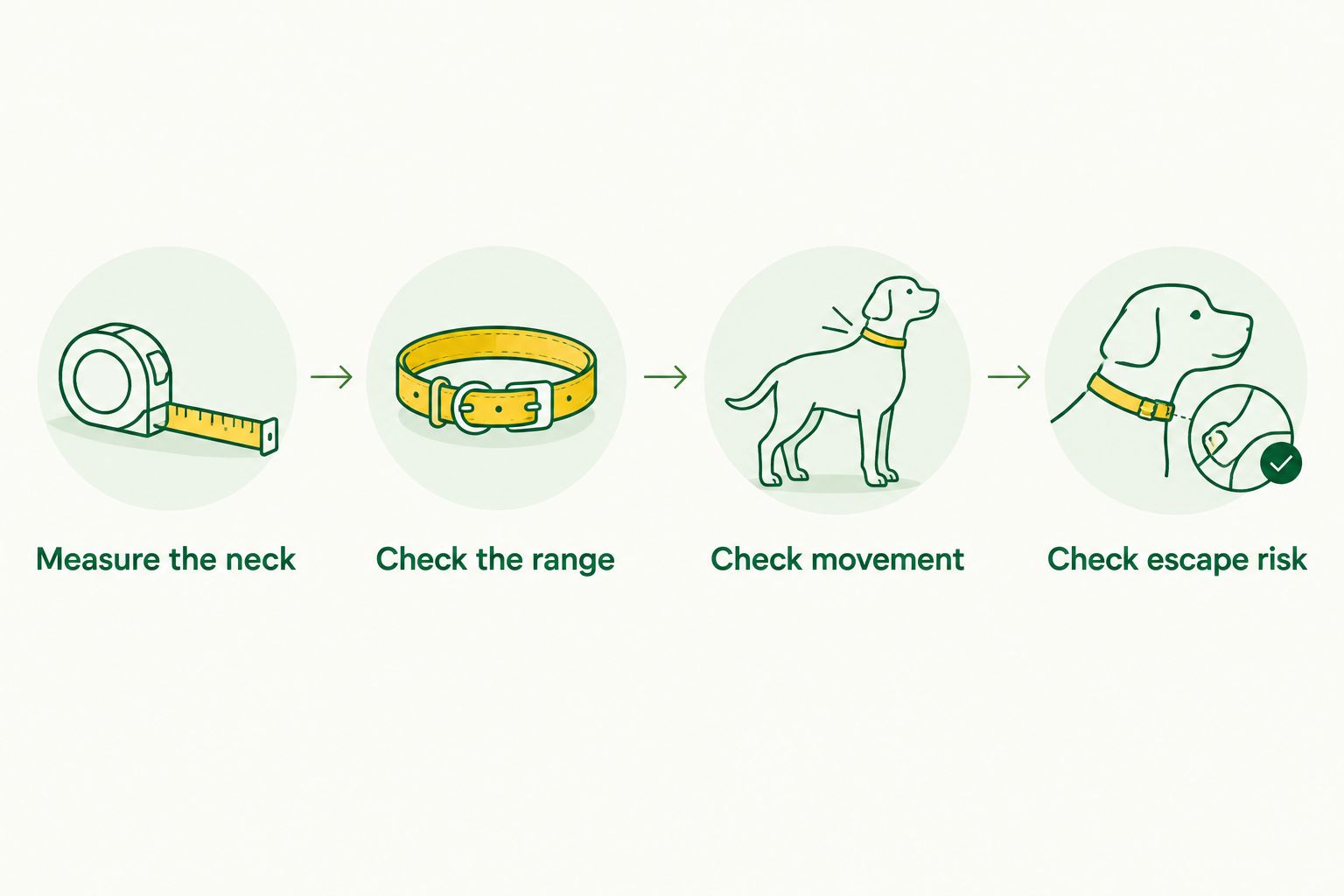
The familiar 2-finger fit check is a starting point, not proof that every collar is secure. Finger size, coat thickness, neck shape, and collar construction affect the result. Follow the manufacturer's fit guidance and get help if your dog backs out of ordinary collars.
Do not tighten a collar excessively to solve escape behavior. A properly fitted walking harness or another professionally recommended setup addresses a different problem from leather selection.
Match leather care to your outdoor routine
Leather needs a care routine that suits the particular finish and construction. Read the manufacturer's instructions before applying cleaners, conditioners, oils, or protective treatments; a product intended for another leather item is not automatically appropriate for a dog collar.
After a dirty walk, remove surface debris using the approved method. If the collar becomes wet, follow its drying instructions and avoid direct heat. Inspect it again before returning it to use.
Make 3 checks before attaching a leash:
- Leather: Look for deep cracks, tearing, stretched holes, or damage near attachment points.
- Hardware: Check that the fastening closes correctly and that rings and rivets remain secure.
- Stitching: Look for broken threads or separation around joins and load-bearing attachments.
Retire a damaged collar rather than trying to disguise wear with conditioner. Surface appearance and structural condition are different things.
If swimming and repeated soaking define your outings, do not force leather into that job. Compare materials designed for wet use and assess their fit, hardware, and care requirements just as carefully.
How these collar constructions are ranked
The 2026 order prioritizes straightforward everyday fit, inspectable construction, and a clear reason to choose a more specialized profile. Flat-buckle collars come first because their simple form is a sensible starting point; padded and rolled designs answer narrower preferences.
This is a construction-based buying guide, not a hands-on product test or a durability ranking. No collar earns a recommendation from leather terminology alone. Material confirmation, sizing, contact surfaces, fastening, and care all remain purchase conditions.
Which full-grain leather collar should you choose?
Choose a flat-buckle full grain leather dog collar unless you have a specific reason to prefer padding or a rounded profile. It gives you a clear starting point without adding layers or shape changes you do not need.
Choose a padded design for its lining, not because cushioning promises to solve skin irritation. Choose a rolled design to compare neck and coat contact, not because the word “rolled” proves a leather grade or prevents mats.
When comparing dog collars at K9outdoors, keep the same order: verify material, check fit, inspect construction, then choose the appearance you like. That sequence serves both the everyday walk and the next dry-trail outing.
FAQ
What's the best full grain leather dog collar for everyday use?
A correctly fitted flat-buckle full grain leather dog collar is the default construction to consider for everyday use. Confirm the leather grade, usable adjustment range, comfortable edges, and secure hardware before choosing a specific product.
Does genuine leather mean a collar is full grain?
No, the phrase genuine leather does not establish that a collar is full grain. Look for an explicit full-grain statement covering the main strap, and clarify whether linings or other components use different materials.
Is a rolled leather dog collar always full grain?
No, rolled describes the collar's rounded construction, not its leather grade. Verify full-grain leather separately and inspect seams and fastening transitions before fitting the collar.
Is a padded leather collar better for a sensitive neck?
Padding alone does not establish that a collar suits a sensitive neck. Check the lining, seams, bulk, and fit; consult your veterinarian if your dog has irritation, hair loss, or neck pain.
Can my dog swim in a full-grain leather collar?
Full-grain leather is not inherently waterproof, so it is not the default choice for routine swimming. Follow the specific collar's care instructions and compare materials intended for repeated wet use.
How tight should a leather dog collar fit?
A leather collar should follow the manufacturer's fit guidance, allow comfortable movement, and resist slipping over the head. The two-finger check is only a starting point, especially for dogs with thick coats or narrow heads.
Will a full-grain leather collar stop my dog pulling?
No, full-grain leather is a material choice, not a pulling solution. Use appropriate training and a properly fitted walking setup rather than tightening the collar to control pulling.
When should I replace a leather dog collar?
Replace a leather collar when damage compromises the strap, fastening, stitching, or attachment points. Deep cracks, tearing, stretched holes, loose hardware, and broken load-bearing stitching require attention before another walk.
One last thing
Before your first outing in a new collar in 2026, look at the underside—not the decorative face. Check the edges, joins, and buckle contact, then reassess your dog's skin and coat after wear. The best leather collar is the one that fits comfortably and remains sound, not the one with the most impressive material label.