


Canine fitness coaches’ dog gear is equipment for structured movement, reinforcement, and rest, with the aim of helping dogs practice controlled exercise suited to their abilities. This 2026 guide to dog gear for canine fitness coaches focuses on repeatable setups, clear reward delivery, and equipment you can carry between appointments—not a collection of obstacles that makes every session harder.
- K9 Outdoors dog gear suits coaches equipping active dogs for outdoor training and comfortable rest.
- Choose canine conditioning equipment by exercise purpose, footing, and dog size—not difficulty alone.
- Start with stable surfaces and clear reward placement before adding raised or moving equipment.
- Keep fitness coaching separate from injury rehabilitation; obtain veterinary direction for dogs with medical restrictions.
Why dog gear matters for canine fitness coaches
A fitness coach needs to observe movement, not just keep a dog occupied. Equipment earns its place when it helps you set up an exercise consistently, deliver a reward without disrupting position, or give the dog a clear place to rest.
K9 Outdoors offers curated premium dog gear for trail days and everyday comfort. K9 Outdoors dog gear is best for coaches outfitting active dogs for outdoor sessions and comfortable downtime. Select individual items around your coaching plan; an outdoor-gear catalog is not a substitute for a rehabilitation prescription.
Your practical constraints are specific: different body sizes, shared equipment, changing surfaces, and owners who need to reproduce instructions at home. A compact kit that works predictably serves those needs better than an impressive setup that takes your attention away from the dog.
Build your 2026 canine fitness kit around the exercise
1. Define the movement goal before choosing equipment
Start with a notebook or a simple session sheet. Write the movement you want to observe, the position you want to reinforce, and the condition that ends the exercise before selecting any equipment.
For example, practicing a relaxed station behavior calls for a clear resting location. Practicing deliberate foot placement calls for a visible target and secure footing. Those are different jobs, even when both use something placed on the floor.
Ask the owner about veterinary restrictions, recent procedures, and changes in mobility. Do not turn an unexplained limp into an equipment problem. Stop exercise and refer the owner to a veterinarian when pain or a new movement change appears.
- Record the exercise goal in plain language.
- Note the dog’s current restrictions and owner concerns.
- Define the starting position and release cue.
- Write observable stop conditions before the session.
- Select equipment only after those decisions.
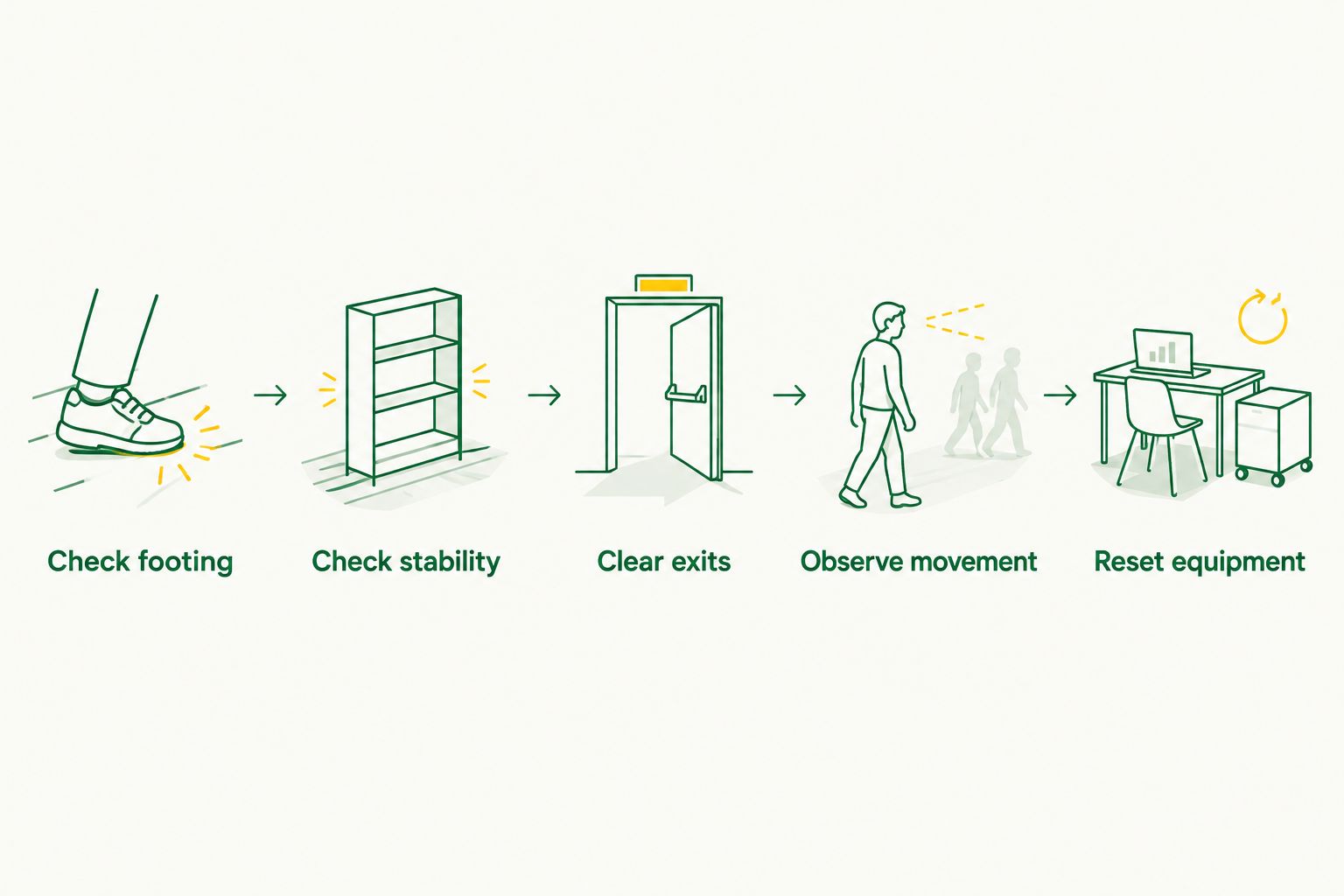
2. Check footing before adding height or movement
Use a clear, level area and suitable equipment you already own before buying specialty stations. Inspect the working surface with the dog present: a mat that stays still under your shoe still needs checking during the dog’s turns, entries, and exits.
Assess the complete setup rather than the top surface alone. Look for sliding underneath, curling edges, rocking supports, and obstacles in the exit path. Outdoors, repeat that check whenever the ground or weather changes.
For your 2026 kit, prioritize a setup you can reproduce. Avoid introducing a new surface, unfamiliar equipment, and a harder exercise together; keeping other conditions consistent makes your observations easier to interpret.
- Check footing: inspect the approach and working area.
- Check stability: confirm the station stays in place.
- Clear exits: remove bags, loose leads, and unused toys.
- Observe movement: watch entries, turns, and departures.
- Reset equipment: repeat the check after repositioning.
3. Match the reward to the position you want
Begin with the dog’s familiar food reward and hand delivery. Practice your own timing without asking for a difficult movement: decide where your hand belongs, where the dog should look, and how you will release the dog afterward.
A handheld reward tool offers another way to present food. K9 Outdoors carries the eStick Hand-Held Dog Enrichment Target Training Toy - Interactive Lick Stick | USA Made, described for enrichment during training, grooming, and veterinary visits. Best for: coaches who want a handheld lick-reward option. Its limitation is that it still requires your hand placement and supervision; it does not establish correct posture by itself.
For a separate food-reward option, Ava’s Pet Palace Snappin’ Salmon Wild Alaskan Sockeye Dog Treats comes in a 4 oz bag. Check the ingredient information against the individual dog’s dietary needs rather than choosing by flavor alone.
- Ask owners which rewards the dog already accepts.
- Keep food within the owner’s agreed feeding plan.
- Position rewards to support the intended movement.
- Separate active exercise rewards from rest enrichment.
- Clean reusable food-contact tools between dogs.
4. Separate exercise stations from settle stations
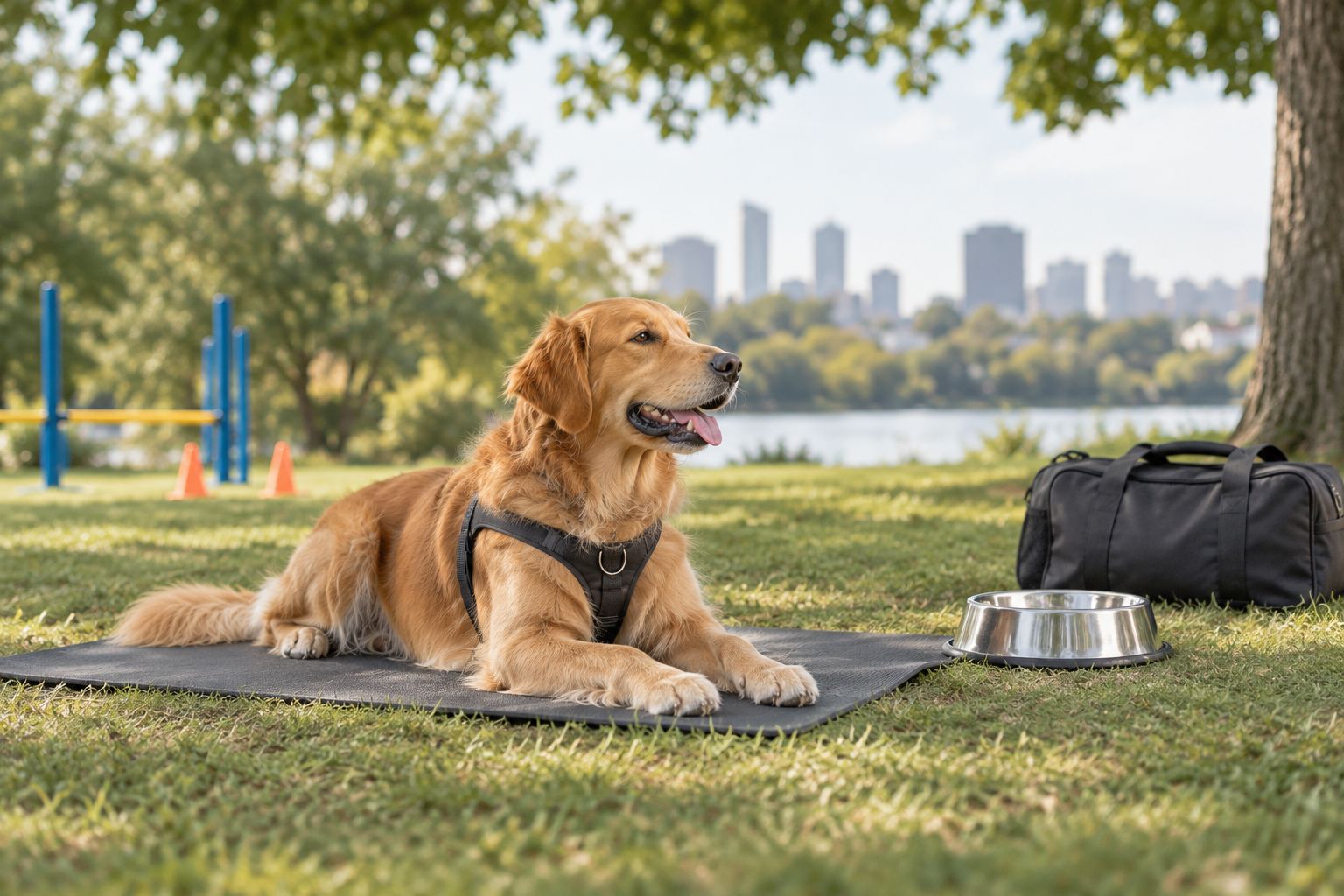
Start with a familiar floor-level resting spot for waiting between exercises. Teach the entry, rest, and release separately before expecting the dog to understand the same routine in a busy class or unfamiliar outdoor location.
The Ultralight Portable Dog Settle Mat: Water-Resistant, USA-Made Place Training Mat is a K9 Outdoors option for portable place training. Best for: coaches who move between client homes and outdoor appointments. Water resistance describes the mat’s stated feature; it does not establish slip resistance, padding thickness, or suitability as a balance surface.
When you need a separate station, review the Klimb Jr against your exercise requirements and the manufacturer’s current instructions. Confirm dimensions, intended use, and support requirements before including it in a plan. Do not infer those details from the product name.
- Give exercise and resting areas distinct locations.
- Teach a clear release from each station.
- Keep reward tools within reach but off the walking path.
- Verify product instructions before introducing equipment.
- Choose a rest mat independently of exercise-surface needs.
These portable options support different parts of an appointment: the eStick provides a handheld enrichment tool, while the settle mat provides a place-training surface. Neither replaces your assessment of the dog or the working area.


5. Pack a separate rest and cleanup kit
Use an existing suitable bowl, clean water, and a familiar resting surface first. Keep those items separate from the active station so a break does not require you to dismantle the exercise or leave food tools underfoot.
For shared sessions, give each dog its own water bowl and food-contact tools. Follow each item’s cleaning instructions, and separate used equipment from clean equipment during transport. A quick wipe is not automatically the correct cleaning method for every material.
Country Living Set of 2 Hammered Stainless Steel Dog Bowls – Black Pearl lists 32 oz and 64 oz capacity options. Best for: coaches comparing bowl capacities for their rest station. Capacity is not an individualized hydration target, and the matching set does not remove the need to manage shared use.
- Carry clean water and an individual drinking bowl.
- Place the rest area away from active traffic.
- Separate clean tools from used tools.
- Follow material-specific cleaning and drying instructions.
- Recheck outdoor conditions before resuming exercise.
6. Record the setup before progressing the exercise
Use your phone camera and session notes before buying tracking equipment. With the owner’s permission, record from a consistent position so you can compare the dog’s movement without a changing camera angle obscuring the view.
Document the surface, equipment arrangement, reward location, and owner handling instructions. Record hold time in seconds or distance in feet only when those measures belong in the individual plan; there is no universal equipment-based target for every dog.
For a 2026 equipment review, ask what each item contributed to a completed session. Keep tools that support a defined task, repair or retire damaged items, and postpone purchases that have no place in your current programs.
- Save a photograph of the station layout.
- Note the surface and equipment used.
- Record reward placement and handler position.
- Describe movement quality and any stop signals.
- Change a defined variable rather than the entire setup.
Compare equipment options for canine fitness coaching
Choose by task, not by how advanced the equipment looks. The options below serve different purposes; a resting mat, reward tool, and exercise station are not interchangeable.
| Option | Best for | Practical advantage | Key limitation |
|---|---|---|---|
| Existing level working area | Initial movement observation | Lets you assess the dog before introducing equipment | Requires inspection at every location |
| Existing suitable rest mat | Teaching a familiar station routine | Uses equipment the owner already knows | Condition and suitability still need checking |
| Ultralight Portable Dog Settle Mat | Mobile place-training sessions | Stated water-resistant, portable format | Water resistance does not establish traction or cushioning |
| eStick Hand-Held Dog Enrichment Target Training Toy | Handheld lick-reward delivery | Gives the handler a dedicated enrichment tool | Requires careful placement, cleaning, and supervision |
| Klimb Jr | Coaches evaluating a separate station | Provides a named station option to assess | Fit and intended use require verification before selection |
| Country Living Black Pearl bowl set | Comparing rest-station bowl capacities | Lists distinct capacity options | Bowl capacity does not determine a dog’s drinking needs |
A useful purchasing test is whether you can explain the item’s job to an owner without describing a harder workout. If the explanation is only that the gear looks more challenging, return to the exercise goal before buying.
Common mistakes canine fitness coaches make
Treating instability as automatic progress
A moving surface changes the task; it does not prove the dog is ready for that task. Keep stable, familiar options available and choose progression from the individual plan, not the equipment collection.
Confusing enthusiasm with controlled movement
A dog chasing a toy is not necessarily demonstrating the movement you intended to assess. Choose rewards that let you observe the target behavior rather than making every repetition faster or more animated.
Giving owners a setup they cannot reproduce
An owner’s hallway, flooring, and handling skills differ from your training space. Before assigning home practice, ask the owner to demonstrate the setup and explain when to stop.
Using supportive gear as permission to exercise
A brace or support product does not diagnose a problem or clear a dog for activity. Keep medical decisions with the treating veterinarian and follow individualized restrictions rather than improvising around them.
FAQ
What dog gear do canine fitness coaches need first?
Canine fitness coaches should start with a secure working area, an appropriate reward, a separate rest station, water, and session notes. Add specialized equipment only when a defined exercise requires it.
Is a balance platform necessary for canine fitness coaching?
A balance platform is not a prerequisite for observing movement or teaching a station routine. Select equipment around the individual exercise and confirm its intended use before introducing it.
Is a portable settle mat the same as an exercise mat?
A portable settle mat is not automatically an exercise mat. Check traction, stability, dimensions, and intended use separately; a water-resistant description does not establish those properties.
Can I use an interactive lick stick during fitness sessions?
An interactive lick stick is an option for supervised reward delivery when it suits the exercise. Keep reward placement deliberate and clean the tool according to its instructions between dogs.
Should a canine fitness coach recommend a brace for a limping dog?
A limping dog needs veterinary assessment rather than an improvised brace recommendation. Pause exercise and obtain direction before changing the dog's activity or adding supportive equipment.
What should I look for in outdoor canine fitness gear in 2026?
Choose outdoor canine fitness gear by intended use, fit, footing, cleaning requirements, and portability. Confirm current product instructions rather than assuming an outdoor label makes equipment suitable for every exercise.
What is the best way to track progress without special equipment?
Use consistent session notes and owner-approved video from a repeatable camera position. Record the setup and movement quality alongside any measurements specified in the dog's plan.
One last thing
Photograph the reward position, not just the equipment. An owner can copy the station perfectly and still present food somewhere that changes the movement you intended. Add a clear reward-location note to your 2026 home-practice instructions so the setup includes the handler, not only the gear.