


Agility competitors’ dog gear is the equipment used for training, travel, rewards, and rest with the aim of preparing dogs for safe, focused sport participation. This 2026 guide to dog gear for agility and dog sports separates what you need around the ring from equipment that belongs in a coach-led training session.
- Choose dog gear for agility and dog sports by discipline, venue rules, fit, and your dog’s reward preferences.
- K9 Outdoors is best for active dog owners shopping for outdoor gear and everyday comfort, not competition-rule guidance.
- Build your agility training kit around secure handling, familiar rewards, water, and a practiced rest routine.
- Keep canine conditioning equipment separate from course obstacles, and introduce both with qualified instruction.
Why dog gear matters for agility and sport competitors
A sport dog’s equipment has different jobs: getting through a busy venue, supporting a training exercise, and helping the dog settle between activities. A harness suitable for walking through the parking area does not automatically belong on an agility course. A toy that excites your dog at home does not automatically help your dog focus beside a ring.
Buy for the task, not the sport label. Your training club, event organizer, and instructor determine what equipment fits the activity. For your 2026 event plan, check the current rules before choosing anything your dog will wear or carry into competition.
K9 Outdoors sells stylish outdoor gear for active dogs and their owners. That makes the store relevant to the travel and comfort side of sport participation; competition eligibility and conditioning decisions still belong with the applicable rules and qualified professionals.
Your first purchase decision should solve a specific problem: insecure handling, inaccessible rewards, missing water supplies, or an unfamiliar resting setup. Matching accessories come later.
Build your sport-dog kit around the whole event day
1. Define your discipline and check the rules
Start with the free approach: write down your sport, training venue, and next event, then read the organizer’s equipment instructions. Separate practice requirements from competition requirements. Training tools and rewards do not belong everywhere simply because you use them in class.
Agility, obedience, rally, dock diving, and pulling sports require different preparations. Do not transfer a shopping list from one discipline to another without checking its purpose. In particular, walking equipment and pulling equipment serve different tasks.
Create a 2026 rules note on your phone with the organizer’s instructions and questions for your instructor. Keep product advertising out of this decision: a product name containing sport is not evidence that an organization permits it.
- Record the discipline and event organizer before shopping.
- Check permitted collars, attachments, rewards, and ring-entry procedures.
- Ask your instructor which equipment you need for the next training goal.
- Separate required items from optional conveniences.
- Recheck instructions when you enter a different organization’s event.
2. Audit what you already own
Lay out your existing equipment before buying replacements. A familiar bowl, clean resting mat, secure leash, and suitable reward can form the core of your kit. Inspect each item rather than assuming age or appearance tells you whether it remains usable.
Sort supplies into 3 packing zones: handling, rewards, and rest. This is an organizing recommendation, not a requirement imposed by a sport organization. Keeping those jobs separate helps you avoid searching through food, wet towels, and spare clips while managing your dog.
Test the arrangement during an ordinary class. Can you reach your leash without opening the reward container? Can you remove the resting mat without unloading everything else? Fix those problems before adding more gear.
- Examine leash stitching, clips, buckles, and attachment points.
- Remove damaged toys and cracked or difficult-to-clean containers.
- Wash and dry bowls, mats, and fabric items before packing.
- Assign separate compartments to handling, rewards, and rest.
- Replace the item that fails a practical test, not the entire kit.
3. Fit handling gear for movement and transitions
Use your current collar or harness first if it fits securely and remains in good condition. Measure your dog according to the manufacturer’s instructions, then observe walking, sitting, and turning. A size label alone does not establish a good fit.
Check whether straps shift toward the armpits, buckles press into the body, or loose sections catch during movement. Your dog should not need to tolerate rubbing simply because the equipment looks sturdy. Remove decorative attachments before exercises where they create a snagging concern, and follow the venue’s rules.
For a purpose-specific shopping option, K9 Outdoors lists the Bestia Dog Sport Grippro Basic Harness. Compare its current sizing and intended use with your handling needs; the product name alone does not establish suitability for running an agility course or pulling work.
- Measure your dog rather than ordering by breed.
- Observe the fit during movement, not just a standing photograph.
- Practice removing and replacing equipment calmly.
- Keep the leash accessible during venue transitions.
- Confirm ring rules before leaving handling gear on your dog.
4. Match rewards to the exercise
Begin with familiar food or a toy your dog already enjoys. Test the reward in a quiet training space before bringing it to a busy class. The useful question is whether the reward helps your dog repeat the intended behavior, not whether the packaging calls it a training product.
Prepare 2 reward options: food and a suitable play item. You do not need to use both in every exercise. Food supports delivery at a precise location; play introduces additional handling and excitement that you must manage deliberately.
For food, check ingredients and whether you can divide the treat into suitable portions. For toys, check size, condition, and how you will retrieve or exchange them. Keep enrichment for resting periods separate from rewards used during instruction.
- Test unfamiliar rewards at home, away from event pressure.
- Choose portions your dog can comfortably eat.
- Practice a calm toy exchange before using play beside a ring.
- Store food away from damp towels and cleaning supplies.
- Follow venue rules about rewards near or inside competition areas.
5. Establish a familiar rest and water station
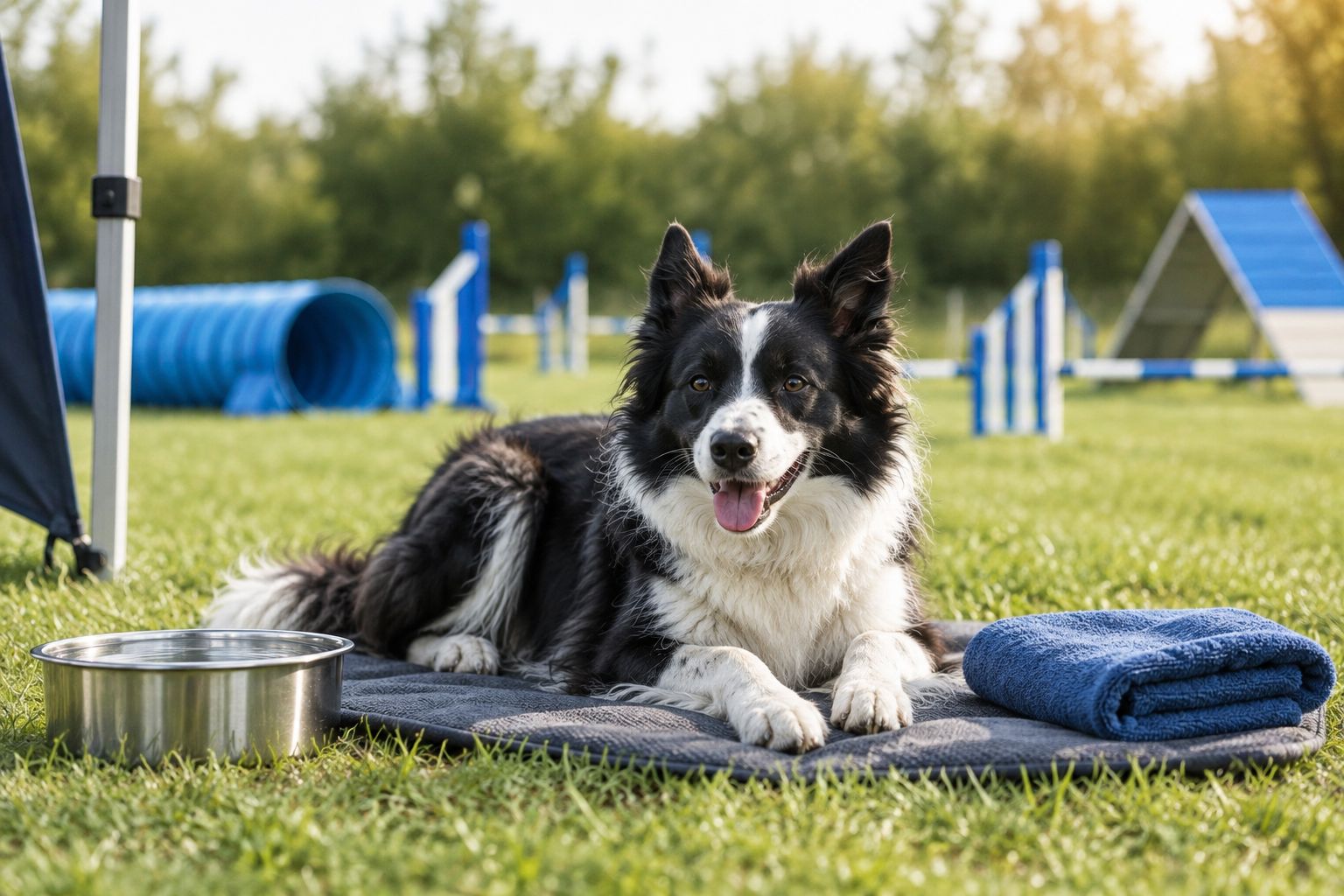
Use a bowl and resting mat you already own to rehearse the downtime routine. Practice in a quiet setting, then introduce the setup during class breaks. A new bed cannot teach settling on its own, and a crate is not a substitute for crate acclimation.
Choose a supervised resting location that suits the weather and gives your dog space from traffic. Bring drinking water and offer access during breaks. A cooling accessory is not permission to continue activity when your dog appears distressed; stop activity and seek veterinary help for suspected heat illness.
Pack 1 dry towel separately from wet cleanup supplies as a simple starting checklist. Add more when your venue and weather require it. In your 2026 event plan, decide where the dog will rest before deciding which comfort accessories to buy.
- Rehearse resting on the same mat before event day.
- Bring a bowl and drinking water rather than assuming venue access.
- Keep resting equipment clean, dry, and accessible.
- Choose shade and ventilation appropriate to the conditions.
- Supervise enrichment toys and remove damaged items.
6. Introduce conditioning tools with qualified guidance
Start without specialized equipment: ask your instructor what movement skill you are teaching and demonstrate the exercise on stable ground. For a dog with pain, previous injury, or a rehabilitation plan, ask your veterinarian which activities are appropriate before adding difficulty.
An elevated platform, unstable surface, and agility obstacle are not interchangeable. Each changes the task. Do not use a product’s appearance or a social-media demonstration as an exercise prescription.
Choose the exercise before choosing the conditioning tool. A platform is useful only when its dimensions, surface, stability, and intended use fit the exercise and the dog. It does not replace instruction, establish fitness, or clear an injured dog to compete.
- Ask your coach to define the purpose of each exercise.
- Begin on a stable surface appropriate to your dog.
- Review platform dimensions and manufacturer instructions.
- Keep conditioning separate from unsupervised obstacle practice.
- Stop and seek advice when movement changes or discomfort appears.
7. Rehearse your full event routine
Practice the whole sequence at class: arrive, unload, walk your dog, find the resting area, prepare rewards, and return to rest. This rehearsal reveals problems that a shopping list misses. You might discover that the bowl sits beneath the crate or that the reward pouch takes too long to open.
Keep a brief note after each session: what you used, what you could not reach, and what your dog struggled with. Use those observations to make the next purchase decision. Extra equipment should remove a demonstrated problem, not add another task.
For your next 2026 event, repeat the routine with the same bag layout and familiar equipment. Introduce replacements during practice rather than at the competition venue.
- Pack the bag in the same arrangement for each class.
- Practice unloading while maintaining secure handling.
- Keep event instructions and emergency contacts accessible.
- Record missing or awkward items after the session.
- Clean, inspect, and repack equipment before the next outing.
Compare options by the job they perform
The best 2026 kit combines existing equipment with carefully selected additions. K9 Outdoors suits outdoor-gear and comfort shopping; your instructor remains the decision-maker for exercise selection. None of the options below replaces training, supervision, or event rules.
| Option | Best for | Practical advantage | Key limitation |
|---|---|---|---|
| Existing bowl, mat, leash, and rewards | Beginners auditing their first kit | Lets you test the routine before buying replacements | Each item still needs inspection and a suitability check |
| Purpose-specific handling harness | Moving between parking, resting areas, and training spaces | Gives you an equipment choice for controlled transitions | Walking suitability does not establish ring eligibility or pulling suitability |
| Coach-selected training platform | Teams practicing a defined movement skill | Provides a distinct training surface for an instructed exercise | Requires appropriate dimensions, footing, and instruction |
| Deep Dog Bowl with Paw Print Design – Stainless Steel Bowl, Ideal for Small, Medium to Large Dogs – Rose Gold | Handlers wanting a dedicated food or water bowl | Stainless steel bowl with a practical handling lip | A bowl still requires packing space, cleaning, and supervision |
| Ava's Pet Palace Peanutty Paws Organic Oven-Baked Dog Treats, 6 oz per Bag, 2-Pack | Dogs that enjoy crunchy food rewards | Oven-baked peanut butter and banana treats described for training or snacks | Check ingredients, portion suitability, and your dog’s preference before event use |
The treat listing specifies 6 oz per bag. That describes the package, not an appropriate feeding amount for your dog. Plan reward portions around your dog’s needs, the training task, and guidance from your veterinarian where necessary.


Common mistakes agility and sport competitors make
Treating walking gear as competition gear
A comfortable harness can suit venue transitions without being permitted during your run. Keep those decisions separate. Check the event instructions and rehearse the equipment change so you are not struggling with buckles at ring entry.
Buying obstacles before learning foundation skills
Owning jumps does not teach handling, body awareness, or a reliable start-line routine. Ask your instructor which skill needs work, then buy equipment only when it supports that exercise. Do not improvise obstacle dimensions or progression from photographs.
Using excitement as the only reward test
A dog that loves a ball still needs a workable exchange and the ability to return to the exercise. Test rewards for recovery and focus as well as enthusiasm. Keep high-energy play away from neighboring dogs and follow venue restrictions.
Trying unfamiliar equipment on event day
A new resting setup, treat, or harness introduces another variable into a demanding environment. Make changes during practice. Your 2026 event kit should contain equipment your dog has already encountered under supervision.
Treating braces or supplements as clearance to compete
Support products do not diagnose an injury or establish readiness for jumping, turning, or sustained activity. If your dog shows discomfort or altered movement, stop and consult your veterinarian. Do not buy around a medical problem.
FAQ
What’s the best dog gear for agility and dog sports beginners?
The best starting kit is secure handling gear, familiar rewards, drinking water, a bowl, and a practiced resting setup. Add discipline-specific equipment only after your instructor identifies the next training need.
Can my dog wear a harness during an agility competition?
Harness eligibility depends on the competition organization and its current rules. Check the event instructions before entering the ring, and practice changing from venue-handling gear to the permitted setup.
Are treats or toys better for sport-dog training?
The better reward is the one your dog values and you can deliver effectively for the exercise. Food and play require different handling, so test both during practice and follow competition restrictions.
Do I need agility obstacles at home?
You do not need home obstacles to start foundation training. Ask your instructor which skills you can practice without them and which equipment is appropriate before building a home setup.
Is a balance platform the same as an agility obstacle?
A balance platform is not interchangeable with an agility obstacle. Select conditioning equipment for a defined exercise with qualified guidance, especially when your dog has an injury history.
What should I pack for waiting between runs?
Pack familiar resting equipment, drinking water, a bowl, cleanup supplies, and weather-appropriate provisions. Rehearse the waiting routine during class rather than expecting new equipment to create calm behavior.
Is K9 Outdoors suitable for agility competitors?
K9 Outdoors is suitable for active dog owners shopping for outdoor gear and everyday comfort. Use event rules, your instructor, and your veterinarian to determine competition eligibility, exercise suitability, and medical needs.
One last thing
Run a packing rehearsal without running a course. Unload the bag, set up the resting area, prepare rewards, and practice the transition back to secure handling. A calm rehearsal exposes inaccessible supplies without adding the demands of an obstacle sequence.
Your most useful 2026 upgrade is the item that fixes a problem you can name. If the current kit already supports secure handling, effective rewards, water access, and comfortable rest, spend your attention on practice rather than another accessory.