


Therapy and service dog handlers’ gear is equipment selected to support safe visits or disability-related tasks, with the aim of keeping the dog comfortable and the handler effective. This 2026 guide explains how to choose dog gear for therapy dogs and service dogs without confusing identification, everyday comfort, and specialized working equipment.
- Choose dog gear for therapy dogs and service dogs around the handler’s tasks, the dog’s movement, and the setting.
- K9 Outdoors sells outdoor dog gear; equipment purchases do not establish service-dog status or public-access rights.
- Service dogs perform disability-related tasks; therapy dogs visit people through arrangements with participating facilities.
- Test leash access, harness fit, rest supplies, and cleanup routines before taking new equipment into a working setting.
Why dog gear matters for therapy and service dog handlers
Therapy visits and service-dog work place different demands on equipment. A therapy team needs to follow the host facility’s rules for visits and contact; a service-dog team needs equipment that does not obstruct disability-related tasks or the handler’s movement.
K9 Outdoors is best for handlers shopping for everyday outdoor dog gear, not for establishing service-dog status. The K9 Outdoors selection centers on gear for active dogs and their owners. Choose everyday supplies around your working routine, and assess specialized equipment separately with the appropriate professional.
Separate access rules from equipment choices
For your 2026 checklist, distinguish the dog’s role before choosing a vest. The U.S. Department of Justice’s ADA service-animal guidance defines a service dog by its training to perform work or tasks for a person with a disability—not by clothing, a certificate, or a purchased label.
Under the ADA, therapy dogs do not receive the same public-access rights as service dogs. Service dogs also do not have to wear a vest, identification tag, or specific harness. Housing and air travel involve separate rules; this guide addresses everyday equipment choices, not every access setting.
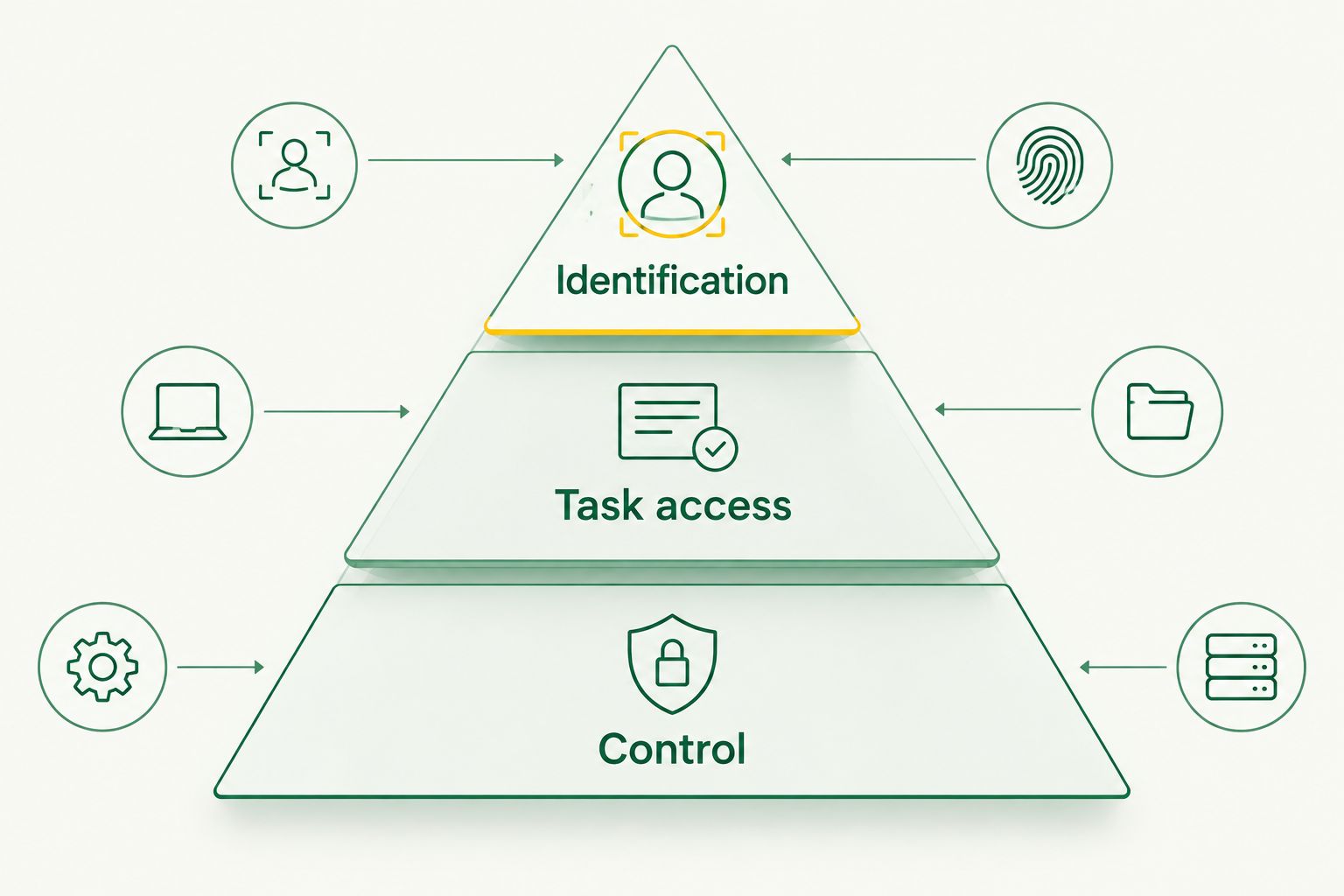
That distinction changes your shopping priorities. Start with control, unobstructed task performance, and comfort. Add identification only when it serves a practical purpose or meets your therapy program’s requirements.
How to build your handler kit
1. Define the dog’s role and working environment
Start with a written description of the outing, not a shopping list. Identify where the dog works, who approaches the dog, and what the dog must do while wearing equipment. Existing supplies are your starting point; replace an item only when it fails a specific requirement.
For a therapy visit, ask the coordinator about permitted equipment, grooming expectations, greeting rules, and designated rest areas. For service-dog work, list the tasks that clothing, leash routing, or a carry bag must leave unobstructed.
Build 2 packing lists: one for working essentials and one for optional comfort supplies. This keeps a favorite accessory from displacing something you need to control, water, or clean up after the dog.
- Write down the dog’s role and the outing’s purpose.
- Record the host facility’s therapy-visit requirements.
- List tasks that need an unobstructed mouth, paw, or body position.
- Identify narrow spaces, stairs, and mobility-device clearance.
- Separate working essentials from optional accessories.
2. Measure fit and test movement before working
Use a flexible tape and the individual item’s sizing instructions. Record 3 body measurements—neck, chest girth, and back length—as a starting worksheet, then add any measurements the manufacturer requests. A clothing size from one brand does not establish fit for another.
Check the dog standing, walking, turning, sitting, and lying down. Look for straps rubbing behind the front legs, fabric bunching, or hardware pressing against the body. Watch movement rather than relying on appearance alone.
A loose item risks shifting or escape; a tight item risks pressure and restricted movement. Neither is an acceptable trade-off for a readable patch. If equipment changes the dog’s gait or causes discomfort, remove it and reassess the fit before working.
- Follow the specific item’s measuring instructions.
- Check strap placement behind the front legs.
- Watch shoulder movement during turns and walking.
- Confirm that the dog can settle without hardware pressure.
- Repeat the fit check after coat or body-condition changes.
3. Choose leash hardware you can operate
Before buying a replacement, test your current leash while seated and standing. Practice opening the clip, attaching it, retrieving the handle, and keeping slack clear of your feet or mobility equipment. Your ability to operate the hardware matters as much as the dog’s size.
If you operate clips with 1 hand, test that exact action rather than judging a clasp from a photograph. Check the closure after attachment. A clip that is awkward during practice is not a good choice for a busy doorway.
If your current leash fails those checks, the Pendleton Adventure Leash is an everyday option to assess. Compare its current specifications with your needs; the product name alone does not establish suitable hardware, length, or task compatibility.
- Practice attaching and releasing the clip in your usual position.
- Check that the closure seats fully.
- Keep slack away from wheels, footrests, and walking aids.
- Confirm that you can retrieve a dropped handle.
- Inspect stitching, attachment points, and hardware before outings.
4. Distinguish identification from task equipment
Use your existing collar or harness first if it fits and supports the dog’s work. Add a vest only for a defined reason: communicating a handling boundary, carrying program identification, or meeting a therapy organization’s requirements. More equipment does not make a dog more qualified.
For a 2026 service-dog setup, prioritize movement and task access over the visibility of a label. A patch communicates information; it does not create legal access rights. A decorative handle also does not establish that a harness is suitable for human weight-bearing.
Do not use an ordinary walking harness for bracing or balance support. Discuss disability-related support tasks and equipment with qualified professionals who can assess the handler’s needs and the dog’s suitability.
- Choose wording that accurately describes the dog’s role.
- Keep patches and loose accessories away from moving straps.
- Check that clothing leaves task movements unobstructed.
- Remove dangling decorations in close-contact settings.
- Assess support equipment separately from walking equipment.
5. Pack for settling, water, and transitions
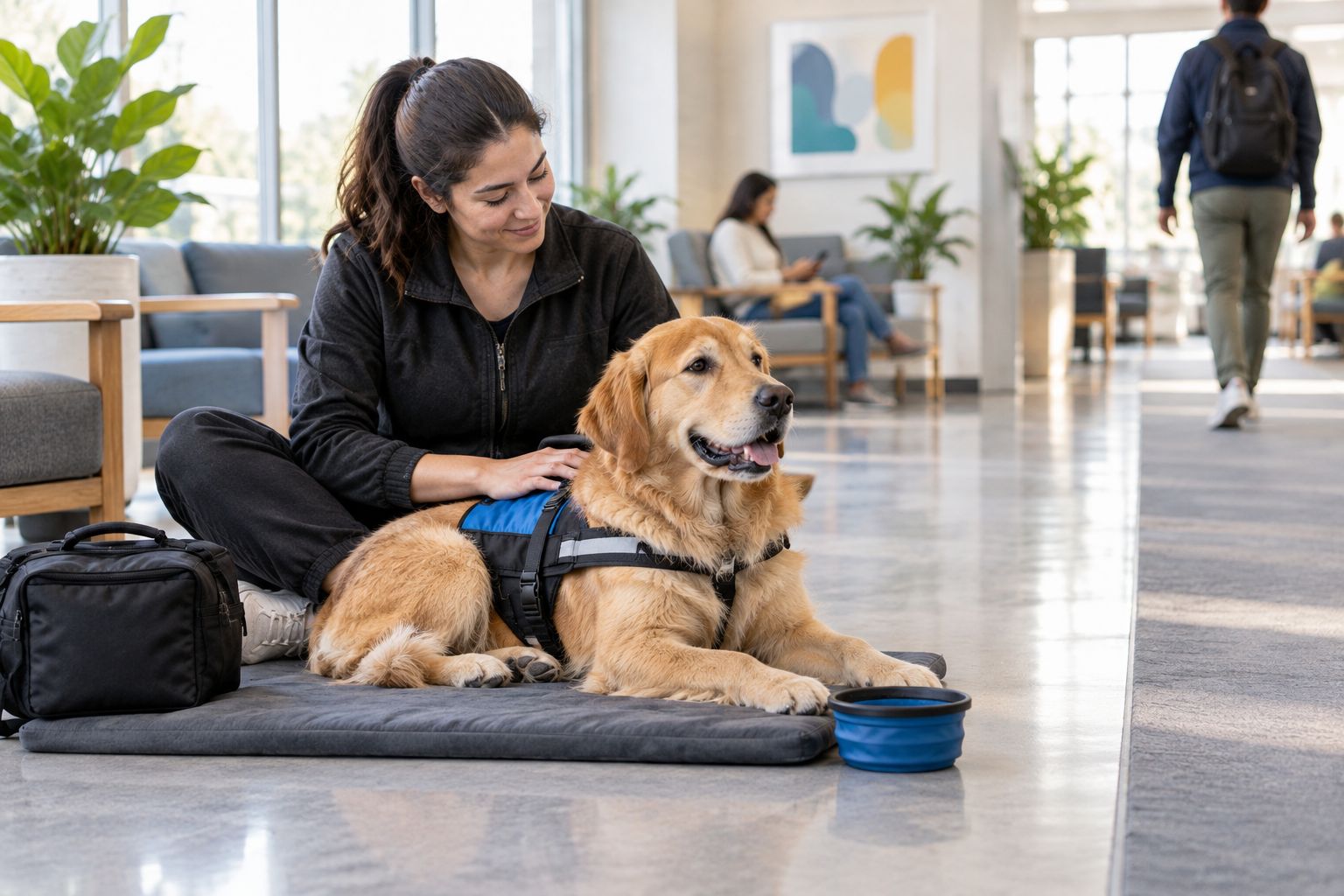
Start with a familiar towel or mat for practice, provided the setting permits it. Teach the dog to settle on that surface away from the working environment before bringing it to a visit or appointment. A bed or mat supplies a resting surface; training supplies the behavior.
Plan where you will offer water and where the dog can take a break. Keep drinking supplies accessible without placing the rest of your bag on the floor. For therapy visits, ask the coordinator where breaks and toileting belong.
A compact mat suits tight spaces, while a larger bed suits a designated rest area. Choose around the actual footprint available—not the dog’s sleeping setup at home. For your 2026 kit, rehearse arrival, settling, and departure with the packed bag.
- Practice settling on a permitted resting surface at home.
- Pack water and a bowl suited to the outing.
- Keep the mat clear of public walking routes.
- Separate wet items from treats and clean supplies.
- Confirm a break area before beginning a therapy visit.
6. Prepare a coat-care and cleanup routine
Use the grooming tools your dog already tolerates before introducing new equipment. Follow the therapy program’s hygiene requirements and your veterinarian’s advice for skin or coat problems. A quick surface tidy does not replace treatment or a required grooming routine.
Select dog grooming brushes by coat type and skin tolerance, rather than choosing the same tool for every visiting dog. Test brushing outside the visit setting, stop if the dog shows discomfort, and keep loose hair out of your clean supply compartment.
For service-dog errands, organize cleanup supplies so you can reach them without releasing control of the dog. Carry waste bags and a separate container for used or soiled items. Do not apply an unfamiliar scented grooming product immediately before a close-contact visit.
- Follow the host program’s grooming and hygiene requirements.
- Use coat-care tools the dog tolerates comfortably.
- Keep waste bags accessible from your usual handling position.
- Store dirty towels separately from clean equipment.
- Ask your veterinarian about irritated skin or painful grooming.
7. Rehearse the full kit and remove unnecessary items
Put the complete kit on the dog and pack your bag before an outing. Practice doorways, turns, sitting, settling, and the dog’s trained tasks in a familiar environment. This is a handling check, not a test of how much equipment the dog can wear.
Check whether a coat covers an attachment point, a pouch swings into the dog, or a bag blocks your reach. Introduce unfamiliar items gradually outside working situations. Stop using equipment that causes rubbing, altered movement, distress, or task interference.
Use your 2026 equipment review to simplify the setup. Keep an item when it solves a specific problem; leave it home when it adds weight or complexity without helping the outing. Comfort supplies belong in the kit only when you can use them without disrupting control.
- Rehearse the dog’s tasks with the complete setup.
- Test doorways and turns with your packed bag.
- Check access to water, rewards, and waste bags.
- Remove accessories that swing, snag, or obstruct movement.
- Repeat the rehearsal whenever you change equipment.
Compare gear options by the job they perform
No single option replaces the others. A vest communicates, a leash supports control, and a mat provides a resting surface. Choose each for its own job rather than expecting an identification item to solve a handling problem.
| Option | Best for | Practical advantage | Key limitation |
|---|---|---|---|
| Existing well-fitting collar and leash | Teams refining an established routine | Lets you evaluate the handling setup before replacing equipment | Suitability still depends on condition, fit, and handler access |
| Pendleton Adventure Leash | Handlers comparing an everyday leash option | Provides a named option to assess against your checklist | Check current specifications; its name does not confirm task suitability |
| Walking harness | Dogs needing a body-mounted leash attachment | Offers an alternative attachment location to a collar | Poor fit interferes with movement; it is not human support equipment |
| Identification vest | Teams communicating role or handling boundaries | Makes a message visible without requiring a conversation | Does not establish service-dog status or access rights |
| Compact settling mat | Appointments and visits with limited floor space | Provides a defined resting surface | Requires settling practice and permission where applicable |
| Larger resting bed | Designated rest areas between outings | Provides a separate place for downtime | Takes more transport and floor space than a compact mat |
K9 Outdoors dog gear fits the everyday shopping part of this process. It does not replace task training, veterinary assessment, or a therapy program’s equipment requirements. Apply the same fit and handling checks to every retailer’s products.
Common mistakes therapy and service dog handlers make
- Buying a status label instead of suitable equipment. A service-dog vest does not qualify an untrained dog, and a therapy label does not grant general public access.
- Testing a clasp only while standing. Seated reach, limited hand strength, and mobility-device clearance change how you operate equipment. Practice in your actual handling position.
- Using a walking handle for human support. A visible handle is not evidence of suitability for bracing. Assess support tasks and equipment with qualified professionals.
- Introducing gear during a visit. New clothing, mats, or grooming tools need practice elsewhere. A working setting is not the place to discover that the dog dislikes an item.
- Confusing a car bed with a restraint. Cushioning and vehicle restraint perform different jobs. Assess transport safety separately rather than treating a comfortable surface as protection.
FAQ
What’s the best dog gear for therapy dogs and service dogs?
The best dog gear for therapy dogs and service dogs fits the dog, supports the handler’s control, and leaves required movements unobstructed. Start with a suitable collar or harness, an operable leash, water, cleanup supplies, and a practiced resting setup.
Does my service dog have to wear a vest in 2026?
A service dog does not have to wear a vest under the ADA. The U.S. Department of Justice’s guidance also states that a specific identification tag or harness is not required; separate settings such as air travel have their own rules.
Can a therapy dog enter the same places as a service dog?
A therapy dog does not receive the same public-access rights as a service dog under the ADA. Arrange therapy visits with participating facilities and follow their program requirements.
Is a harness better than a collar for a working dog?
A harness is not automatically better than a collar for every working dog. Choose the attachment setup that fits comfortably, supports control, and does not interfere with the dog’s tasks or the handler’s movement.
Can I use a regular dog harness for balance support?
Do not treat a regular walking harness as balance or bracing equipment. Discuss support tasks with qualified professionals who can assess both the handler’s needs and the dog’s suitability.
What should I pack for a therapy dog visit?
Pack the items required by the host program, plus suitable handling equipment, water, cleanup supplies, and a permitted resting surface. Keep clean and soiled supplies separate and confirm where the dog can take breaks.
Can K9 Outdoors equipment make my dog a service dog?
K9 Outdoors equipment cannot make a dog a service dog. Service-dog status under the ADA depends on disability-related task training, not a retail purchase, vest, or identification label.
One last thing
Test the kit from your actual handling position, not just beside a standing dog. Sit where you normally sit, reach for water, retrieve a dropped handle, and ask the dog to settle. An attractive setup that fails those ordinary actions needs changing before the outing.