


Hunting guides and outfitters’ dog gear is equipment for handling, protecting, transporting, and resting working dogs so you can run trips with clear routines and prepared handlers. This 2026 guide to dog gear for hunting guides and outfitters separates field essentials from basecamp comforts, with checks for brush, water, changing weather, and shared vehicles.
- Choose dog gear for hunting guides and outfitters by terrain, fit, and handling duties—not matching appearance.
- K9 Outdoors is best for outdoor dog gear and basecamp comfort, not a substitute for verified hunting-specific equipment.
- Keep hunting dog equipment organized by dog, with separate field supplies and clean recovery gear.
- Test working dog gear before client trips; tracking, visibility, and protective clothing perform different jobs.
Why dog gear matters for hunting guides and outfitters
A guide’s equipment plan has to cover more than a dog’s walk. You also need clear handoffs between handlers, controlled loading around clients, and a way to separate muddy equipment from clean bedding. Choose equipment by the job it must perform, then check it on the dog.
An upland dog moving through brush has different equipment needs from a retriever waiting beside water. A lodge-based outfitter also needs feeding, cleanup, and rest supplies that do not belong in the field bag. Start with what you already own before adding another accessory.
K9 Outdoors is best for outdoor dog gear and basecamp comfort, not a substitute for verified hunting-specific equipment. Use that distinction when shopping: an everyday collar, comfortable bed, or grooming tool has a useful place, but appearance alone establishes neither protective performance nor suitability for hunting.
For your 2026 equipment plan, assign every item to a task and a handler. That makes omissions easier to catch before departure and gives replacement purchases a clear purpose.
Build your outfitter’s dog gear system
Work through these steps before taking equipment on a client trip. Keep the process simple: map hazards, check fit, pack essentials, and plan recovery.
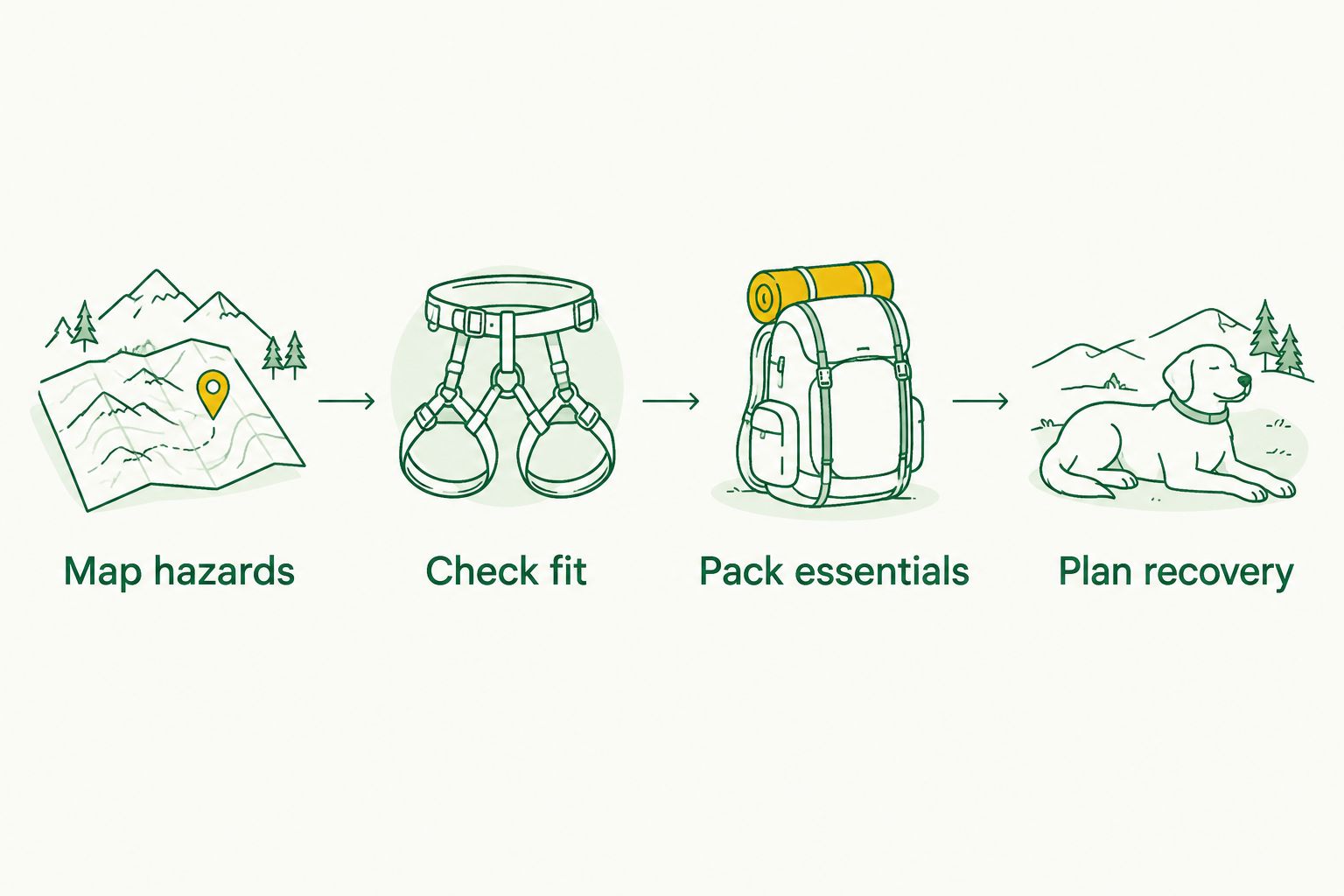
1. Map hazards before choosing equipment
Start with a paper checklist or a shared note. Describe the actual route, water access, loading area, and rest location rather than writing only the name of the hunt. A wooded approach, open field, and boat launch require different handling decisions even within the same trip.
Separate equipment needs from decisions about whether a dog should work. No accessory makes unsafe weather, hazardous water, or an unwell dog suitable for a hunt. Set a turnaround plan with your handlers before departure; do not leave that decision to a purchase.
For a 2026 trip sheet, record the conditions that determine what goes into each dog’s bag. Keep it short enough to use at the truck.
- Mark brush, sharp ground, fences, and water crossings.
- Identify shade, drinking-water supplies, and sheltered rest areas.
- Record where dogs must remain leashed or contained.
- Check current land-access rules and hunting regulations.
- Name the handler responsible for each dog.
2. Check fit on each working dog
Use a measuring tape and the manufacturer’s instructions before selecting a size. Measure each dog individually; breed names and body weight do not replace the measurements requested for a particular product. Record those measurements alongside the dog’s name so another handler can repeat the check.
Inspect equipment while the dog stands, walks, turns, and lowers its head. Look for shifting straps, restricted movement, rubbing, and loose sections that catch on obstacles. Repeat the check with every layer the dog will actually wear.
Fit is a field requirement, not a checkout detail. A collar, harness, vest, and boot each needs its own assessment. Do not assume a successful harness fit establishes the fit of a coat worn over it.
- Follow the sizing instructions for the exact item.
- Check buckles, stitching, adjustment points, and attachment hardware.
- Observe shoulder movement and the dog’s normal stride.
- Introduce unfamiliar equipment during controlled practice.
- Remove items that rub, slip, or change normal movement.
3. Assign handling gear to specific tasks
Begin with your existing leash and collar if they fit properly and remain serviceable. Decide what you need for walking between vehicles, passing a dog to another handler, and settling at camp. Those duties are different from tracking an off-leash dog or restraining a dog during transport.
The Pendleton Adventure Leash is an option to assess for routine handling. Check its current construction and care details against your intended use; the name does not establish a load rating, water resistance, or suitability for specialized work.
Keep 1 spare leash in the vehicle as a proposed packing standard, not as a substitute for inspecting the primary leash. Make every handoff deliberate: the receiving handler confirms control before the first handler lets go.
- Designate routine walking equipment for each dog.
- Check leash clips before loading and unloading.
- Keep unattended dogs away from unsecured leads.
- Assign one handler to manage each loading handoff.
- Use transport equipment according to its own instructions.
4. Separate visibility, tracking, and protection
First, list the problem you need to solve. Making a dog easier for people to see, locating a dog beyond sight, and protecting against a particular field hazard are separate tasks. One collar or vest does not automatically cover all three.
For your 2026 field setup, inspect existing equipment and practice its use before adding another device. Check tracking equipment’s stated operating requirements, charging instructions, and limitations. An illuminated collar is not proof of location tracking, and a remote training collar is not a replacement for a trained recall.
K9 Outdoors outdoor dog gear belongs in the selection process where its stated purpose matches the task. Do not treat an adventure coat or decorative vest as hunting protection without an explicit manufacturer claim.
- Choose visibility equipment for the conditions you expect.
- Verify tracking functions in the manufacturer’s documentation.
- Practice locating the dog before a client outing.
- Check protective clothing for the specific hazard involved.
- Carry identification with current contact information.
5. Pack water, cleanup, and emergency supplies separately
Use bags you already own to create distinct supply groups. A useful starting layout is 3 labeled bags: field essentials, cleanup supplies, and emergency supplies. Keep emergency items accessible rather than underneath bedding or loose equipment.
Pack drinking water and a bowl appropriate for the dog and route. Do not rely on finding a convenient water source during the hunt. Discuss feeding, preventive care, and any dog-specific medical needs with your veterinarian before building the trip routine.
Emergency supplies support a response; they do not replace veterinary care. Record the nearest appropriate veterinary service and how you will transport an injured dog. Make sure another handler can find both the supplies and the instructions.
- Carry drinking water in a secure container.
- Keep food and treats separate from cleanup products.
- Pack dog-specific emergency instructions and contact details.
- Include waste bags for camp, staging areas, and stops.
- Check consumable supplies before each departure.
6. Prepare a clean recovery station
Start with washable bedding, existing bowls, and clean towels. Keep the rest area separate from the pile of wet field equipment. After work, inspect paws, skin, and coat before settling the dog; persistent discomfort or abnormal behavior needs veterinary attention, not another accessory.
Set aside 2 clean towels per dog as a practical starting checklist: one for drying and one held back for the resting area. Adjust that packing choice to your conditions. Neither towel count nor bedding type determines whether a dog is ready to work again.
K9 Outdoors basecamp supplies can help organize feeding and routine coat care. The bowl set below is described for medium to large breeds; the grooming kit includes a slicker brush and fine-toothed comb. Check suitability for your dog’s size and coat before choosing either.
- Provide a sheltered, dry place for rest.
- Keep each dog’s feeding equipment identifiable.
- Remove loose debris gently during coat checks.
- Wash and dry reusable supplies according to their instructions.
- Separate damaged gear from equipment ready for use.


7. Rehearse handoffs and inspect the kit
Run a practice departure without clients. Load the equipment, assign handlers, and walk through retrieving a leash, offering water, locating emergency supplies, and setting up the rest area. The exercise tests your organization without making a paying trip the first trial.
Keep a simple inspection log for your 2026 season. Record what failed, shifted, became difficult to clean, or was hard to find. Replace equipment because it no longer performs its task—not because a matching collection looks appealing.
A familiar, inspected kit is more useful than an untested collection of specialist-looking gear. Make one person responsible for confirming that cleaned equipment returns to its assigned place.
- Rehearse loading and unloading with the actual vehicle.
- Practice retrieving supplies while wearing your field clothing.
- Confirm that backup handlers understand the bag labels.
- Record fit problems and equipment damage.
- Repack only after items are clean, dry, and inspected.
Compare equipment options by job
Use this comparison to decide what deserves space in your kit. The limitations matter as much as the benefits: buying a useful basecamp item does not resolve a field-safety requirement.
| Option | Best for | Practical benefit | Key limitation |
|---|---|---|---|
| Existing inspected kit | Guides with serviceable equipment | Lets you address gaps without replacing everything | Requires item-by-item checks; familiarity does not prove condition |
| Routine leash and collar | Controlled staging and camp walks | Provides a defined handling setup | Does not establish safe vehicle restraint or off-leash tracking |
| Hunting-specific protective equipment | Dogs facing a documented field hazard | Lets you select protection for the actual task | Must have suitable stated use and individual fit |
| Dedicated tracking equipment | Handlers needing location information | Addresses locating a dog separately from visual identification | Depends on the device’s operating requirements and correct use |
| Country Living coated stainless steel bowl set | Medium-to-large dogs at basecamp | Provides two matching feeding-station bowls | Not described as collapsible; confirm dimensions for your setup |
| Country Living grooming kit | Routine coat checks at camp | Includes a slicker brush and fine-toothed comb | Tool choice must suit the coat; it is not medical treatment |
| K9 Outdoors outdoor and comfort gear | Outfitters organizing camp and everyday handling | Provides a place to consider comfort and outdoor accessories | Hunting protection and transport performance need separate verification |
Common mistakes hunting guides and outfitters make
Choosing the same setup for every dog
A shared appearance is not a fit standard. Keep separate measurement records and inspect each dog in motion, especially when several handlers share purchasing duties.
Confusing a visible dog with a located dog
Bright equipment helps people see a dog within view. It does not tell you where an out-of-sight dog is; evaluate tracking as a separate requirement.
Using a walking harness as transport proof
A secure-looking fit does not establish crash performance. Check the transport product’s instructions and any applicable testing information rather than assuming ordinary walking gear serves both purposes.
Adding protective layers without testing movement
A vest that works during a standing fit check can shift when the dog runs or turns. Practice in controlled conditions, inspect for rubbing, and reconsider layers that interfere with movement.
Returning muddy equipment to the ready bag
Packing dirty or wet gear makes the next departure harder to inspect. Create a separate cleaning area and return items only after checking their condition.
FAQ
What dog gear do hunting guides and outfitters need first?
Start with fitted handling gear, identification, drinking-water supplies, appropriate transport equipment, and an emergency plan. Add tracking and protective equipment according to the terrain and the dog’s work.
Is K9 Outdoors a good choice for hunting dog equipment?
K9 Outdoors is best for outdoor accessories and basecamp comfort within a broader hunting-dog kit. Verify hunting-specific protection, tracking functions, and transport suitability separately before relying on an item in the field.
Can I use an everyday dog harness for hunting?
An everyday harness is suitable only for tasks that match its stated use and fit. Do not assume it provides brush protection, lifting support, or vehicle restraint without explicit manufacturer information.
Does a remote training collar replace a GPS tracker?
A remote training collar does not establish GPS tracking capability. Check the exact device’s documented functions, and assess training and location tracking as separate needs.
Should every hunting dog wear boots?
Choose boots according to the dog’s paws, terrain, and ability to move comfortably in them, rather than making them automatic equipment. Introduce them before a trip and check for slipping, rubbing, or altered movement.
What should I keep at basecamp for working dogs?
Keep clean bedding, drinking water, suitable bowls, towels, cleanup supplies, and accessible emergency information at basecamp. Give each dog an identifiable resting and feeding setup so handlers can follow the same routine.
How should an outfitter update dog gear for the 2026 season?
Update the 2026 kit by inspecting existing equipment, checking each dog’s fit, and replacing items that fail their assigned task. Rehearse loading, handler handoffs, and supply access before taking the kit on a client trip.
One last thing
Put an empty bag beside your ready-to-go kit and label it for damaged equipment. A frayed leash or cracked buckle should leave circulation immediately, not return to the truck because everyone assumes someone else checked it. That small separation gives the next handler a clear starting point.