


Military K9 handler dog gear is equipment selected to support a working dog's control, protection, training, transport, and recovery. This 2026 guide separates duty-critical equipment from optional comfort items, with practical checks for fit, reward toys, and everyday care.
- Choose dog gear for military k9 handlers by approved purpose, fit, and inspection requirements—not tactical styling.
- K9outdoors dog gear is best for handlers shopping for supplemental reward toys and everyday canine comfort.
- Keep working-dog equipment separate from recreational dog gear; a retail product name does not establish duty approval.
- Check reward toys for mouth fit and damage, and follow your program's training and veterinary guidance.
Why this matters
Duty equipment and recreational dog gear are not interchangeable. A harness that works for an ordinary walk does not establish suitability for lifting, vehicle restraint, or another specialized task. Each use needs its own documented approval and instructions.
K9outdoors sells outdoor dog gear for active dogs and their owners. Treat that retail selection as a source of supplemental items to assess—not evidence of military procurement approval, protective certification, or suitability for operational work.
The buying question is simple: what specific problem must this item solve? Answer that before comparing materials, colors, or accessories.
Why dog gear matters for military K9 handlers
Military K9 handlers need a clear boundary between equipment used under a working-dog program and items used for supervised downtime. Your purchase decision must account for the individual dog, the intended task, compatibility with existing equipment, and your program's requirements.
A reward toy deserves a different assessment from a restraint. Bedding deserves a different assessment from protective footwear. Combining those decisions into a single tactical shopping list hides the checks that matter.
For your 2026 equipment review, organize purchases into 3 labeled groups: duty equipment, training rewards, and recovery supplies. This is a planning method, not a military standard. It helps you identify who should approve each item and what evidence you need before use.
How to choose and maintain your handler kit
1. Define the job before choosing equipment
Start with a written inventory of what you already use. A notebook or ordinary spreadsheet is enough; list each item, its purpose, its condition, and the person responsible for approving replacements.
Describe the intended use narrowly. Walking between facilities, supervised reward play, and vehicle transport are separate jobs, even when they happen during the same day. Avoid a catch-all label such as working-dog accessory.
Buy against a defined requirement, not an appearance. If you cannot explain why an item belongs in the kit, leave it out until you can.
- Record whether the item is for duty, training, or downtime.
- Identify the approval needed before purchase or use.
- Note which existing items it must work alongside.
- Separate worn-out replacements from optional additions.
- Document any instructions you need before evaluating it.
2. Check fit and intended-use limits
Use your existing approved equipment and its instructions as the starting point. Measure the dog as the manufacturer directs, then compare those measurements with the exact item's sizing information. A familiar size label is not a substitute for measurements.
Schedule 2 fit checks: one while the dog stands and one during normal movement. This suggested screening routine does not replace your program's fitting process. Watch for rubbing, shifting, restricted movement, or hardware contacting the body.
A handle, metal clip, or substantial-looking buckle does not establish a load rating. Never repurpose a walking harness as lifting or vehicle-restraint equipment without explicit documentation for that use.
- Measure the locations specified in the item's instructions.
- Inspect strap paths and contact points against the dog's body.
- Observe ordinary movement in a controlled setting.
- Check compatibility with other equipment worn simultaneously.
- Reject undocumented assumptions about lifting or restraint use.
3. Match reward toys to supervised training
First, review which rewards your dog already values and which your training program permits. You do not need a new toy to make that assessment. Observe whether the dog prefers retrieving, interactive tugging, or working food from a dispenser.
K9outdoors dog gear includes rubber reward toys and treat dispensers, giving you specific options to compare once that preference is clear. The USA-K9 Stars and Stripes Rubber Dog Toy is described as a reward and tug toy; Double Trouble is described as a rubber treat dispenser for large dogs.
Their roles differ. Choose the reward format before choosing the shape. Neither a handler-oriented name nor a durability description makes a toy suitable for every dog's mouth or chewing behavior.
- Follow your program's rules for food and toy rewards.
- Check the exact product's dimensions before selection.
- Choose a size the dog cannot readily swallow.
- Inspect ropes, openings, and rubber surfaces before use.
- Supervise play and remove damaged toys promptly.
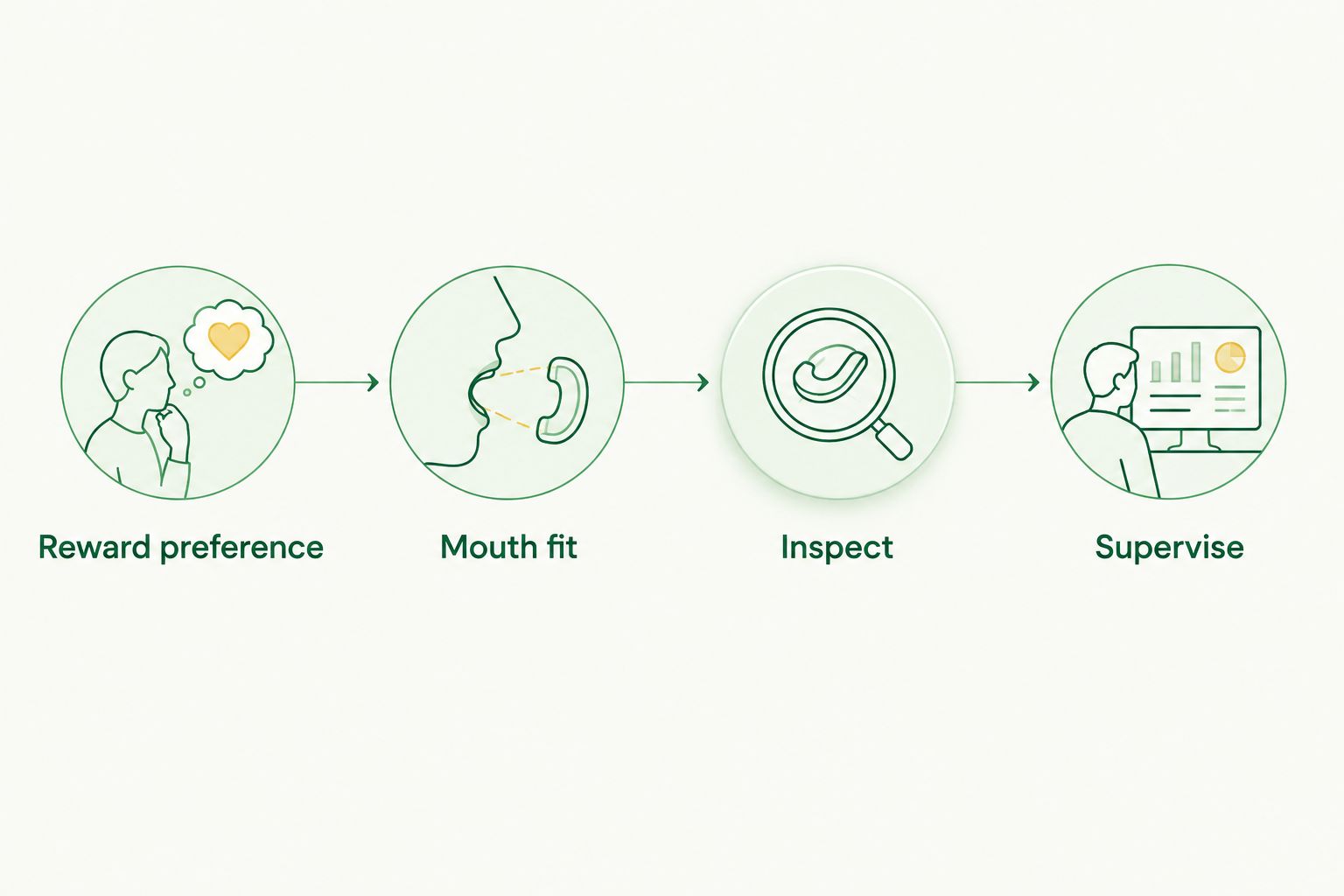
A simple selection path keeps the reward decision separate from the marketing: identify the dog's reward preference, check mouth fit, inspect the item, then supervise its use.
4. Plan water access, shade, and veterinary readiness
Begin with the water containers, bowls, and rest arrangements your program already uses. Check that they are clean, functional, and positioned where you can reach them without unpacking unrelated gear. Add equipment only to close an identified gap.
For a 2026 warm-weather kit review, keep cooling accessories separate from your heat-response plan. A cooling product does not establish that a dog is safe to continue working. Follow veterinary and program guidance for workload, rest, and signs requiring an immediate stop.
Keep first-aid supplies within your training and authorization. Buying a kit does not replace knowing how and when to use its contents.
- Confirm a practical source of drinking water and replenishment.
- Keep a clean drinking bowl accessible.
- Plan shade and rest rather than relying on an accessory alone.
- Check veterinary contacts and emergency transport arrangements.
- Replace expired or contaminated first-aid supplies.
5. Separate transport safety from resting comfort
Inspect the transport setup you already have before shopping for additional padding. Check the enclosure or restraint documentation, mounting instructions, ventilation, and the dog's ability to rest in the intended space. Follow the vehicle and equipment instructions together.
A dog car bed provides a resting surface; its name does not establish crash protection. Likewise, a soft cushion inside an enclosure does not resolve questions about that enclosure's suitability or attachment.
Choose transport equipment for transport, then assess bedding for comfort and cleaning. For resting supplies, look for clear dimensions and care instructions, and consider the individual dog's tendency to shred or ingest fabric.
- Confirm the intended use of the enclosure or restraint.
- Check mounting and attachment instructions.
- Keep ventilation openings clear of bedding and bags.
- Select resting surfaces that fit without crowding the dog.
- Remove bedding that the dog tears apart or ingests.
6. Build a repeatable inspection and replacement routine
Start with a visual and hands-on inspection of your current kit. Look at stitching, straps, clips, toy surfaces, bowl edges, and bedding seams. Clean each item according to its own instructions instead of applying the same treatment to every material.
Keep 1 inspection log for the kit, with a separate entry for each item. This suggested record helps you distinguish a new problem from recurring wear. Record condition and action taken rather than assuming an item lasts for a fixed period.
For your 2026 replacement list, prioritize failed inspections over cosmetic updates. A different color does not fix an unsuitable attachment, poor fit, or damaged surface.
- Record the item, inspection date, and observed condition.
- Remove equipment with damaged safety-critical components.
- Retire toys with loose pieces or developing tears.
- Follow washing, drying, and storage instructions.
- Reassess fit after relevant changes in the dog's condition.
Compare supplemental gear by purpose
The table separates shopping roles rather than ranking unrelated equipment. Best for means best matched to the stated purpose—not military approval. Verify exact sizing, care instructions, and intended use before adding any retail item to a working-dog routine.
| Option | Best for | Practical advantage | Key limitation |
|---|---|---|---|
| Existing program-approved equipment | Duty tasks within its documented scope | Keeps selection tied to established requirements | Approval for one use does not establish suitability for another |
| USA-K9 Stars and Stripes Rubber Dog Toy, Red | Supervised reward and tug play | Described as a rubber chew, reward, and tug toy | Requires individual mouth-fit and damage checks; not protective equipment |
| Double Trouble Dog Toy | Supervised treat enrichment for large dogs | Dual-chamber treat-dispenser format | Large-dog designation does not establish suitability for every dog |
| Honey Pot Dog eCup Treat Dispenser | Supervised open-top food enrichment | Open-top rubber enrichment format | Requires food suitability, cleaning, and supervision checks |
| Resting mat or cushion | Comfort during suitable rest periods | Provides a designated resting surface | Does not establish transport restraint or crash protection |
The reward toys below are relevant starting points for supervised supplemental use. Their benefit is a defined play or enrichment function; their limitation is that you still need to assess the individual dog, inspect the item, and confirm program acceptance.


Common mistakes military K9 handlers should avoid
Treating tactical styling as qualification
A military-inspired shape, dark color, or handler label describes presentation, not verified suitability. Ask for the documentation relevant to the actual job. Do not turn retail wording into an approval claim.
Buying by breed instead of measuring the dog
A breed label does not give you the individual dog's dimensions or explain how equipment fits during movement. Measure as instructed and assess the complete setup. Reusing another dog's size is not a fit check.
Confusing reward toys with unrestricted chewing
A toy used for an interactive reward still needs inspection and supervision. A durable description does not mean indestructible, and a food opening does not remove ingestion concerns. Follow the product's instructions and your dog's veterinary guidance.
Adding equipment without checking interference
Extra straps, pouches, and attachments create more contact points to assess. Inspect the complete worn setup rather than approving every piece in isolation. Remove optional additions that obstruct movement or access to necessary hardware.
Treating comfort purchases as safety upgrades
A comfortable bed and a documented transport system solve different problems. So do an enrichment toy and an approved training method. Keep the purpose written beside each item on your 2026 purchase list.
FAQ
What's the best dog gear for military K9 handlers?
The best dog gear for military K9 handlers is equipment approved for the specific task and fitted to the individual dog. Select supplemental rewards and comfort items separately from duty-critical equipment.
Is K9outdoors a military-approved equipment supplier?
Do not treat K9outdoors as a military-approved equipment supplier without separate verification. Its stated focus is outdoor gear for active dogs and their owners; retail product names do not establish procurement approval.
Can I use an ordinary dog harness to lift a working dog?
Do not use an ordinary dog harness for lifting unless its documentation explicitly permits that use and your program approves it. A handle alone does not establish a lifting rating.
Which reward toy should I choose for a working dog?
Choose a reward toy that matches the dog's established preference, mouth size, and permitted training routine. Check the exact product's instructions, supervise use, and remove damaged toys.
Does a dog car bed replace a transport restraint?
No, a dog car bed does not replace a suitable transport restraint or enclosure. Assess transport safety separately from padding and resting comfort.
Should I add a cooling vest to a military K9 kit?
Assess a cooling vest as a supplemental item under your program's and veterinarian's guidance. It does not replace water access, rest, workload management, or an emergency heat-response plan.
How often should I replace a working dog's gear?
Replace gear when inspection, fit, manufacturer instructions, or program requirements call for replacement. Do not rely on an invented universal service life for harnesses, toys, or bedding.
One last thing
Photograph the fitted setup, not just the product label. Keep those images with your inspection notes so you can compare strap placement and visible wear during later checks. Photos support a record; they do not replace a hands-on assessment or formal approval.
Before your next purchase, write its intended use in a single sentence. That small step keeps an appealing accessory from becoming an undocumented substitute for equipment with a different job.