


Chlorhexidine shampoo can be safe for puppies when your veterinarian approves the specific product for your puppy’s age, skin condition, and treatment needs. It is not the right default for an ordinary muddy coat, and the wrong formula or application can irritate skin or injure the eyes. This 2026 guide explains what to check before bathing, how to follow a prescribed treatment, and when to stop and call your veterinarian.
- Is chlorhexidine shampoo safe for puppies? Yes, when a veterinarian approves the exact formula and treatment instructions.
- Chlorhexidine treats certain skin infections; ordinary dirt does not justify a medicated puppy bath.
- Keep chlorhexidine shampoo out of eyes, ears, and mouths, and prevent licking during treatment.
- K9 Outdoors offers dog grooming products; puppy shampoo suitability still depends on the label and veterinary advice.
Is chlorhexidine shampoo safe for puppies?
Yes, with product-specific veterinary guidance—not simply because the bottle says it is for dogs. Your veterinarian needs to consider your puppy’s age, the suspected skin problem, the shampoo’s ingredients, and where you will apply it. A shampoo recommended for an adult dog is not automatically appropriate for a young puppy.
Start by separating treatment from cleanup. If your puppy only needs dirt removed, the guide to dog shampoo for sensitive skin provides a useful grooming starting point; persistent itching, sores, or an unusual odor need veterinary assessment instead.
| Bathing option | Best for | Main benefit | Main limitation |
|---|---|---|---|
| Veterinarian-approved chlorhexidine shampoo | Puppies with a diagnosed condition that needs topical antiseptic treatment | Helps manage susceptible microorganisms on the skin | Requires the correct formula, application instructions, and monitoring |
| Puppy-appropriate nonmedicated shampoo | Routine coat cleaning when the label permits use at your puppy’s age | Cleans without adding an antiseptic treatment | Does not replace treatment for a skin infection |
| Plain-water spot cleaning | Small patches of ordinary dirt on otherwise healthy skin | Avoids an unnecessary medicated bath | Does not treat infection or remove every type of residue |
A puppy with redness or scratching needs more than a product comparison. Fleas, mites, allergies, and skin infections require different treatment plans, and similar-looking symptoms do not establish the same diagnosis.
Why this matters
Chlorhexidine is an antiseptic used in veterinary skin care. It helps control susceptible bacteria and is included in some products used for yeast-associated skin problems, but it does not explain why your puppy’s skin became inflamed.
That distinction matters after outdoor adventures. Dirt on the coat is a cleaning problem; repeated licking, crusts, hair loss, or painful skin are reasons to speak with your veterinarian. Treating every itchy patch with an antiseptic risks delaying the correct diagnosis.
For your 2026 puppy-care routine, keep grooming and treatment separate. Clean a dirty coat with an age-appropriate approach; treat a skin condition according to a veterinary plan. A medicated shampoo belongs in the second category.
What supports veterinary use of chlorhexidine?
The MSD Veterinary Manual’s guidance on canine pyoderma describes topical antimicrobial treatment, including chlorhexidine, as part of managing bacterial skin disease. VCA Animal Hospitals’ information on topical chlorhexidine emphasizes following veterinary directions and avoiding contact with the eyes.
Those sources support condition-specific treatment and careful handling. They do not establish that every chlorhexidine shampoo is suitable for every puppy, or that you can borrow another dog’s bathing schedule.
What should you check before the first bath?
Read the entire label before you open the bottle. The front panel identifies the product, but the directions and warnings determine how to use it.
Bring the bottle or clear label photographs to your veterinarian. Include the ingredient list and directions, not just the brand name, so the recommendation applies to the actual formula in your hand.
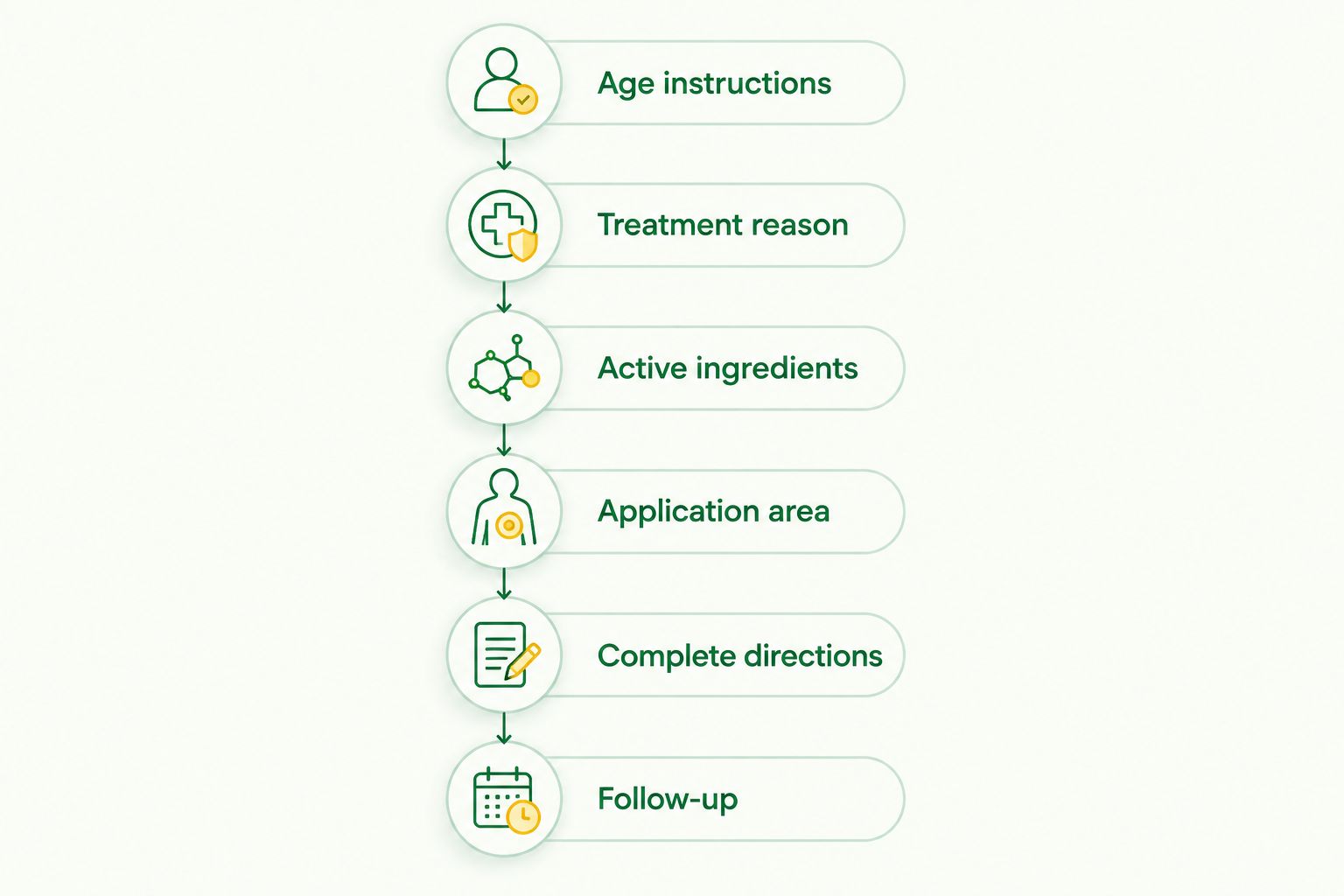
- Check the age instructions. Look for a minimum age, puppy-use directions, or a warning requiring veterinary advice. If the label does not answer the age question, ask before bathing.
- Confirm the reason for treatment. Ask which condition the shampoo is intended to address. Ordinary dirt, a diagnosed bacterial infection, and unexplained itching are different situations.
- Review every active ingredient. Some medicated shampoos combine chlorhexidine with another active ingredient. Approval of chlorhexidine alone does not establish approval of the whole formula.
- Confirm the application area. Ask whether treatment should cover the body or a particular area. Do not improvise around eyes, ear canals, genital tissue, or painful wounds.
- Get the complete directions. Confirm whether dilution is required, how long the shampoo should remain on the coat, how thoroughly to rinse, and when to repeat treatment.
- Agree on follow-up. Ask what improvement should look like and which changes mean you should stop treatment or arrange another examination.
This 2026 pre-bath checklist is about preventing mistakes, not choosing the strongest bottle. Write the veterinarian’s directions beside the product instructions so another household member does not accidentally change the treatment.
Is 2% chlorhexidine safer than 4% for a puppy?
Neither 2% nor 4% chlorhexidine is automatically the safer choice for your puppy. These concentrations appear in veterinary topical products, but concentration alone does not establish age suitability or determine the best treatment.
The whole formulation matters. Other active ingredients, cleansing agents, directions, and the condition being treated all affect whether a product fits your puppy’s needs.
Do not select a lower concentration as a workaround for an unclear label. Likewise, do not choose a higher concentration because the rash looks severe. Your veterinarian should select the formula rather than having you adjust it by guesswork.
Do not dilute a shampoo unless its label or your veterinarian directs you to do so. Adding water changes the formulation’s concentration and does not create a tested puppy-specific product. Keep the original bottle available throughout treatment so you can check its instructions.
Why chlorhexidine shampoo safety varies
There is no single safety answer that applies to every puppy and every bottle. These factors determine whether a particular treatment is appropriate:
- Age and general health: Very young, weak, or unwell puppies need special handling, including attention to warmth during cleaning.
- The underlying condition: An antiseptic addresses susceptible microorganisms, not every cause of itching, redness, or hair loss.
- The complete formula: Additional active ingredients and other components can change the product’s suitability and warnings.
- The treatment location: Eyes, ear canals, mucous membranes, and damaged tissue require precautions beyond an ordinary coat wash.
- Application and exposure: Dilution, contact time, rinsing, and opportunities to lick the shampoo affect how safely it is used.
- Previous reactions: A history of irritation or suspected allergy to the product needs veterinary review before another application.
Use these factors when discussing a 2026 treatment plan, rather than asking only whether chlorhexidine is generally safe. The useful question is whether this exact shampoo is appropriate for this puppy’s current condition.
How do you bathe a puppy with prescribed chlorhexidine shampoo?
Prepare everything before wetting your puppy. Use a stable, nonslip bathing area, comfortable water, clean towels, and a way to keep your puppy supervised without tightening restraint around the neck.
Follow the prescribed sequence. Do not add another medicated cleanser, essential oil, or home remedy to make the treatment seem more effective.
- Recheck the instructions. Confirm the product, any required dilution, the treatment area, and the prescribed contact time before starting.
- Wet the coat as directed. Keep water and shampoo away from the eyes and ear canals. Avoid directing a spray at the face.
- Apply gently. Work the shampoo into the intended area without vigorous scrubbing. Inflamed skin does not need abrasion.
- Prevent licking. Stay beside your puppy throughout the prescribed contact period. Do not leave a shampoo-covered puppy unattended.
- Rinse as directed. For a rinse-off shampoo, remove the product thoroughly, including from folds and areas where suds collect.
- Dry and observe. Towel-dry gently, keep your puppy comfortable and warm, and check for new irritation or unusual behavior.
Contact time and bathing frequency are product-specific. A schedule copied from an online comment is not a substitute for the directions your veterinarian gave for your puppy.
If the puppy becomes distressed, starts shivering, or develops obvious discomfort, stop the bath and address the immediate problem. Call your veterinarian for instructions before trying again.
What reactions mean you should stop using the shampoo?
Stop using chlorhexidine shampoo if your puppy develops new or worsening irritation during treatment. Increased redness, swelling, intense scratching, or obvious pain needs veterinary advice before another application.
If a reaction starts during a rinse-off bath, rinse away the shampoo and contact your veterinarian. Do not apply a second product to counteract the first unless instructed.
Facial swelling, difficulty breathing, collapse, or severe weakness requires emergency veterinary care. Take the product container with you, or have its ingredient list ready, so the veterinary team knows what your puppy encountered.
What should I do if shampoo gets in my puppy’s eyes?
Begin flushing the eye promptly with clean lukewarm water or sterile saline, and seek veterinary advice immediately. Squinting, redness, tearing, or pawing at the eye needs prompt assessment; do not wait for the next scheduled appointment.
What should I do if my puppy licks chlorhexidine shampoo?
Prevent further licking and contact your veterinarian or an animal poison-control service with the product details. Explain whether your puppy licked diluted bath suds or swallowed shampoo from the bottle, and describe any symptoms.
Do not induce vomiting unless a veterinary professional specifically instructs you to do so. Combination products contain different ingredients, so the exact bottle matters when assessing an exposure.
What about shampoo for ordinary puppy cleanup?
For an otherwise healthy puppy with a dirty coat, choose a nonmedicated product only after checking its age directions. Oatmeal, aloe, or a sensitive-skin description does not by itself establish newborn or puppy suitability.
K9 Outdoors is best for active dog owners shopping for outdoor gear, not for diagnosing puppy skin problems. Its grooming selection belongs in the cleanup conversation; veterinary advice determines whether your puppy needs an antiseptic treatment.
These products from the K9 Outdoors grooming selection illustrate routine-cleansing options, not approved substitutes for a prescribed medication. Confirm puppy suitability before using either one.
| Product | Best for | Stated product details | Limitation for this question |
|---|---|---|---|
| UBAVET Aloe & Oatmeal Shampoo for Dogs & Cats, 16.9 fl oz | Owners comparing a moisturizing cleanser for routine care | A 16.9 fl oz cleanser described for normal, dry, or sensitive skin | The supplied product details do not establish a minimum puppy age |
| Dr. Theo’s Dog Shampoo with Oatmeal, Cucumber & Aloe, 16 oz | Owners comparing an oatmeal, cucumber, and aloe dog shampoo | A 16 oz formula made in the USA | The supplied product details do not establish puppy suitability or infection treatment |
The useful comparison is purpose, not bottle size. Neither product description supplies the puppy-age guidance needed to recommend it for your particular dog, and a routine cleanser should not replace veterinarian-directed treatment.


Can I use chlorhexidine shampoo on a newborn puppy?
Do not start chlorhexidine shampoo on a newborn puppy without direct veterinary instructions. Newborn cleaning needs special attention to warmth and handling, and an adult-dog label does not establish neonatal safety.
Ask your veterinarian how to clean the affected area and whether an examination is needed. Avoid turning a small cleanup problem into an unnecessary full-body medicated bath.
How often should I use chlorhexidine shampoo on my puppy?
Use chlorhexidine shampoo only as often as the product directions and your veterinarian prescribe. There is no universal puppy schedule that applies across formulations and diagnoses.
Do not increase bathing frequency because improvement seems slow. Contact your veterinarian if symptoms persist or worsen so the diagnosis and treatment plan can be reassessed.
Can I use human chlorhexidine wash instead?
Do not substitute a human chlorhexidine wash for the veterinary shampoo your puppy was prescribed. Human products can have different ingredients, concentrations, and application instructions.
The same active ingredient does not make two products interchangeable. Ask your veterinarian to approve any replacement before it touches your puppy’s skin.
FAQ
Is chlorhexidine shampoo safe for puppies with itchy skin?
Chlorhexidine shampoo can be appropriate when a veterinarian identifies a condition it treats and approves the exact product for your puppy. Itching alone does not establish a bacterial or yeast-associated skin problem.
Can I use chlorhexidine shampoo on an eight-week-old puppy?
An eight-week-old puppy needs product-specific age guidance and veterinary approval before chlorhexidine shampoo use. Age alone does not establish that a particular formula is suitable.
Is 2% chlorhexidine shampoo always safer than 4% for puppies?
Neither 2% nor 4% chlorhexidine is automatically safer for puppies. Your veterinarian should consider the whole formulation, your puppy’s age, and the condition being treated.
How long should chlorhexidine shampoo stay on my puppy?
Use the contact time specified for the exact shampoo and confirmed by your veterinarian. Do not transfer a contact time from another product or extend it to make treatment stronger.
Can my puppy lick chlorhexidine shampoo during a bath?
Prevent your puppy from licking chlorhexidine shampoo during bathing. If licking or swallowing occurs, contact your veterinarian or an animal poison-control service with the product details.
Does chlorhexidine shampoo kill fleas on puppies?
Do not use chlorhexidine shampoo as your puppy’s flea treatment. Ask your veterinarian for an age-appropriate flea-control plan, and do not assume an antiseptic shampoo provides parasite protection.
Is oatmeal shampoo better than chlorhexidine for puppies?
Oatmeal shampoo and chlorhexidine shampoo serve different purposes, so neither is universally better. An age-appropriate routine cleanser suits ordinary cleanup; a diagnosed condition can require veterinarian-directed antiseptic treatment.
One last thing
Before your puppy’s next bath in 2026, photograph the label and write down any previous skin reaction. That simple record gives your veterinarian the exact ingredients and instructions to review, rather than a remembered product name.
Keep the same distinction when browsing K9 Outdoors: outdoor gear and routine grooming support everyday adventures, while medicated skin care needs a condition-specific plan. The safest next move is to confirm the bottle before treating the skin.