


No—cow hooves are not a good choice for protecting your dog's teeth. Their hard surface can fracture teeth, and broken pieces can injure the mouth or cause choking or digestive obstruction. This 2026 guide explains why scraping away some buildup does not make a hoof a safe dental tool, and what to use for dental care and downtime instead.
- Are cow hooves good for dogs teeth? No—the risk of tooth fractures outweighs their value as dental chews.
- The American Veterinary Dental College recommends regular toothbrushing; hard chews do not replace dental care.
- Choose dental products with Veterinary Oral Health Council acceptance for the specific plaque or tartar claim.
- Use lick mats for supervised enrichment, not tooth cleaning, and stop chewing if your dog shows mouth pain.
Are cow hooves good for dogs' teeth?
Cow hooves are a poor dental-care choice because teeth can break against material that does not yield under pressure. Chewing can rub exposed tooth surfaces, but that action does not reliably clean every tooth or address disease below the gumline.
Separate your dog's need to chew from your dog's need for dental care. K9 Outdoors offers dog gear and enrichment options, but a retail chew or toy is not a substitute for a veterinary dental assessment.
| Option | Best for | Useful feature | Main limitation |
|---|---|---|---|
| Cow hoof | Not recommended for dental care | Provides chewing activity | Hardness creates a tooth-fracture risk; fragments create additional hazards |
| Toothbrush and dog toothpaste | Routine home plaque control | Lets you clean accessible tooth surfaces directly | Requires gradual training and does not remove established tartar |
| VOHC-accepted dental chew | Supplementing a home dental routine | Meets acceptance criteria for its stated plaque or tartar claim | Requires correct sizing and does not replace brushing or treatment |
| Appropriately sized rubber toy | Supervised play and chewing | Offers an alternative to rigid animal parts | Can still be damaged or swallowed; dental benefit is product-specific |
| Lick mat | Supervised food enrichment | Gives your dog a licking activity | Is not a toothbrush or a chew toy |
Why this matters
A dog can enjoy chewing something that is bad for its teeth. Enthusiasm is not a safety test, and a chew that lasts a long time is not automatically a better choice.
A fractured tooth can expose sensitive internal tissue and require veterinary treatment. Dogs also hide discomfort: continuing to eat does not rule out a painful tooth. For your 2026 home-care routine, judge a dental product by its evidence and suitability—not by how tough it looks.
The American Veterinary Dental College's home-care guidance supports regular brushing and cautions against hard objects that can damage teeth. The Veterinary Oral Health Council evaluates qualifying products for specific plaque or tartar claims; its acceptance is not a promise that every product suits every dog.
Why cow-hoof risk varies between dogs
The dental concern remains even when one dog appears to tolerate a hoof better than another. These factors affect how a chewing session unfolds:
- Chewing style: A dog that clamps down forcefully puts different stress on teeth than a dog that mostly licks or gently mouths an object.
- Existing dental damage: Cracked, worn, loose, or diseased teeth need veterinary assessment rather than a harder chew.
- Mouth and chew size: A piece small enough to swallow creates a different hazard from a large piece that encourages forceful biting.
- Changes during chewing: Cracks, sharp edges, and detached fragments make an already questionable chew more hazardous.
- Swallowing behavior: Dogs that gulp pieces need particular caution with edible chews and damaged toys.
- Supervision: Watching lets you interrupt unsafe behavior, but it cannot prevent every tooth fracture.
Supervision does not turn a hard hoof into a tooth-safe chew. You can remove a fragment when you see it; you cannot always interrupt the bite that breaks a tooth.
Do cow hooves remove plaque or tartar?
Cow hooves can rub tooth surfaces, but surface scraping is not the same as dependable plaque control. A chew also does not reach every tooth surface simply because your dog works on it enthusiastically.
Plaque is a bacterial film. Tartar is mineralized buildup, and established tartar requires professional assessment and cleaning rather than more aggressive home scraping. Do not use a hoof to try to chip deposits off a tooth.
For dental products you buy in 2026, check the specific claim. A product accepted for tartar control is not automatically accepted for plaque control, and a package that says dental is not automatically VOHC-accepted.
Choose a dental product for its verified purpose, not its hardness. Ask your veterinarian whether the product fits your dog's teeth, chewing behavior, diet, and swallowing habits.
Are cow hooves safer than antlers or bones?
Neither cow hooves nor antlers are a good default for protecting teeth. Both are hard objects that can cause fractures, so replacing one with the other does not solve the central problem.
Bones also carry tooth-fracture and fragment-related risks. The useful comparison is not which animal part lasts longest; it is whether the object is appropriate for your dog's mouth and whether it serves a supported dental purpose.
Avoid treating natural as a safety certification. Natural materials still have physical properties that can damage teeth or create swallowing hazards.
Can puppies or senior dogs chew cow hooves?
Skip cow hooves for puppies and senior dogs rather than assuming smaller pieces or shorter sessions make them suitable. Puppies need age-appropriate chewing options, while older dogs need choices matched to their actual dental condition.
Age alone does not reveal whether a tooth is healthy. Ask your veterinarian about suitable textures if your dog is teething, has missing teeth, has had dental extractions, or has a history of fractured teeth.
Do not introduce a tough chew to test a sore mouth. Reluctance to chew, dropping food, or chewing on one side calls for an examination—not a different hoof.
What should you use instead of cow hooves?
Start with the job you want the item to do. Dental cleaning, chewing, and licking are different activities; no single object needs to perform all of them.
Toothbrushing: best for routine home plaque control
Aim to brush your dog's teeth 1 time per day, using dog toothpaste and a suitable soft toothbrush. Daily brushing is the standard home-care goal supported by veterinary dental guidance, not a guarantee against dental disease.
Build acceptance gradually. Let your dog become comfortable with lip handling and the brush before trying to clean the outer tooth surfaces. Use pet toothpaste, not human toothpaste, and stop if handling appears painful.
The limitation is straightforward: brushing does not remove established tartar or treat an infected or fractured tooth. Arrange a veterinary examination when you see buildup, persistent bad breath, bleeding, or discomfort.
VOHC-accepted chews: best for an additional dental tool
Look for the Veterinary Oral Health Council seal and read the exact plaque or tartar claim. Follow the product's directions for size, feeding, and supervision, and include edible chews in your dog's overall food intake.
The benefit is evidence tied to a stated dental outcome. The limitation is that acceptance does not eliminate choking, digestive, or individual suitability concerns, and it does not make a chew a replacement for brushing.
Rubber toys: best for supervised chewing and play
Choose a toy that fits your dog's mouth and chewing style. Some rubber toys offer more give than rigid animal parts, but rubber is not a universal safety guarantee: a dog that tears pieces away needs a different activity.
The Natural Rubber Dog Bone Chew Toy for Small Dogs measures 5.5 inches long and 2 inches wide according to its product listing. Those dimensions help you assess fit; they do not establish dental effectiveness or make the toy appropriate for every small dog.
Lick mats: best for supervised food enrichment
A lick mat changes the activity from gnawing to licking. Use a suitable food your dog already tolerates, supervise the session, and remove the mat if your dog starts biting or tearing it.
The Camp eMat has suction cups and is presented as an enrichment option for active dogs. Its limitation is just as important as its purpose: it is not a dental treatment, and its outdoor theme does not establish tooth-cleaning benefits.
K9 Outdoors dog enrichment gear is best for active-dog owners choosing supervised play and licking activities, not treatment for dental disease. The following options serve those enrichment roles; neither is presented here as a proven plaque-removal product.


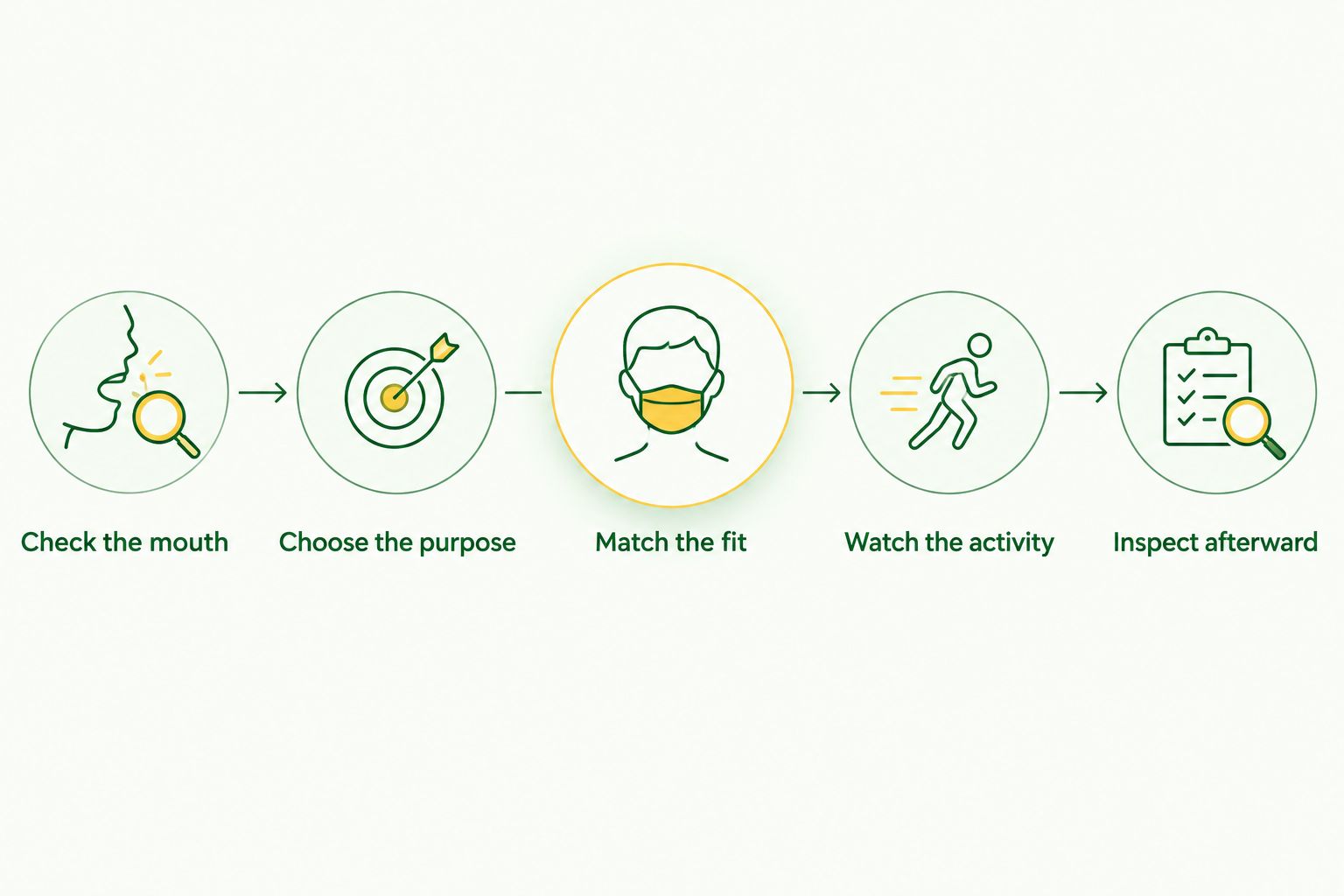
How do you replace a cow hoof without losing enrichment?
Use this sequence when revising your dog's chew routine in 2026. Keep the dental-care decision separate from the activity you offer during a quiet evening or a campsite break.
- Check the mouth. Look for obvious bleeding, a broken tooth, swelling, or reluctance to accept normal food. Do not force your dog's mouth open or put your fingers near a painful area.
- Choose the purpose. Use brushing for routine plaque control and an appropriate toy or lick mat for enrichment. Ask your veterinarian about an additional dental chew.
- Match the fit. Read the manufacturer's sizing guidance and consider how your dog actually uses objects. Do not rely on breed labels alone.
- Watch the activity. Interrupt biting at a lick mat, tearing pieces from a toy, or gulping a chew. Trade calmly rather than grabbing an item from a guarding dog.
- Inspect afterward. Check the item for damage, clean it according to its instructions, and remove damaged equipment from use.
These steps help you manage enrichment; they do not certify an object as safe. If your dog repeatedly destroys and swallows toys, ask your veterinarian for an individualized plan.
What if your dog has already chewed a cow hoof?
Remove the hoof and check for missing pieces without forcing an examination of your dog's mouth. If your dog seems comfortable and has no obvious injury, contact your veterinarian for advice about any suspected swallowed fragment or dental damage.
Seek urgent veterinary help for breathing difficulty, collapse, repeated retching, or an apparent choking episode. Repeated vomiting, abdominal pain, inability to keep water down, or marked lethargy after swallowing a piece also needs prompt veterinary attention. Do not induce vomiting unless a veterinarian directs you to do so.
A visible chip, bleeding near a tooth, facial swelling, drooling, dropping food, or chewing on one side warrants a dental examination. Avoid further chewing and do not attempt to file, glue, or scrape a damaged tooth at home.
FAQ
Are cow hooves good for dogs' teeth if I supervise?
No—supervision does not remove the tooth-fracture risk from cow hooves. Watching helps you notice fragments or unsafe chewing, but a tooth can break during a single bite.
Can I soften a cow hoof to make it safe for my dog?
Do not rely on soaking or softening a cow hoof to make it tooth-safe. Home preparation does not establish a dependable hardness or eliminate fragment and swallowing hazards.
What's the best way to clean my dog's teeth at home?
Daily brushing with dog toothpaste and a suitable soft toothbrush is the standard home-care approach. Ask your veterinarian about existing buildup or pain before brushing an uncomfortable mouth.
Is a lick mat better than a cow hoof for dental cleaning?
A lick mat is an enrichment tool, not a dental-cleaning replacement. Use it for supervised licking and keep brushing and veterinary dental care as separate parts of your dog's routine.
Can my dog have a broken tooth and still eat normally?
Yes—a dog can continue eating despite a painful or fractured tooth. Arrange a veterinary examination if you notice a chip, bleeding, swelling, dropped food, or a change in chewing.
Does a VOHC seal mean a dental chew is safe for every dog?
No—the VOHC seal identifies acceptance for the product's stated plaque or tartar claim, not universal suitability. Follow sizing and feeding directions and ask your veterinarian about dogs with dental disease or a tendency to swallow pieces.
One last thing
A chew lasting longer can mean your dog's teeth are doing more work against an unforgiving surface—not that the chew is healthier. Keep that distinction on your 2026 shopping checklist.
Use K9 Outdoors dog enrichment gear for an activity your dog can enjoy under supervision. Let dental evidence, your dog's mouth, and veterinary advice determine the dental-care routine.