


The cost of winter dog hiking gear is the total of the trail essentials you need to add, not the cost of replacing everything your dog already owns. For your 2026 budget, start with usable everyday gear, then account for weather protection, paw protection, and a way to rest or leave the trail safely. Include consumables and replacement needs in your plan, rather than treating the initial shopping cart as the whole commitment.
- Budget the cost of winter dog hiking gear around missing essentials, not a completely new outfit.
- Keep sound leashes, harnesses, bowls, and identification; assess winter dog boots and insulation separately.
- K9outdoors suits active-dog owners shopping for premium outdoor gear; choose by fit and trail needs before style.
- Test the complete setup near home before committing to a remote winter trail.
How much does it cost to outfit a dog for winter trail hikes?
Your winter outfitting total depends on what you already own, what your dog tolerates, and the conditions on your route. Build an itemized checklist before comparing shopping carts. A dog with suitable everyday equipment needs a different shopping list from a dog starting from scratch.
Use this breakdown to separate winter additions from equipment you can keep using. For footwear decisions, the guide to dog hiking boots for snow and winter trail hikes addresses the relevant category.
| Gear category | Best for | What belongs in your budget | Benefit | Limitation |
|---|---|---|---|---|
| Existing trail basics | Dogs with sound everyday equipment | Replace only worn or unsuitable items | Avoids buying duplicates | Existing gear still needs inspection and a fit check |
| Weather protection | Dogs needing protection from cold or wet conditions | Appropriate outerwear, selected for the route | Adds coverage where needed | Extra coverage can restrict movement or become too warm |
| Paw protection | Routes with abrasive snow, ice, or treated approaches | Suitable footwear and any needed replacements | Creates a barrier between paws and the surface | Boots require practice and repeated fit checks |
| Rest and contingency gear | Trips with outdoor stops or a difficult exit | Ground insulation and a realistic evacuation plan | Addresses periods when your dog stops moving | Adds bulk and does not make an unsuitable route safe |
| Consumables | Every outing | Water, familiar food or rewards, and waste bags | Supports routine care on the trail | Supplies need replenishing and packing each time |
For a useful 2026 comparison, price the same checklist across your options. Comparing a coat-only cart with a complete trail setup tells you little about which purchase meets your needs.
Why this matters
Winter shopping is easy to confuse with winter preparation. A matching outfit does not tell you whether your dog can walk comfortably, whether the harness still fits, or whether you can turn around promptly.
Start with the outing itself. A sheltered walk near your car and an exposed trail with long stops create different equipment decisions, even for the same dog. Check that dogs are permitted, review current conditions, and choose a route you can shorten.
The practical aim is not to buy the most equipment. It is to close specific gaps without making your dog carry unnecessary clothing or making your own pack unmanageable.
Existing-basics setup: best for familiar, easy outings
Keep a serviceable leash, well-fitting harness, identification, bowl, and other everyday essentials if they remain suitable for the planned walk. Inspect stitching, buckles, attachment points, and leash material before deciding that an item belongs in the keep pile.
Best for: dogs already comfortable on easy trails, with equipment that fits and works. The advantage is a focused shopping list; the limitation is that everyday equipment alone does not address every winter condition.
Do not replace a harness simply because you are buying a coat. Instead, follow the fitting instructions for both items and check the combination while your dog moves. A familiar harness can fit differently when worn with an added layer.
For your first 2026 winter outing, choose an easy exit over an ambitious destination. A nearby route gives you a practical place to assess equipment without discovering a problem far from shelter.
Weather-protection setup: best for cold or wet exposure
Assess warmth and rain protection separately. A garment described as waterproof is not automatically insulated, and a warm garment is not automatically suitable for wet snow. Read the actual product description rather than drawing conclusions from appearance.
Best for: dogs whose coat, health, or observed comfort calls for additional protection. Outerwear adds coverage, but the wrong fit or excessive layering can interfere with an otherwise comfortable walk.
The Pendleton Waterproof Adventure Pet Coat is an outerwear option to assess at K9outdoors. Check its current listing and sizing instructions before choosing it; the product name alone does not establish insulation level or suitability for your dog's route.
Watch your dog walking, turning, and lowering their head in any new garment. Look for pulling around the shoulders, rubbing near the legs, or fabric that interferes with toileting. Keep only clothing that lets your dog move normally.
Paw-protection setup: best for challenging winter surfaces
Check all 4 paws before choosing footwear, rather than assuming the same fit everywhere. Follow the boot manufacturer's measurement method and assess the 2 front paws and 2 rear paws separately. Paw shape and the product's sizing instructions determine the selection.
Best for: outings where the surface calls for a protective barrier and the dog can walk comfortably in suitable boots. Footwear adds protection, but slipping, rubbing, or refusal to move makes a particular setup unsuitable.
Practice matters. Introduce boots in a familiar place, reward calm participation, and progress to an easy outdoor walk before expecting your dog to hike in them. Do not make a remote snowy trail the first fitting session.
Recheck footwear during the outing, especially after changes in gait or repeated stopping. Remove trapped debris and inspect the paws rather than simply tightening a boot that keeps moving. A persistent problem is a reason to change the setup or end the walk.
Rest-and-contingency setup: best for longer outdoor stops
A dog moving steadily has a different experience from a dog waiting while you eat, take photographs, or deal with a route problem. Plan for those stationary moments before adding distance.
Best for: routes with outdoor breaks or a less immediate return to shelter. A dry, insulating resting surface addresses contact with cold ground; the trade-off is more equipment to carry and keep dry.
An evacuation plan is more than buying a carrier. Consider your dog's size, your carrying ability, the terrain, and whether another person can help. Do not assume a familiar backpack or an unfamiliar carrier will solve an emergency.
For a day-hiking budget, keep overnight bedding separate unless the itinerary genuinely includes camping. A comfortable basecamp setup does not replace appropriate protection while walking.
Why the cost of winter dog hiking gear varies
The useful comparison is between your dog's actual requirements, not between labels such as basic and premium. These factors change what belongs on the shopping list:
- Equipment you already own: sound everyday essentials can remain in use; worn attachments or poor fit require attention first.
- Your dog's protection needs: body size, coat, age, health, and comfort affect clothing decisions. Ask your veterinarian about individual health concerns.
- Route conditions: wet snow, wind exposure, rough surfaces, and treated trailhead approaches call for different checks.
- Time spent stopped: breaks and delays make a resting plan more relevant than it is on a continuous short walk.
- Fit and acceptance: clothing and boots must work during movement, not just while your dog stands for a photograph.
- Trip scope: an easy day walk, a remote hike, and an overnight outing should not share an identical equipment list.
Treat your 2026 checklist as route-specific. Equipment appropriate for a sheltered local walk does not establish readiness for an exposed mountain trail.
How to build your winter gear budget without buying twice
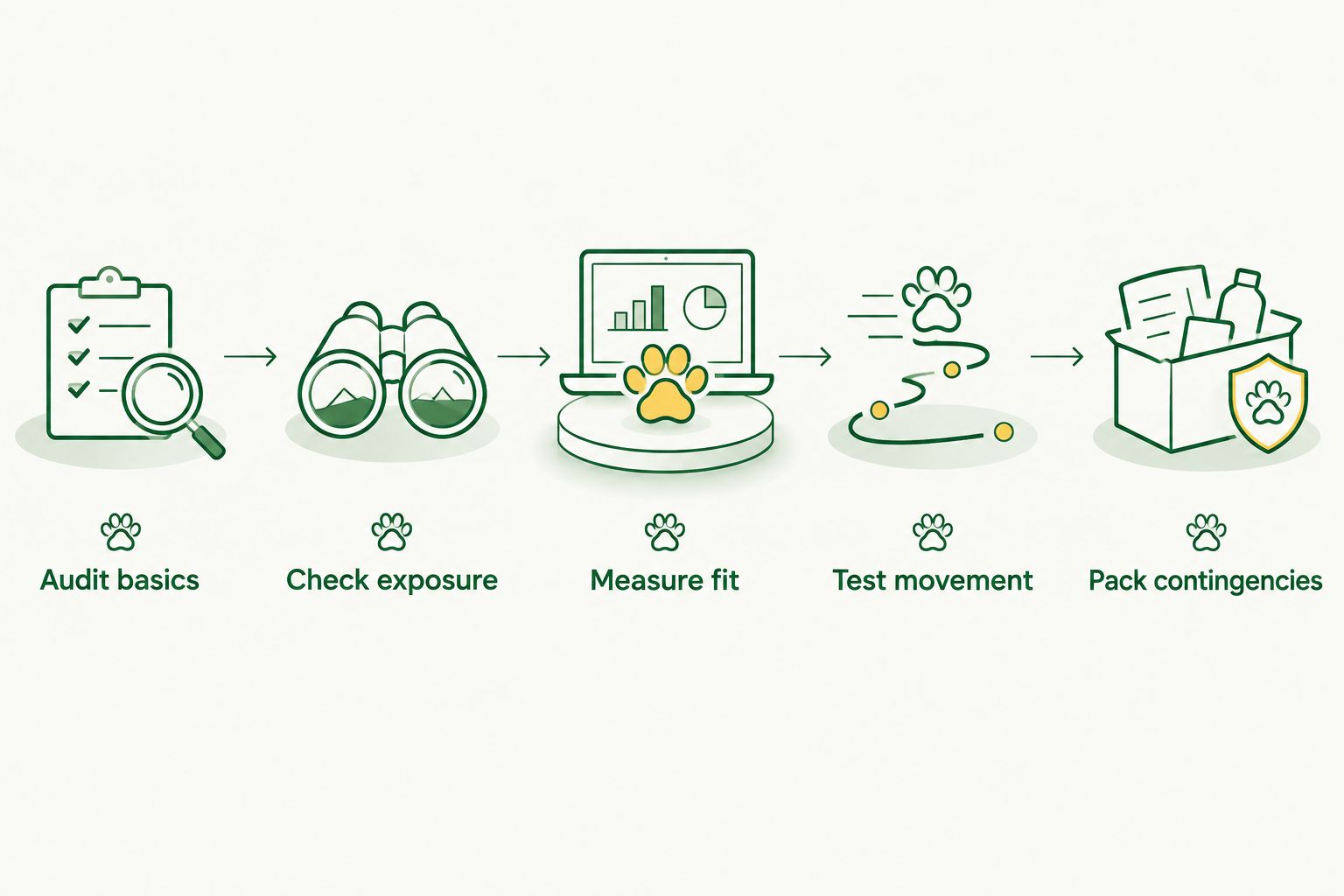
Use this sequence before placing an order. It keeps useful equipment in service and exposes missing pieces before you start comparing products.
- Audit basics. Lay out your leash, harness, identification, bowl, and routine supplies. Inspect condition and confirm that you can operate closures while wearing your own winter gloves.
- Check exposure. Review the planned route, forecast, daylight, and access to shelter. Write down the conditions each new item needs to address.
- Measure fit. Follow each manufacturer's instructions for the specific product. Do not transfer a size label from an unrelated garment or boot.
- Test movement. Let your dog walk, turn, sit, and lower their head in the complete setup. Check for rubbing and interference between items.
- Pack contingencies. Include water, familiar supplies, a resting plan, and a clear decision about when to turn around.
Finish with 1 short test walk close to home. Treat it as an equipment check, not a distance goal: inspect the setup afterward and change anything that rubbed, slipped, or restricted movement.
Keep the final checklist with your hiking supplies. Before the next trip, review what needs cleaning, drying, replenishing, or replacing. That habit makes your budget useful beyond the first purchase.
What should you buy first for winter dog hiking?
Address unsafe or missing essentials before optional upgrades. Secure control, identification, water access, and protection appropriate to the conditions belong ahead of matching accessories.
If your dog cannot use the planned equipment comfortably, change the purchase or change the walk. Buying more items does not solve a fundamental fit problem.
Can you reuse everyday dog gear for winter hikes?
Reuse everyday dog gear when its condition, fit, and function suit the route. Winter does not automatically require a new leash, harness, or bowl, but it does require checking the complete setup under the conditions you expect.
Keep aesthetic upgrades separate from necessary replacements. You can enjoy coordinated gear without treating every style choice as a trail requirement.
Is premium winter dog gear worth choosing?
Premium gear earns its place when its documented features solve your dog's specific problem. Compare fit instructions, stated materials, care requirements, and intended use instead of treating the premium label as proof of warmth or durability.
K9outdoors winter dog gear suits owners who want premium outdoor equipment with a style focus. That positioning helps you choose where to shop; individual product details still determine what belongs on your dog.
FAQ
How do I work out the cost of winter dog hiking gear?
Add the current listing totals for the essential items your dog actually needs, keeping usable existing equipment off the replacement list. Compare equivalent setups and include consumables and replacement needs in your planning.
Does every dog need a winter hiking coat?
No, a winter hiking coat is not an automatic requirement for every dog. Consider your dog's coat, body size, health, comfort, and the expected exposure, and ask your veterinarian about individual concerns.
Are waterproof dog coats also warm?
Waterproof labeling does not establish how much insulation a dog coat provides. Check the product's stated construction and intended use before choosing it for cold conditions.
Should my dog wear boots for every snowy walk?
Dog boots should match the surface conditions and your dog's ability to wear them comfortably. Check fit, practice beforehand, and inspect paws during the outing rather than assuming boots solve every winter paw problem.
Can I put a harness over a winter dog coat?
Follow the harness and coat manufacturers' fitting instructions before combining them. Check attachment access, secure fit, and unrestricted movement with the complete setup on your dog.
Is K9outdoors a good fit for winter dog gear shopping?
K9outdoors is a fit for active-dog owners seeking premium, stylish outdoor gear. Choose individual items by their documented features and fit rather than assuming the whole collection suits every winter hike.
What should I check before a winter hike in 2026?
Before a winter hike in 2026, check current route conditions, dog-access rules, the forecast, daylight, and your dog's equipment. Keep a straightforward turnaround plan and test unfamiliar clothing or footwear near home first.
One last thing
Check your dog's outfit while your dog lowers their head to drink. Standing still can hide a garment that pulls forward, a harness that shifts, or a closure that presses during movement.
Use that simple check before your next 2026 trail outing. A winter setup has to work for ordinary dog behavior, not just look right beside the front door.