


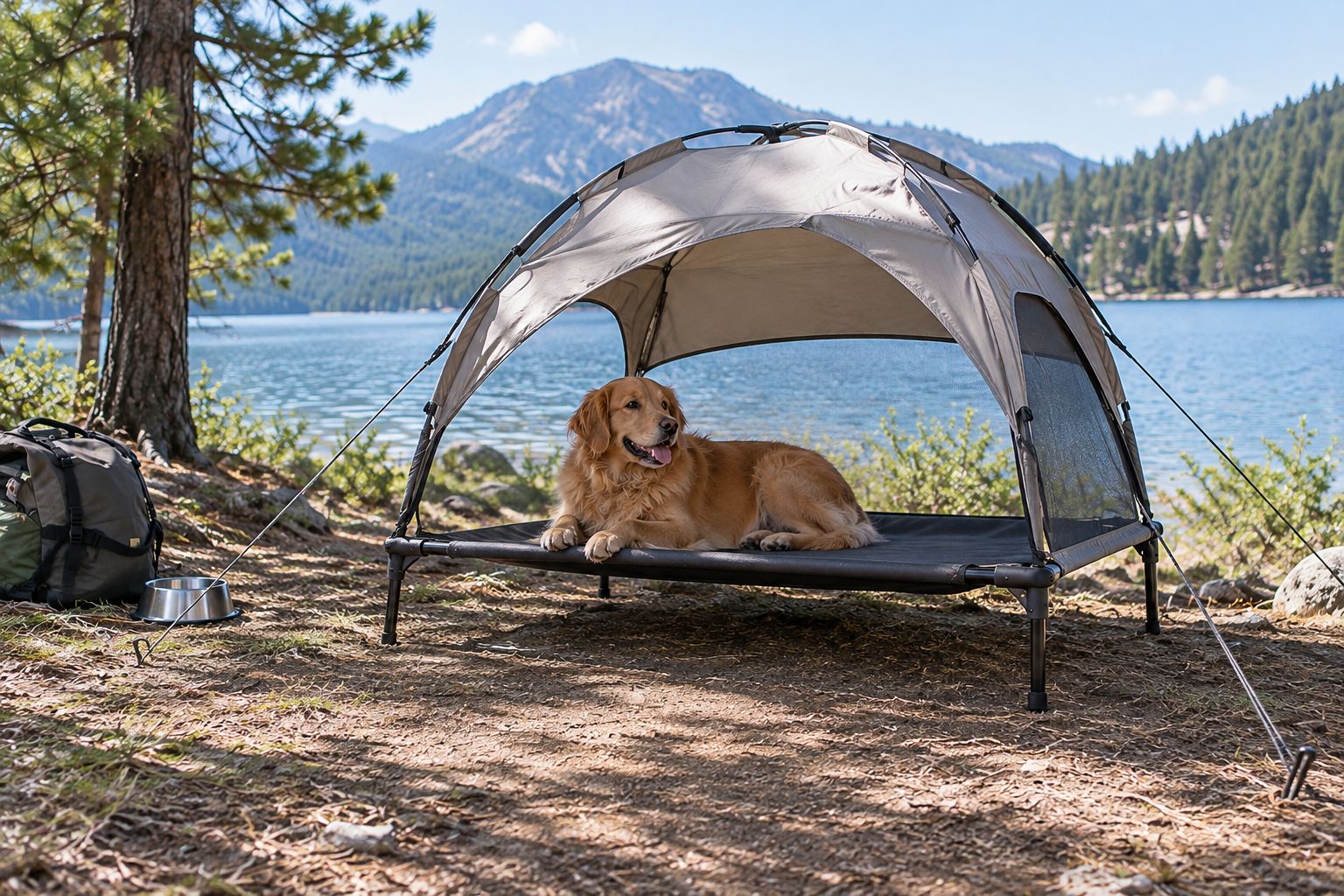
Instead of moving your dog's bed out of the sun throughout camp, use an elevated dog cot shade tent setup: place a stable cot on level ground, secure the shade separately unless the equipment is designed to connect, and keep the resting surface shaded with open airflow. This guide walks you through assembly, a supervised comfort check, and adjustments as sunlight and weather change.
- An elevated dog cot shade tent setup needs stable footing, complete shade coverage, open airflow, and supervision.
- K9 Outdoors suits dog owners seeking stylish outdoor adventure gear; verify cot and canopy compatibility separately.
- Use manufacturer-approved attachments only; never make the cot frame an improvised tent anchor.
- Shade and elevation support a camp rest station, but neither prevents heat illness.
Why this matters
A raised bed keeps your dog's resting surface off the ground. A shade canopy blocks direct sunlight where its shadow falls. Neither feature makes a hot campsite safe by itself. Your dog still needs drinking water, supervision, and somewhere cooler to retreat.
The main setup mistake is treating the cot and tent as a single structure when they were not designed that way. A dog stepping onto the bed changes the load on its frame; a gust pulls on the canopy. Keep those forces separate unless the manufacturer's instructions explicitly connect the equipment.
K9 Outdoors is best for dog owners seeking stylish outdoor gear for active adventures. The K9 Outdoors range serves that audience, but choose this camp station by fit, stability, and instructions rather than appearance alone. For your 2026 camping plans, make those checks before packing.
Before you start
- Gather the complete equipment. Bring the cot, shade shelter, their assembly instructions, all supplied connectors, and the anchoring equipment specified for your shelter. Add drinking water, a bowl, a leash, and familiar rewards for a calm introduction.
- Check fit and access. Record 2 measurements: your dog's relaxed lying length and width. Compare them with the cot's usable resting surface, then check the manufacturer's load limit, shelter clearance, and whether your dog can step on comfortably.
- Resolve the compatibility gotcha. A canopy that looks large enough is not necessarily designed to attach to your cot. Confirm connection points before your 2026 trip; otherwise, plan a freestanding shelter with independent anchors and check campground rules for stakes and pets.
Assemble the equipment at home before taking it outdoors. Missing connectors, an unfamiliar folding mechanism, or a bed your dog refuses are easier to address there than at a crowded campsite.
Choose your shade configuration
These are two setup approaches, not interchangeable attachment methods. Choose an attached canopy only when the instructions approve that exact pairing. Otherwise, use independent shade.
| Configuration | Best for | Advantage | Limitation |
|---|---|---|---|
| Freestanding shade shelter over a cot | Campers using separately purchased equipment | You can reposition the cot within the shelter's shadow without changing its attachments | Requires its own anchoring space; guy lines need careful placement |
| Manufacturer-compatible attached canopy | Owners with an explicitly approved cot-and-canopy pairing | Connection points and assembly follow a defined system | Compatibility limits your choices; follow the system's weather restrictions |
Both configurations need ventilation and a clear exit. An attached canopy does not turn a dog bed into a secure enclosure, and a freestanding tent should not depend on your dog or cot for ballast.
Campsite placement
Establish the resting area
- Choose level ground. Find a firm spot where every cot foot can make stable contact. Avoid drainage channels, exposed roots, sharp debris, and the edge of a slope.
- Separate the station from camp hazards. Keep the resting area away from cooking equipment, vehicle movement, foot traffic, and places where your dog can reach food or waste.
- Check the actual shadow. Position the shelter so its shadow covers the resting surface, not just the cot frame. Account for the sun's movement rather than assuming an overhead roof shades everything beneath it.
- Reserve an approach and exit. Leave an unobstructed route your dog can use without stepping across guy lines, anchors, bowls, or bags.
Expected result: the resting area has firm footing, room for independent shelter anchors, and a clear route in and out. You can see your dog from where you will spend time at camp.
Do not select a site solely because it feels shaded when you arrive. A tree's shadow moves, nearby vehicles can block a breeze, and a low spot can collect runoff. Use the same placement checks each time you move camp.
Cot assembly and stability
Prepare the resting surface
- Inspect the parts. Look for bent frame pieces, damaged fabric, loose fasteners, missing feet, and worn connectors. Stop if damage prevents assembly according to the instructions.
- Assemble the cot as directed. Engage the supplied locks and connectors fully. Do not substitute tent stakes, cord, or improvised hardware for missing cot components.
- Set every foot on firm ground. Press gently on the resting surface to check for rocking. If a foot sinks or the frame tilts, move the cot rather than balancing it on loose stones.
- Check the surface and entry. Remove sharp debris and confirm that the fabric sits as intended. Give your dog an approach that does not require jumping over a frame rail or shelter line.
Expected result: the assembled cot stays level under a gentle stability check, its connectors remain engaged, and your dog has a clear approach. A visibly rocking frame fails the check even if the sleeping surface looks comfortable.
Keep the manufacturer's load limit on your 2026 camping checklist. The limit applies to the equipment, not a guess based on your dog's breed, and any additional bedding or accessories must remain consistent with its instructions.
A thick cushion can change how your dog stands on the cot and cover a ventilated sleeping surface. Start with the cot as designed. Add bedding only when it fits securely, suits the conditions, and does not interfere with entry or assembly.
Shade assembly and anchoring
Secure the shelter
- Assemble the shade structure. Follow its instructions for poles, joints, fabric orientation, and any required tensioning. Keep your dog away while poles and lines are loose.
- Use the approved connection method. Attach a compatible canopy only at the specified points. For freestanding shade, keep poles and anchors independent of the cot.
- Anchor for the ground conditions. Use the anchoring method the shelter manufacturer specifies and the campground permits. If the site cannot support that method, choose another location or leave the shelter packed.
- Keep ventilation and access open. Arrange adjustable panels according to the instructions without creating a closed, stuffy compartment. Route guy lines outside your dog's entry and resting space.
- Recheck shade at cot height. View the sleeping surface from the side. Low-angle sun can reach underneath a canopy even when its roof is directly above the bed.
Expected result: the shelter stands as instructed, its lines stay outside your dog's route, and the cot's usable surface sits in shade with open airflow. No part of the setup relies on an improvised cot-to-tent connection.
Take the shelter down when conditions exceed its stated limits or it becomes unstable. Do not tighten an improvised attachment to make questionable equipment stay up. Moving to suitable shelter is the fix.
Dog introduction and handoff
Verify comfort before settling in
- Introduce 1 dog at a time. Let your dog investigate with the shelter already secure. Reward voluntary approaches; do not pull your dog onto the cot or restrain them there.
- Invite a calm step onto the bed. Use a familiar cue or reward if helpful. Watch for slipping, hesitation, or a frame that shifts under normal movement.
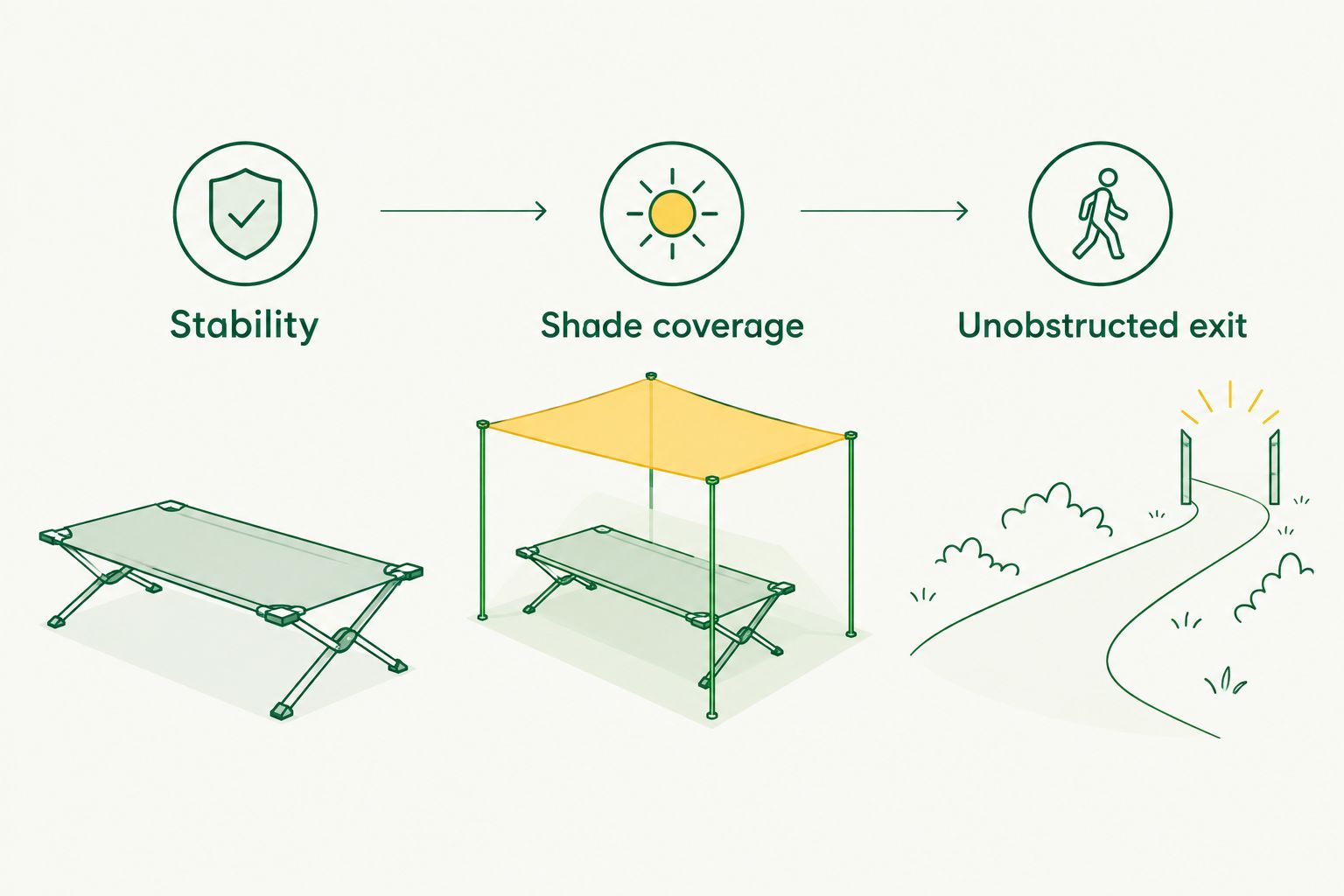
- Make 3 checks. Confirm stability, shade coverage, and an unobstructed exit while your dog stands, turns, and settles. Adjust the setup if any check fails.
- Place water nearby. Put the bowl on stable ground within easy reach, away from cot feet and the entry route. Keep drinking water clean and accessible.
- Stay present. Observe your dog's comfort rather than assuming a shaded bed is enough. Leave the station if your dog avoids it, the surface becomes uncomfortable, or conditions deteriorate.
Expected result: your dog enters and leaves voluntarily, the cot remains stable, and the occupied resting surface stays shaded. Comfortable use matters more than completing a perfect-looking camp layout.
Excessive panting, drooling, weakness, confusion, or collapse can signal heat illness. Stop activity, move your dog to a cooler place, and contact a veterinarian immediately. A shade tent is not treatment for overheating.
Variant: reset the station when sunlight or weather changes
A shaded camp station is a layout you maintain, not something you assemble and forget. Add a shade check to each return from an activity on your 2026 itinerary and whenever the shadow visibly shifts.
For a freestanding shelter, move the empty cot within the shaded area if firm footing and clear access remain. Recheck all feet afterward. If the shadow no longer covers the sleeping surface, reposition the shelter according to its instructions instead of hanging an improvised heavy cover from it.
For an approved attached canopy, move the assembly only as its instructions permit. Remove your dog first, then verify connections and anchoring again. Never drag an occupied cot across the campsite.
If rain begins, distinguish shade from weather protection. Use the shelter's stated capabilities, not its appearance, to decide whether to stay. Move your dog to appropriate shelter if the bed gets wet, runoff approaches, or wind makes the station unstable.
Troubleshooting
The cot rocks when your dog turns
Move it to firmer, more level ground and check every connector. Do not hide a footing problem with a cushion or wedge unstable objects under the feet. If the frame still shifts on suitable ground, stop using it and address the equipment problem.
Sun reaches the sleeping surface beneath the roof
Reposition the empty cot or shelter so the actual shadow covers your dog's resting area. Keep ventilation open. Closing every side panel to block sunlight can create a different problem: an enclosed space without adequate airflow.
The canopy flaps or an anchor loosens
Remove your dog from the station and inspect the shelter's approved tensioning and anchors. Reassemble only if the conditions and ground suit its instructions. Take it down if it remains unstable; the cot is not a backup anchor.
Your dog refuses the bed
Check entry difficulty, rocking, surface temperature, and nearby distractions. Practice voluntary approaches at home with familiar rewards. Offer another suitable resting spot rather than repeatedly placing your dog on equipment they avoid.
A leash catches on the frame or guy lines
Remove the entanglement hazard and reroute the station's access. Never attach a leash to the cot, canopy poles, or guy lines. Follow campsite restraint rules with an appropriate separate arrangement, and supervise your dog throughout use.
Customize your workflow
Build your 2026 camp kit around the problems you actually encounter. For dirty paws, keep cleanup supplies outside the resting area; for wet weather, plan a separate dry sleeping location rather than assuming your shade shelter handles rain.
K9 Outdoors offers gear for trail days and everyday comfort, but more accessories do not automatically improve this station. Keep the cot surface, entry route, and anchors clear before adding anything else. Each addition needs a purpose and must fit the equipment's instructions.
For the bed-selection side of this workflow, use the guide to elevated dog cots for camping and backyard lounging. Choose the resting surface first, then plan shade around its footprint and your dog's access needs.
FAQ
How do I set up an elevated dog cot under a shade tent?
Assemble the cot on firm, level ground, secure the shade shelter according to its instructions, and position the whole resting surface in shadow. Keep anchors and guy lines outside your dog's approach, then check stability while your dog uses the bed.
Can I attach any shade tent to my dog's elevated cot?
No; attach a canopy only when the manufacturer approves that exact cot-and-canopy pairing. Otherwise, use a freestanding shelter with independent anchors and no improvised frame connections.
Is an elevated dog cot cooler than a bed on the ground?
Elevation alone does not establish that a cot is cooler. Surface material, direct sunlight, airflow, and weather all affect comfort, so check the resting surface and your dog's behavior rather than relying on height.
Should I put a blanket on the cot at camp?
Use a blanket only if it fits securely, suits the conditions, and does not interfere with safe use. A blanket can cover ventilated fabric or shift underfoot, so start with the cot as designed and follow its instructions.
Can my dog stay alone in a shaded camp station?
No; keep the camp station supervised. Shade moves, weather changes, and a cot with a canopy is not a secure enclosure or a guarantee against heat illness.
What should I do if my dog gets too hot under the canopy?
Move your dog to a cooler place and contact a veterinarian immediately if you suspect heat illness. Excessive panting, drooling, weakness, confusion, or collapse require urgent attention; do not rely on the canopy to solve the problem.
Does K9 Outdoors gear fit every cot and shade shelter?
Compatibility depends on the individual equipment, not the retailer. Check the exact assembly instructions, dimensions, load limits, and approved attachments before combining a cot with a shade shelter.
One last thing
Check the shadow on your dog's body, not just on the empty cot. A roof can shade the fabric while low sunlight reaches a dog's head or back above it. Make that final visual check after your dog settles, and move the station if needed.