


A dog can rest outside the tent while you supervise, but plan for your dog to sleep inside your tent or another suitable enclosed shelter with you overnight. A tether, open crate, or tent vestibule does not replace supervision or protection from weather and wildlife. This guide explains how to choose a sleeping setup, prepare your dog, and recognize when camping conditions call for a different plan.
- Can a dog sleep outside the tent camping? Choose shared, enclosed shelter rather than an unattended outdoor sleeping spot.
- K9 Outdoors sells dog camping gear; bedding adds comfort but does not replace shelter or supervision.
- Check campground pet rules, overnight weather, and your dog's health before choosing a sleeping setup.
- Keep food and treats out of the sleeping area and follow local wildlife-storage requirements.
Why this matters
Your dog’s daytime campsite behavior does not establish that an outdoor sleeping arrangement is safe. Once you fall asleep, you cannot actively watch for tangled lines, approaching animals, changing weather, or distress.
For your 2026 trip, choose the sleeping arrangement before packing accessories. Start with the dog camping gear guide for overnight trips, then check your destination’s current pet restrictions and wildlife guidance.
Can a dog sleep outside the tent while camping?
Do not make unattended outdoor sleeping your default camping plan. Give your dog a designated bed inside your shelter, keep the exit secure, and leave enough room for comfortable movement without blocking your way out.
The useful distinction is not simply inside versus outside. It is whether you can provide appropriate shelter, secure containment, and timely help when your dog needs it. Tent fabric is not a wildlife barrier, and bringing your dog inside does not remove the need for food storage and campsite precautions.
| Sleeping arrangement | Best for | Main benefit | Main limitation | Recommendation |
|---|---|---|---|---|
| Inside your tent | Tent campers with room for their dog | Keeps your dog close and easier to check | Requires adequate space, ventilation, and exit management | Preferred tent-camping setup |
| Shared pet-permitted cabin | Campers choosing enclosed lodging | Provides a shared indoor sleeping space | Property rules and conditions still apply | Use when the lodging suits your dog |
| Separate outdoor crate | Supervised daytime settling | Gives a crate-trained dog a familiar resting place | A crate alone does not provide weather or wildlife protection | Do not treat it as an overnight shelter |
| Tent vestibule | Storing permitted equipment outside the sleeping compartment | Keeps some gear outside | Usually lacks the containment and protection of the inner tent | Do not use as the default dog bedroom |
| Tether beside the tent | Attended outdoor breaks where permitted | Limits movement while you remain present | Creates entanglement and escape concerns without active supervision | Not an unattended overnight setup |
A secure setup also needs a workable exit routine. Keep your leash accessible so you can attach it before opening the tent, rather than trying to catch an excited dog after the door is open.
Inside the tent: best for shared overnight shelter
Place your dog’s bedding where you can check it without moving everyone’s sleeping gear. Keep the doorway clear, and avoid a layout that forces your dog to step over your face or sleeping bag whenever you leave.
Choose space based on your actual sleeping layout, not just the tent’s person-capacity label. Your dog needs room to lie comfortably, change position, and remain clear of equipment that could snag or injure them.
Ventilation matters. Follow the tent manufacturer’s instructions, keep vents unobstructed, and never use a stove, charcoal grill, or fuel-burning heater inside the tent to warm your dog.
Inside the tent means nearby, not automatically comfortable. Check bedding for dampness, make sure your dog is settling, and change the arrangement if the space becomes hot, wet, or stressful.
Outside the tent: best limited to supervised rest
An outdoor bed is useful while you cook, organize gear, or relax nearby, provided the location and campsite rules allow it. Stay attentive; being somewhere in the campground is not the same as supervising your dog.
A crate or exercise pen does not make the surrounding environment safe. Check its instructions, your dog’s ability to escape, the surface beneath it, and exposure to sun, rain, insects, and other animals.
Do not attach your dog to tent poles or guy lines. A dog pulling against the tent can disrupt the shelter, and lines around the campsite create snagging hazards.
If your dog cannot settle inside, work on the sleeping routine before the trip. Leaving your dog outside while everyone sleeps is not a substitute for that preparation.
Why the right sleeping setup varies
No single sleeping arrangement suits every dog and campsite. Base your 2026 camping plan on these factors:
- Weather: Check the overnight forecast, wind, rain, and local alerts—not just the afternoon temperature. Wet bedding and an exposed campsite change the sleeping conditions.
- Health and life stage: Puppies, older dogs, and dogs with medical conditions need plans suited to their individual needs. Ask your veterinarian about camping suitability when health concerns affect comfort or temperature tolerance.
- Coat and body condition: Fur is not a universal weather rating. Avoid using breed reputation as permission to leave a dog exposed overnight.
- Behavior: Separation distress, barking, wildlife chasing, and escape attempts all affect whether your dog can settle safely at camp.
- Destination rules: Pet access, containment, unattended-pet restrictions, and food-storage requirements depend on the campground and land manager. Check the rules for your specific site.
- Shelter layout: A cramped tent, blocked doorway, or leaking floor needs a practical fix. Adding a bed does not correct an unsuitable shelter.
Treat these factors together. A dog accustomed to outdoor activity still needs a different plan when the weather deteriorates or the campsite introduces unfamiliar hazards.
How do you prepare your dog to sleep inside a tent?
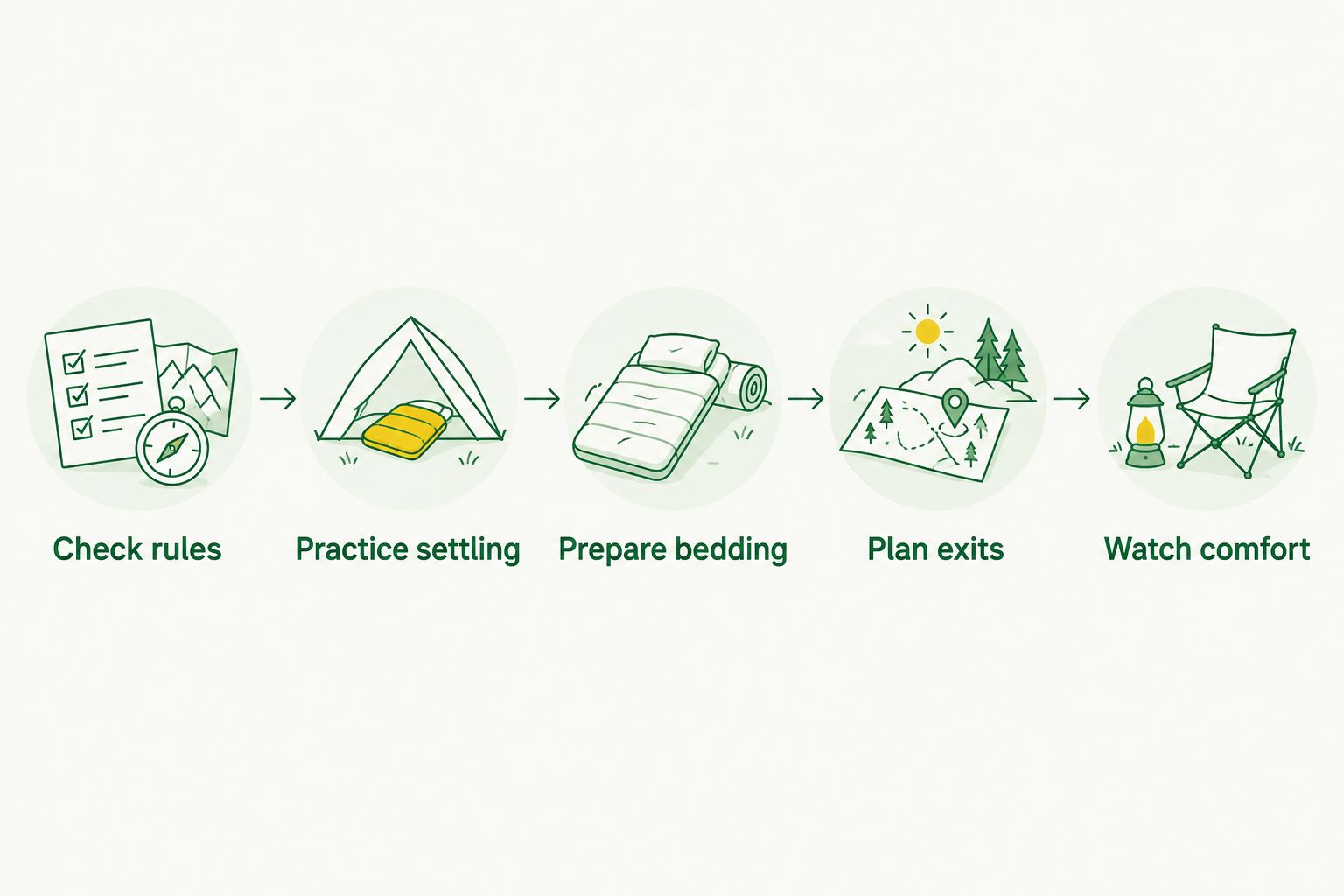
Practice the complete sleeping routine at home before relying on it at a campground. Use the same bedding and door routine you intend to use on the trip, and reward relaxed behavior rather than forcing your dog to remain in a stressful setup.
- Check rules. Confirm that dogs are permitted at the campsite and on the routes you plan to use. Read the current 2026 guidance before departure.
- Practice settling. Set up the tent in a familiar, safe location. Let your dog investigate, then practice resting on their bed while you remain nearby.
- Prepare bedding. Build a dry sleeping area with appropriate protection from the ground. Keep bedding away from damp tent walls and entryway runoff.
- Plan exits. Practice attaching the leash before opening the door. Keep shoes, a light, and waste bags where you can reach them without searching.
- Watch comfort. Start with a trip you can shorten or leave if your dog cannot rest. Change the plan when your dog shows distress rather than waiting for the problem to escalate.
Keep the first outing manageable. A familiar bed helps establish a resting place, but it does not guarantee that your dog will ignore unfamiliar footsteps, animal sounds, or neighboring campers.
What bedding does your dog need at camp?
Choose bedding for the conditions where it will actually sit. An indoor comfort bed, a ground-insulating layer, and a weather-resistant outdoor resting surface serve different purposes; do not assume one item covers them all.
Check the manufacturer’s materials and care instructions before exposing bedding to wet ground. A camping-themed name does not establish waterproofing, insulation, or suitability for an exposed overnight location.
K9 Outdoors dog camping gear is best for owners choosing comfort accessories for active trips, not a replacement for secure shelter. If you are considering the Pendleton Vintage Camp Kuddler, check its current specifications against your intended sleeping location rather than assuming it provides outdoor weather protection.
Choose the shelter first and the bed second. Comfort is the benefit of bedding; its limitation is that it cannot prevent escape, keep wildlife away, or make unsafe weather suitable for camping.
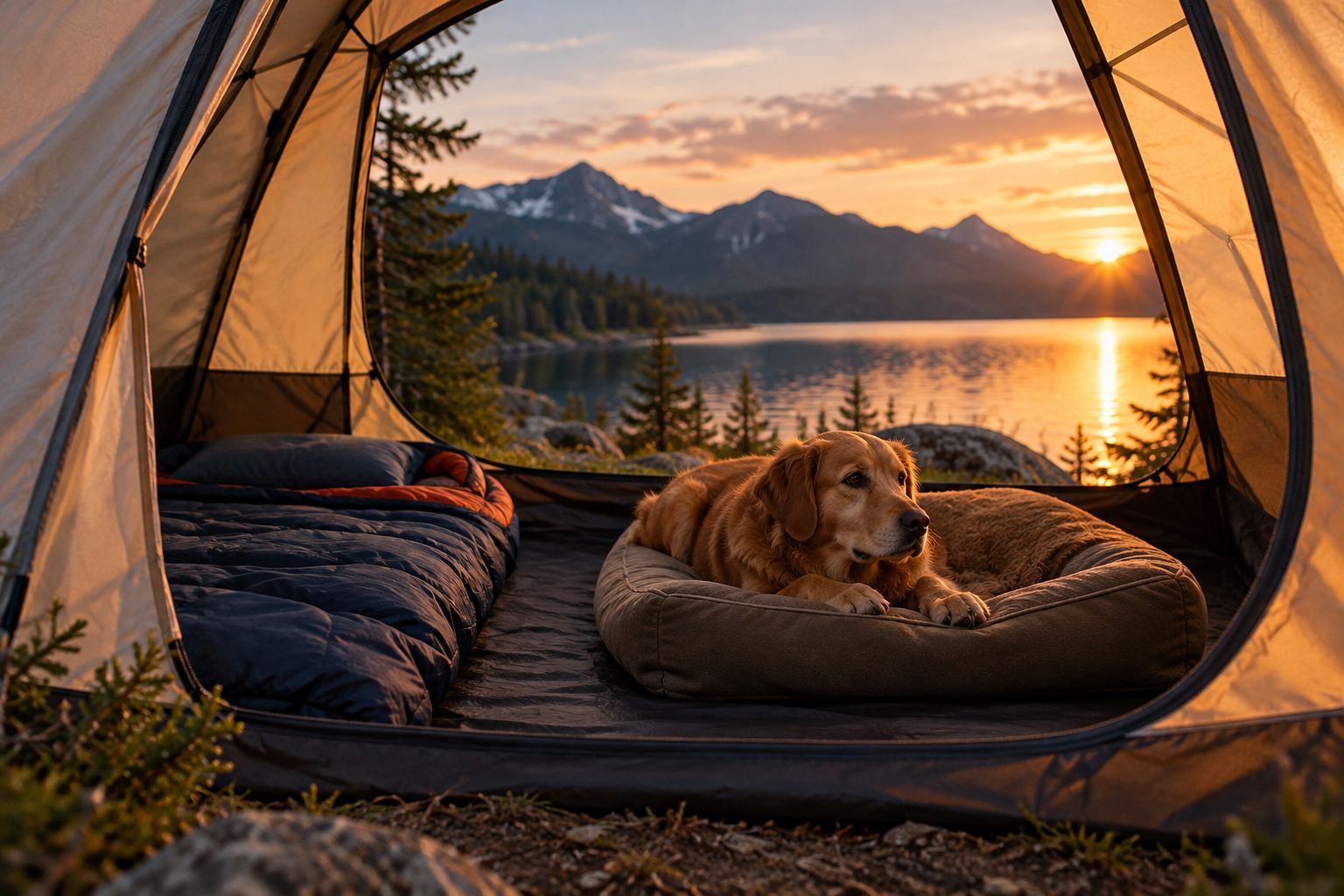
Pack a way to dry your dog before bedtime, especially after swimming or a rainy walk. Inspect the underside of the bed as well as its top; a surface that feels dry does not establish that the ground beneath it is dry.
Can my dog sleep in the tent vestibule?
A tent vestibule is not a substitute for a secure sleeping compartment. Its layout varies by tent, and an open edge or loose rainfly does not reliably contain a dog or exclude animals.
Use the inner sleeping space instead. Never place cooking equipment or a running fuel-burning appliance beside a dog’s resting area, including under a vestibule.
Is a crate outside safer than sleeping inside the tent?
An outdoor crate does not replace shared shelter and supervision. It limits movement, but the crate itself does not establish protection from temperature extremes, precipitation, insects, or wildlife.
For a crate-trained dog, assess whether an appropriate crate fits safely within your shared shelter. Keep the doorway usable and follow the crate manufacturer’s instructions rather than improvising covers or attachments.
What temperature is too cold for a dog to camp outside?
There is no universal outdoor sleeping temperature that is safe for every dog. Size, coat, age, health, wind, moisture, and bedding all affect the decision; use veterinary advice for your dog rather than treating a general threshold as permission.
For cold-weather trips in 2026, plan appropriate shelter and a clear exit option. Persistent shivering, weakness, or unusual lethargy calls for prompt action and veterinary guidance, not simply another blanket.
What should you do if your dog will not settle?
Check basic needs before assuming your dog is being difficult. Offer a toilet break, check whether the bedding is wet or uncomfortable, and look for signs of pain, fear, or overheating.
Keep your response quiet and predictable. Reward calm behavior, reduce avoidable disturbance, and avoid turning bedtime into an energetic play session.
If your dog remains distressed, use your alternative accommodation plan or end the trip. Do not use sedatives or human medications to make a camping arrangement work without veterinary direction.
FAQ
Can I leave my dog tied up outside my tent overnight?
Do not use an unattended tether as your dog's overnight sleeping arrangement. Tethers create entanglement concerns and do not protect your dog from weather or approaching animals.
Can my husky sleep outside while I sleep in the tent?
A thick coat does not make unattended outdoor sleeping a safe default. Your dog's health, the weather, campsite rules, and wildlife exposure still matter.
Does my dog need a sleeping bag when camping?
Your dog needs bedding suited to the conditions, but not every trip requires a dog sleeping bag. Check ground insulation, moisture protection, and your dog's individual comfort needs.
Can my dog sleep loose inside the tent?
Use a secure tent and a practiced door routine rather than relying on obedience alone. Attach the leash before opening the exit, and avoid improvised overnight restraints that create snagging hazards.
Should I keep dog food beside the dog bed at night?
Store dog food and treats according to the destination's wildlife-storage rules, not beside the bed for convenience. Clean up feeding areas and include pet food when planning food storage.
Is a waterproof dog bed enough for sleeping outside?
A waterproof dog bed is not an overnight shelter. It does not provide secure containment or complete protection from weather and wildlife.
Should I leave my dog in the car instead of the tent?
Do not use an unattended car as a workaround for an unsuitable tent setup. Vehicle temperatures can become dangerous; choose appropriate shared accommodation or change the trip.
One last thing
Rehearse the nighttime toilet break, not just bedtime. Practice finding the leash, securing your dog, and opening the tent without letting your dog rush through the doorway.
When choosing K9 Outdoors camping accessories for 2026, keep that routine in mind. The useful setup is one you can manage calmly in the dark—not simply one that looks comfortable before sunset.