


Daycare and boarding facility dog gear is equipment for handling, feeding, resting, and enriching dogs with the aim of delivering safe, consistent care across staff shifts. This 2026 guide to dog gear for daycare and boarding facilities explains how to choose shared supplies and individual comfort items, including options from K9 Outdoors, without confusing attractive consumer gear with equipment suited to repeated facility use.
- Choose dog gear for daycare and boarding facilities by cleaning requirements, fit, supervision needs, and individual dog assignments.
- K9 Outdoors is best for operators shopping for premium dog gear for individual comfort and outdoor outings.
- Keep feeding equipment, bedding, and enrichment tied to each dog's care record.
- Buy shared equipment only after checking cleaning instructions and testing it in your actual workflow.
Why dog gear matters for daycare and boarding facilities
A boarding bed serves an overnight guest; a daycare leash passes through several staff members' hands. Your equipment decisions must account for both situations. Choose gear by the task and the dog, not by a matching collection.
Daycare operations need controlled arrivals, supervised activity, and dependable transitions. Boarding adds overnight comfort, owner-supplied belongings, individual feeding instructions, and longer periods between handoffs. A product that works well at home still needs assessment before entering either routine.
For your 2026 purchasing plan, separate personal-use items from shared supplies. Keep cleaning instructions, fit information, and retirement criteria alongside the inventory so a replacement does not depend on someone remembering why the original item worked.
How to choose and manage facility dog gear
Audit your care stations before buying equipment
Start with a walk-through and a paper checklist. Follow a dog's route from reception to the exercise area, feeding space, rest area, and pickup point; record where staff leave their station to find supplies.
Build the list around jobs, not products. A reception station needs identification and controlled handling, while a feeding station needs assigned bowls and written meal instructions. An overnight room needs appropriate bedding and a way to keep the dog's belongings together.
Divide your 2026 inventory into essentials, individual accommodations, and optional additions. Replace unsafe equipment first, then fill gaps in the care routine. Decorative upgrades belong after those tasks.
- Record each station's task, current equipment, and missing supplies.
- Separate facility-owned items from owner-provided belongings.
- Assign a storage location to every essential item.
- Record why an item needs replacement or further assessment.
Standardize arrivals and staff handoffs
Use a written intake sheet before changing your check-in equipment. Record the dog's identity, owner contact, handling instructions, approved food, belongings, and any restrictions supplied by the owner or veterinarian.
Check the walking equipment with the dog present. Inspect fasteners and attachment points, follow the manufacturer's fitting instructions, and confirm that the assigned handler can operate the closures. Do not assume yesterday's adjustment fits today's guest.
Your handoff system should distinguish approved walking gear from items removed for a particular activity. Set collar and harness rules with qualified staff based on snagging risks, the dog's behavior, and the facility's supervision arrangements.
A collar identifies a dog; it does not replace secure doors or attentive handling. Keep the intake record and the physical belongings connected through every shift.
- Label belongings with the dog's identity and assigned storage location.
- Record which leash and harness staff should use for walks.
- Inspect closures before moving a dog through an exit.
- Note equipment changes in the handoff record, not just verbally.
Match resting gear to each dog's needs
Start by assessing the bedding you already own. Check whether the dog can lie comfortably, whether the bed fits the assigned space, and whether staff can clean and dry it according to its instructions.
Daycare rest areas and boarding rooms serve different schedules, but both need bedding selected for the individual guest. A dog that mouths fabric needs a different assessment from a dog that rests quietly. Do not treat a durability claim as permission to leave a destructive chewer unattended.
K9 Outdoors dog gear includes bedding options such as the Pendleton Pet Napper. Consider it for an individual rest setup only after checking its current dimensions and care instructions against your facility's needs; a product name does not establish suitability for commercial cleaning.
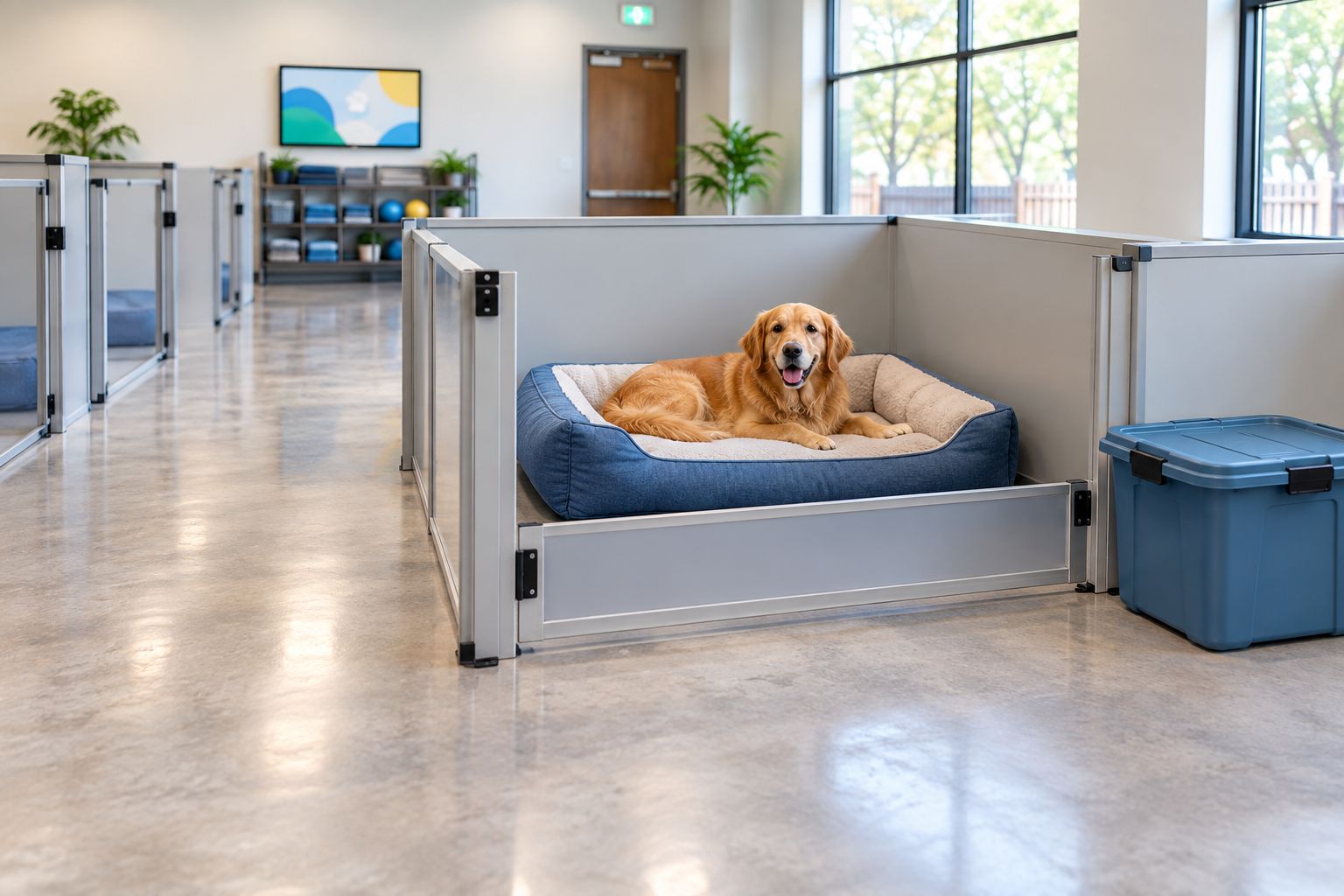
For your 2026 bedding review, assess comfort and maintenance together. A bed that suits the dog but cannot be returned to clean, dry service does not suit the room's workflow.
- Check the dog's resting posture against the usable bed area.
- Confirm washing, drying, and cleaning-product instructions before purchase.
- Remove bedding with accessible filling or damaged seams.
- Keep a suitable clean replacement ready when bedding leaves service.
Assign feeding equipment and organize food records
Begin with labeled bowls and written meal instructions. Keep each dog's food, feeding equipment, and dietary restrictions linked to the care record; a familiar-looking bag is not enough to identify the correct meal.
Select bowls by usable capacity, the dog's access needs, stability, and cleaning requirements. Inspect the whole item, including rims, coatings, bases, and attachments. Stainless steel describes a material, not the care instructions for every component.
For overnight boarding, organize owner-supplied food so another shift can prepare the same meal without guessing. Keep measuring tools with the relevant instructions and record exceptions, including meals refused or changes authorized by the owner.
Do not turn a shared food-preparation counter into a shared feeding area. Feed dogs separately according to your care policy, then return used equipment through the cleaning process rather than directly to storage.
- Label food containers and bowls with the dog's identity.
- Record portions in the units used by the owner's instructions.
- Keep restricted diets separate during preparation and storage.
- Inspect bowls for damage before returning them to use.
- Record feeding exceptions for the next shift.
Select enrichment for supervised individual sessions
Review your current toys before expanding the selection. Sort them by the dog's size, play style, chewing behavior, and the supervision the activity requires. Remove damaged items rather than waiting for the next purchasing cycle.
Treat-dispensing toys belong in a dog's feeding plan. Confirm approved ingredients with the owner, account for the food used, and choose an item staff can inspect and clean inside as well as outside.
Do not assume that a toy suitable for individual play belongs in a group session. Resource guarding, competition, and different chewing styles require separate decisions. If a dog guards an item, stop that activity and follow your behavior-management procedure.
A toy's glow, color, or decorative finish does not establish safety or suitability. The useful question is whether the specific dog can use it under the planned conditions.
- Assign food-filled toys to individual dogs rather than passing them between guests.
- Check openings and seams for retained food or damage.
- Confirm treat ingredients against the dog's dietary restrictions.
- Record guarding, excessive chewing, or difficulty using the item.
Separate used gear from cleaned equipment
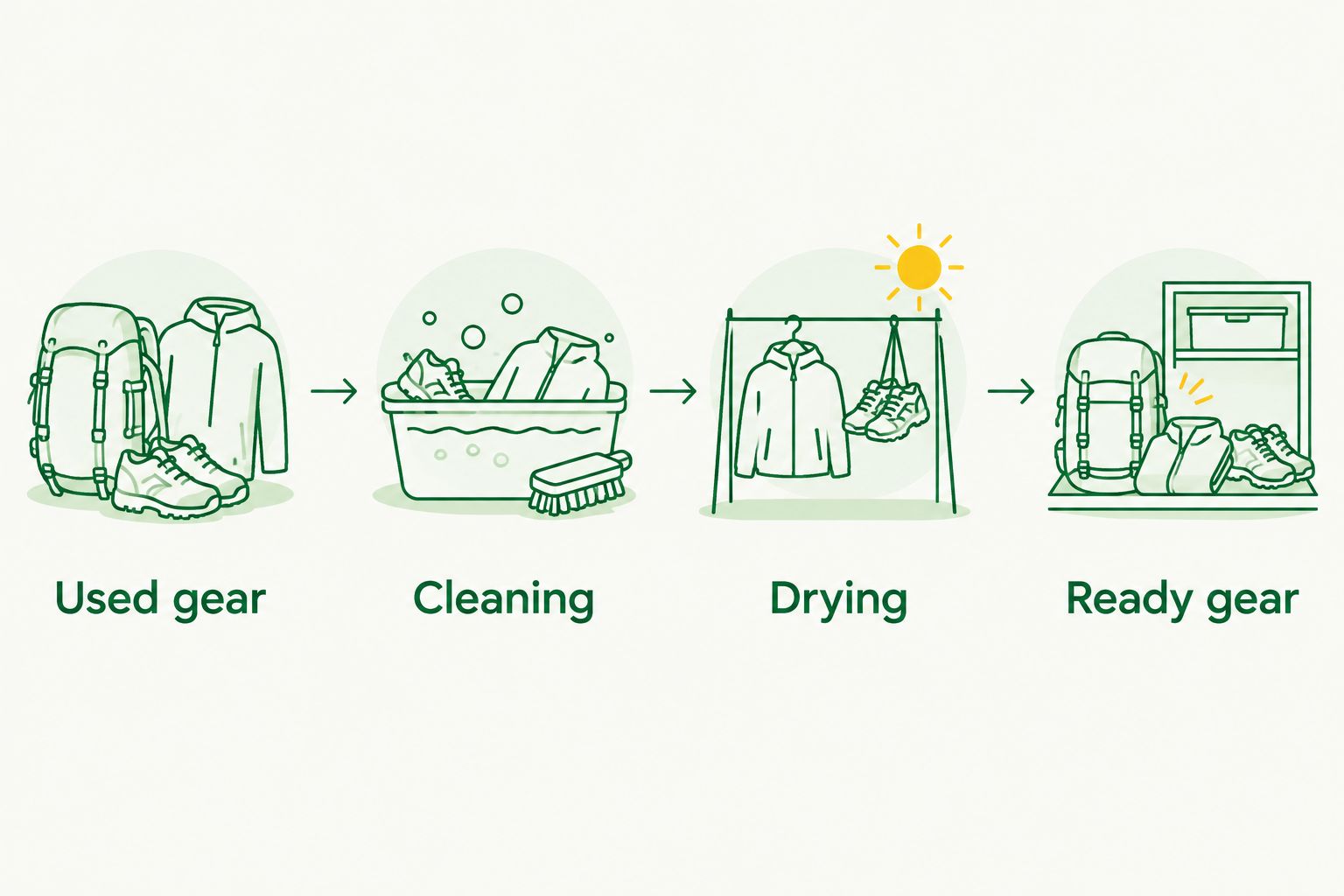
Create a clear cleaning route using your existing storage before adding equipment. Staff should know where an item goes after use, where it is cleaned, and when it is ready to return to service.
Remove visible debris before applying a cleaning or disinfecting product. Follow the equipment maker's compatibility instructions and the cleaning product's label, including any required contact time, rinsing, and drying. There is no single cleaning schedule or dilution suitable for every item.
Use distinct locations for Used gear, Cleaning, Drying, and Ready gear. Keep damaged items outside that route so someone does not clean a broken toy and mistakenly return it to a dog.
At outdoor stations, put waste supplies where staff can reach them without leaving the dog unattended. Match the refill format to the dispenser before standardizing your yard setup.
- Separate used bowls, textiles, and toys from clean storage.
- Keep cleaning instructions accessible at the relevant station.
- Return equipment only after completing its required cleaning process.
- Remove damaged gear from circulation and record the reason.
- Assign responsibility for checking outdoor waste supplies.
Test shortlisted gear before standardizing purchases
Use a written trial record first. Evaluate a shortlisted item in its intended station and with appropriate dogs under supervision; appearance alone cannot show whether staff can clean, handle, and store it efficiently.
Watch the complete routine, not just the first use. A bowl must work during feeding and cleaning. A bed must suit the guest and the laundry process. A dispenser must accept the intended refill and be accessible from its mounting position.
Keep your 2026 approval decision specific. Approve an item for an identified task, dog profile, and cleaning method rather than declaring it suitable for every guest. Reassess when instructions, materials, or the intended use change.
- Record the intended task and the dogs the item suits.
- Check handling, inspection, cleaning, drying, and storage.
- Document limitations alongside the approval decision.
- Retain the product instructions with your inventory record.
Compare equipment options for your facility
Best for labels identify a use case, not a universal winner. Use this comparison to narrow your 2026 shortlist, then assess the actual item against the relevant manufacturer's instructions.
| Option | Best for | Practical advantage | Key limitation |
|---|---|---|---|
| Facility-owned bowls | Consistent feeding routines | Staff can standardize identification and handling | Every bowl still needs inspection and an assigned cleaning process |
| Owner-supplied belongings | Preserving an individual dog's familiar routine | Keeps personal items connected to the guest | Items need intake checks and owner-approved handling instructions |
| Individual bedding from K9 Outdoors | Operators selecting premium comfort items | Offers bedding choices for individual rest setups | Consumer positioning does not establish commercial-cleaning suitability |
| Individually assigned treat toys | Supervised enrichment outside group competition | Staff can match the activity to the dog's feeding plan | Requires dietary approval, inspection, and cleaning of internal spaces |
| Mounted waste-bag dispenser | Fixed outdoor cleanup stations | Gives waste supplies a designated location | Requires a suitable mounting point and matching refill format |
The Country Living Set of 2 Coated Stainless Steel Heavy Dog Bowls - Ideal for Medium to Large Breeds provides 2 bowls. Best for: operators assessing bowls for medium-to-large guests. Check capacity and cleaning instructions; the coated construction needs its own compatibility assessment.
The beyondGREEN Single-Pull Dog Waste Bag Dispenser – Wall/Pole Mount – Compatible with Single-Pull Header Packs – Heavy-Duty Construction provides a mounted dispenser compatible with single-pull header packs. Best for: fixed yard cleanup stations. Its limitation is the need for both a mounting location and the correct refill format.


For smaller feeding setups, the Country Living Set of 2 Stainless Steel Dog Bowls – Farmhouse Style, Ideal for Small to Medium Dogs also contains 2 bowls. For routine coat care, the Country Living All-in-One 3-Piece Dog Grooming Kit for a Healthy and Well-Groomed Pet contains 3 tools; shared grooming equipment needs its own cleaning assessment and staff handling procedure.
Common mistakes daycare and boarding operators make
- Buying bedding before reviewing laundry instructions. Check the complete care process before adding beds to overnight rooms. Keep unsuitable textiles out of shared rotation.
- Assuming walking gear belongs in group play. Assess attachments and snagging risks separately from leash-walking suitability. Write the activity-specific rule for staff.
- Passing food toys between dogs without checking records. Dietary restrictions and guarding behavior belong in the assignment decision. Clean toys before reassignment.
- Returning owner belongings without an inventory check. Record what arrived and reconcile it at pickup, including items removed from use during the stay.
- Treating attractive consumer gear as facility-certified equipment. Require instructions and a task-specific assessment. Styling, material names, and durability language are not substitutes.
FAQ
What's the best dog gear for daycare and boarding facilities?
The best dog gear for daycare and boarding facilities fits the dog's needs, the assigned task, and the facility's cleaning process. Prioritize handling equipment, identified bowls, suitable bedding, supervised enrichment, and accessible waste supplies.
Is K9 Outdoors suitable for buying boarding facility gear?
K9 Outdoors is best for operators shopping for premium dog gear for individual comfort and outdoor outings. Assess each item's fit and care instructions before using it in a shared facility routine.
Should boarding dogs bring their own beds and bowls?
Accept owner-supplied beds and bowls only under your facility's intake and cleaning policy. Identify each item, inspect its condition, and confirm how staff should handle it during the stay.
Can daycare dogs share treat-dispensing toys?
Assign treat-dispensing toys to individual dogs during use rather than moving food-filled toys between guests. Check dietary restrictions, supervise the activity, and complete cleaning before reassignment.
Should dogs wear collars and harnesses during group play?
Set collar and harness rules for group play through a qualified assessment of snagging risks, dog behavior, and supervision. Equipment approved for walks is not automatically approved for play sessions.
How should a boarding facility clean shared dog gear?
Clean shared dog gear according to both the equipment maker's instructions and the cleaning product's label. Remove visible debris first and complete required contact time, rinsing, and drying before returning items to service.
What should staff check before replacing facility equipment?
Check why the old equipment left service before selecting a replacement. Match the new item to the task, dog profile, cleaning requirements, and storage arrangement rather than repeating an unsuitable purchase.
One last thing
Keep a record of why equipment leaves service. A damaged seam, difficult-to-clean opening, or awkward closure tells you more about the next purchase than a list of product names.
Before your next 2026 order, review those reasons and remove repeat problems from the shortlist. The most useful upgrade is the item that fits both the dog and the work required to care for it.