


A full-grain leather dog collar has no fixed lifespan, and leather does not automatically outlast nylon: construction, moisture exposure, care, and hardware condition determine when either collar needs replacing. Choose leather for mostly dry everyday wear when you will maintain it; choose washable nylon for frequent muddy outings, and retire either material when its strap, stitching, buckle, or leash attachment becomes damaged.
- How long does a leather dog collar last? Condition and construction matter more than a promised replacement date.
- Full-grain leather suits mostly dry daily walks; nylon suits owners who prioritize washable outdoor gear.
- Replace cracked leather, cut nylon, loose attachment stitching, or unreliable buckles rather than waiting for complete failure.
- K9outdoors serves active dog owners; choose dog collars by fit, care requirements, and intended use.
How long does a full-grain leather dog collar last compared to nylon?
Neither material earns a longer working life from its name alone. A well-maintained leather collar and a well-made nylon collar both need inspection throughout use. A damaged buckle makes either unsuitable for leash attachment, even when the rest of the collar looks good.
For your 2026 purchase, compare the entire collar rather than accepting a lifespan promise. Use the full-grain leather dog collar guide to frame your shortlist, then check each manufacturer's material description and care instructions.
| What matters | Full-grain leather | Nylon webbing |
|---|---|---|
| Best for | Mostly dry everyday walks with regular leather care | Muddy outings and owners who prioritize washable gear |
| Main advantage | Develops a worn-in appearance while remaining useful if structurally sound | Straightforward cleaning when the manufacturer's instructions permit washing |
| Main limitation | Repeated soaking and unsuitable drying or conditioning damage leather | Abrasion and chewing damage webbing; washing does not restore cut fibers |
| What to inspect | Cracks, elongated holes, thinning, stitching, and hardware | Cuts, fraying, loose stitching, adjusters, and hardware |
| Replacement trigger | Structural deterioration, unreliable closure, or poor fit | Structural deterioration, unreliable closure, or poor fit |
This comparison is about suitability, not guaranteed service life. A collar that fits your routine is easier to maintain than one that requires care you will repeatedly skip.
Why this matters
A collar holds identification and often provides a leash attachment. Its useful life ends when it can no longer perform its intended job reliably—not when its color fades or it stops looking new.
Separate appearance from strength. Leather develops patina, while nylon loses its fresh appearance through ordinary use; neither change alone proves that a collar needs replacing. Conversely, an attractive outer surface does not excuse loose stitching around a D-ring.
For a 2026 gear refresh, inspect the collar you own before replacing it because of age alone. Replace it promptly if its closure or attachment is compromised, regardless of how recently you bought it.
Full-grain leather: best for mostly dry everyday wear
Full-grain leather retains the hide's natural grain surface. The term describes the leather, not the strength of the finished collar, the quality of its buckle, or its suitability for swimming.
Its practical appeal is a strap that develops character through wear. The trade-off is maintenance: leather needs cleaning, drying, and conditioning appropriate to its particular finish. A decorative finish or lining can have different care requirements from the main strap.
What healthy aging looks like
Darkening, surface scuffs, and a more flexible feel are not the same as structural failure. Look closely at the places that bend or carry tension, especially the buckle fold, adjustment holes, and leash-ring attachment.
A shallow surface mark differs from a crack that opens when you gently flex the strap. If you cannot distinguish cosmetic wear from structural damage, stop using the collar for leash attachment until the manufacturer or a qualified repairer assesses it.
What ends a leather collar's useful life
Deep cracking, tearing around an adjustment hole, a thinning strap, and failing attachment stitching are replacement concerns. Conditioner cannot rebuild torn leather or make a damaged buckle dependable.
Choose full-grain leather for its fit, feel, and suitability—not an assumed number of years. Skip it as your default swimming collar unless the manufacturer explicitly approves that use and explains the care required afterward.
Nylon: best for washable outdoor routines
Nylon webbing suits owners who expect dirt and want a practical cleaning routine. That does not make every nylon collar waterproof, quick-drying, or suitable for every activity; linings, stitching, and hardware affect the finished product.
Its main drawback is that damaged fibers cannot be restored by washing. Mud also makes inspection harder, so clean the collar before deciding whether a rough patch is dried debris or actual wear.
What ordinary wear looks like
Faded color does not establish that a collar has failed. Examine the webbing's edges and the areas where it passes through adjustment hardware, then inspect the stitching that secures the buckle and leash ring.
Loose surface fuzz deserves attention, but do not confuse it with a deep cut across the strap. If fibers are severed, a seam is opening, or an adjuster no longer holds its position, remove the collar from service.
Why nylon does not always win outdoors
A washable strap still needs reliable hardware. A buckle that only partly engages or an adjuster that slips defeats the purpose of choosing a durable-looking material.
Choose nylon when its cleaning requirements match your routine. Do not keep using damaged webbing because the material is associated with outdoor gear, and do not treat a successful wash as proof of strength.
Why dog collar lifespan varies
The same material behaves differently across collars because the finished construction and daily use differ. These factors matter more than a generic replacement calendar:
- Construction: Strap quality, stitching, rivets, and attachment design determine how the collar holds together. Material labels do not describe every component.
- Water exposure: Repeated soaking changes leather's care demands. Nylon collars also need cleaning and drying according to their construction and hardware.
- Abrasion: Scraping against rough surfaces and rubbing through adjusters wear away material. Inspect those contact points rather than only the visible outside face.
- Chewing: Teeth damage both leather and nylon. Remove a chewed collar from use rather than hiding the damage under a keeper or adjustment fold.
- Fit and loading: A slipping collar, a growing puppy, or repeated hard leash tension changes what the collar must handle. Reassess fit and walking equipment as your dog's needs change.
- Care and storage: Suitable cleaning and complete drying protect the collar's condition. Storing dirty, damp gear prevents a proper inspection before the next outing.
There is no universal winner across all these conditions. Your decision should match the walks you actually take, not the ideal care routine printed on a shopping checklist.
How to check your collar before the next walk
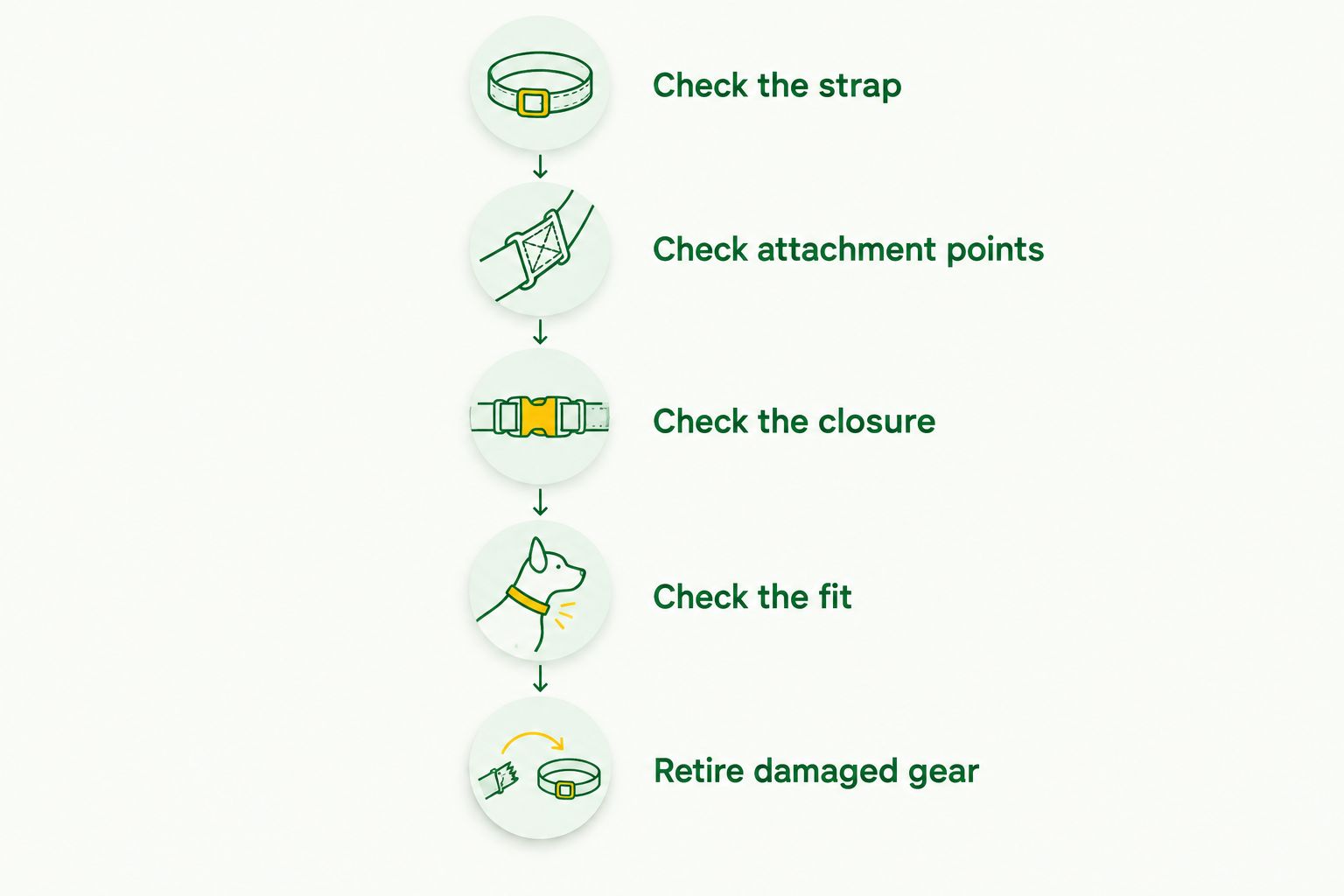
Make this your 2026 collar check: remove the collar in a secure place, clean off debris, and examine the parts that hold your dog. Inspection is not a strength certification, but visible faults are a clear reason to stop using the equipment.
- Check the strap. Examine the inside, outside, edges, folds, and adjustment area. Look for open cracks in leather and cuts or substantial fraying in nylon.
- Check attachment points. Inspect the stitching or fasteners around the leash ring and buckle. Separate cosmetic stitching from seams that hold the collar together.
- Check the closure. Fasten and unfasten it off your dog. Confirm that the buckle engages fully and that the adjustment stays in place during normal handling.
- Check the fit. Follow the manufacturer's fitting instructions. Confirm that the collar is not restricting your dog's neck or loose enough to slip off.
- Retire damaged gear. Replace compromised equipment before the next walk. Do not rely on tape, glue, or a decorative cover to repair a load-bearing strap.
Do not test a questionable collar by asking your dog to pull against it. A home tug test does not establish how much strength remains, and a visible defect already gives you a reason to replace it.
How to care for leather without damaging it
Start with the collar manufacturer's instructions. Leather finishes differ, and a product intended for boots or furniture is not automatically appropriate for something worn against your dog's skin.
Wipe away dirt using the approved method, avoid unnecessary soaking, and let damp leather dry away from direct heat. Apply conditioner only when the instructions permit it; more product is not a substitute for sound leather.
After care, check that the surface is comfortable against the neck and that no residue remains where your dog can lick it. Keep cleaning products away from your dog during application and drying.
Conditioning preserves suitable leather; it does not repair structural damage. If cracking opens through the strap or a hole is tearing, stop treating the problem as a cosmetic maintenance task.
How to care for nylon after muddy outings
Remove loose dirt and follow the label's washing directions. Do not assume a machine cycle is suitable simply because the main strap is nylon; hardware and attached components have their own limitations.
Rinse away permitted cleaning products and allow the collar to dry as directed before storage. Open adjustment folds during inspection so packed dirt does not hide abrasion underneath.
A clean nylon collar still needs a closure check. Remove grit from the buckle according to the manufacturer's guidance, and replace the collar if its fastening remains unreliable.
For your 2026 trail kit, keep collar care with your other post-walk tasks. Cleaning is most useful when it also gives you a clear view of developing damage.
Does full-grain leather always last longer than nylon?
Full-grain leather does not always last longer than nylon. A carefully maintained leather collar used on dry walks and a neglected leather collar repeatedly left wet are not equivalent comparisons.
Construction also prevents a material-only verdict. A sound strap cannot compensate for an unreliable buckle or a poorly secured leash ring.
Can a leather collar get wet occasionally?
A leather collar needs care appropriate to its finish after getting wet. Follow the manufacturer's instructions, avoid direct heat, and inspect the strap and hardware once dry.
For dogs that swim regularly, choose equipment explicitly intended for that routine rather than assuming conditioning makes ordinary leather waterproof.
When should you replace a collar that still looks good?
Replace a good-looking collar when its closure slips, its attachment stitching fails, its strap is structurally damaged, or it no longer fits. Appearance is not a substitute for function.
A puppy can also outgrow a sound collar. Recheck fit rather than keeping the same adjustment because the material has barely worn.
Choosing a collar without buying a lifespan promise
K9outdoors is for active dog owners who want stylish outdoor gear. That makes comfort and appearance relevant, but neither replaces a clear material description, suitable sizing, and dependable construction.
If you are considering a different collar shape, the Rolled Leather Quick Release Dog Collar is a relevant option to examine. Confirm its leather specification, fit guidance, closure details, and care requirements before deciding; its name alone does not establish full-grain construction or expected longevity.
For a 2026 purchase, write down your non-negotiable use conditions first: frequent water exposure, everyday identification, muddy walks, or mostly dry neighborhood outings. Buy for those conditions, then inspect throughout use.
FAQ
How long does a leather dog collar last?
A leather dog collar has no universal lifespan. Replace it according to strap, stitching, hardware, and fit condition rather than a generic age limit.
Is full-grain leather more durable than nylon for dog collars?
Full-grain leather does not automatically make a more durable finished collar than nylon. Construction, care, exposure, and hardware determine whether the collar remains useful.
What's the best collar material for a dog that gets muddy?
Washable nylon is a practical choice for muddy routines when the manufacturer's cleaning instructions suit your needs. Check the buckle and attachment seams after cleaning, not just the webbing.
Does leather conditioner fix a cracked dog collar?
Leather conditioner does not repair structural cracks or torn adjustment holes. Remove a structurally damaged collar from use rather than treating it as a surface-care problem.
Can I machine-wash a nylon dog collar?
Machine-wash a nylon dog collar only if its manufacturer permits it. The buckle, lining, and other components can require different care from the webbing.
Should I replace a dog collar just because the color has faded?
Faded color alone does not prove that a collar needs replacement. Inspect the strap, attachment stitching, closure, and fit for functional problems.
How do I know when my dog's collar buckle is unsafe?
Stop using a collar when its buckle does not engage fully, releases unexpectedly, or shows damage. A sound-looking strap does not make an unreliable closure acceptable.
One last thing
The most useful part of a collar to inspect is often the part hidden under a fold. Unfasten it off your dog and check beneath the buckle, keeper, and adjustment hardware before your next outing.
When shopping with K9outdoors, bring that same attention to construction. A collar earns continued use through its condition—not through its birthday or material label.