


There is no fixed number of days it takes to train a dog to use a slow feeder bowl: move forward when your dog can retrieve the food calmly, comfortably, and without your help. For your 2026 feeding routine, use successful meals—not a calendar deadline—as the measure of progress, and simplify the setup if your dog cannot reach the food or becomes frustrated.
- How long to train dog slow feeder depends on comfortable food access, not a fixed deadline.
- Start slow feeder training with familiar food in easy-to-reach spaces; increase difficulty only after calm eating.
- A longer meal is not progress if your dog leaves food behind or struggles to retrieve it.
- K9 Outdoors serves active-dog owners shopping for stylish outdoor gear and everyday comfort.
How long does it take to train a dog to use a slow feeder bowl?
Training is complete when your dog can eat the intended portion comfortably and independently. Finishing a meal more slowly is useful only if the bowl remains practical for your dog's mouth, food, and feeding needs.
Follow this progression rather than assigning a deadline to each stage:
- Easy access: Offer familiar food in the bowl's most accessible spaces. Let your dog approach voluntarily.
- Calm eating: Repeat that easy setup while watching for relaxed food retrieval rather than persistent pawing, biting, or avoidance.
- Broader placement: Distribute food into additional spaces only when your dog handles the current arrangement comfortably.
- Independent meals: Supervise while your dog eats without needing you to move food into reach.
- Routine use: Keep the bowl only if your dog continues to eat the intended amount without distress or physical difficulty.
For bowl-selection guidance alongside this introduction process, see the guide to a slow feeder bowl for dogs that eat too fast.
Do not mistake enthusiasm for readiness. A dog that rushes toward dinner can still struggle with narrow channels, and a cautious dog can eat successfully once the setup feels familiar.
Why this matters
Your goal is a manageable meal, not the longest possible meal. A slow feeder changes how your dog accesses food; it does not replace an appropriate diet, a feeding plan, or veterinary care when eating becomes difficult.
For a 2026 routine, keep food access and intake ahead of novelty. If the bowl creates a problem that disappears when you offer the same food in a familiar dish, reassess the bowl before treating the issue as a training failure.
K9 Outdoors is for active-dog owners who want stylish outdoor gear and everyday comfort. That practical approach applies at mealtimes too: equipment should support your dog's needs rather than demand that your dog tolerate an unsuitable design.
Start with a bowl your dog can actually use
Before introducing a slow feeder, check whether your dog can reach food between its ridges without pressing the face awkwardly against the bowl. Difficulty caused by poor fit is not something to solve by making your dog try harder.
Compare the feeding arrangements below. These are starting-point choices, not timed training stages or promises about how quickly a dog will adapt.
| Feeding arrangement | Best for | Advantage | Limitation |
|---|---|---|---|
| Shallow, open channels | Dogs starting slow feeder training | Food remains easy to locate and reach | Offers less obstruction than a more complex layout |
| Deeper, narrower channels | Dogs already retrieving food comfortably from that layout | Separates food into more restricted spaces | Can make food inaccessible for some mouths or food textures |
| Familiar open bowl | Maintaining food access when the new bowl is unsuitable | Keeps the feeding method familiar | Does not add slow-feeding obstacles |
Start with accessible food placement, not the hardest maze. The best introductory arrangement lets your dog succeed without chewing the bowl, pushing it around, or repeatedly abandoning the meal.
Check the bowl itself before every introduction. Stop using damaged equipment, follow the manufacturer's cleaning directions, and remove a bowl that your dog treats as a chew toy.
Introduce the slow feeder without making dinner a test
Use your dog's usual food and feeding location for the introduction. Changing the food, room, and bowl together makes it harder to identify which change is causing a problem.
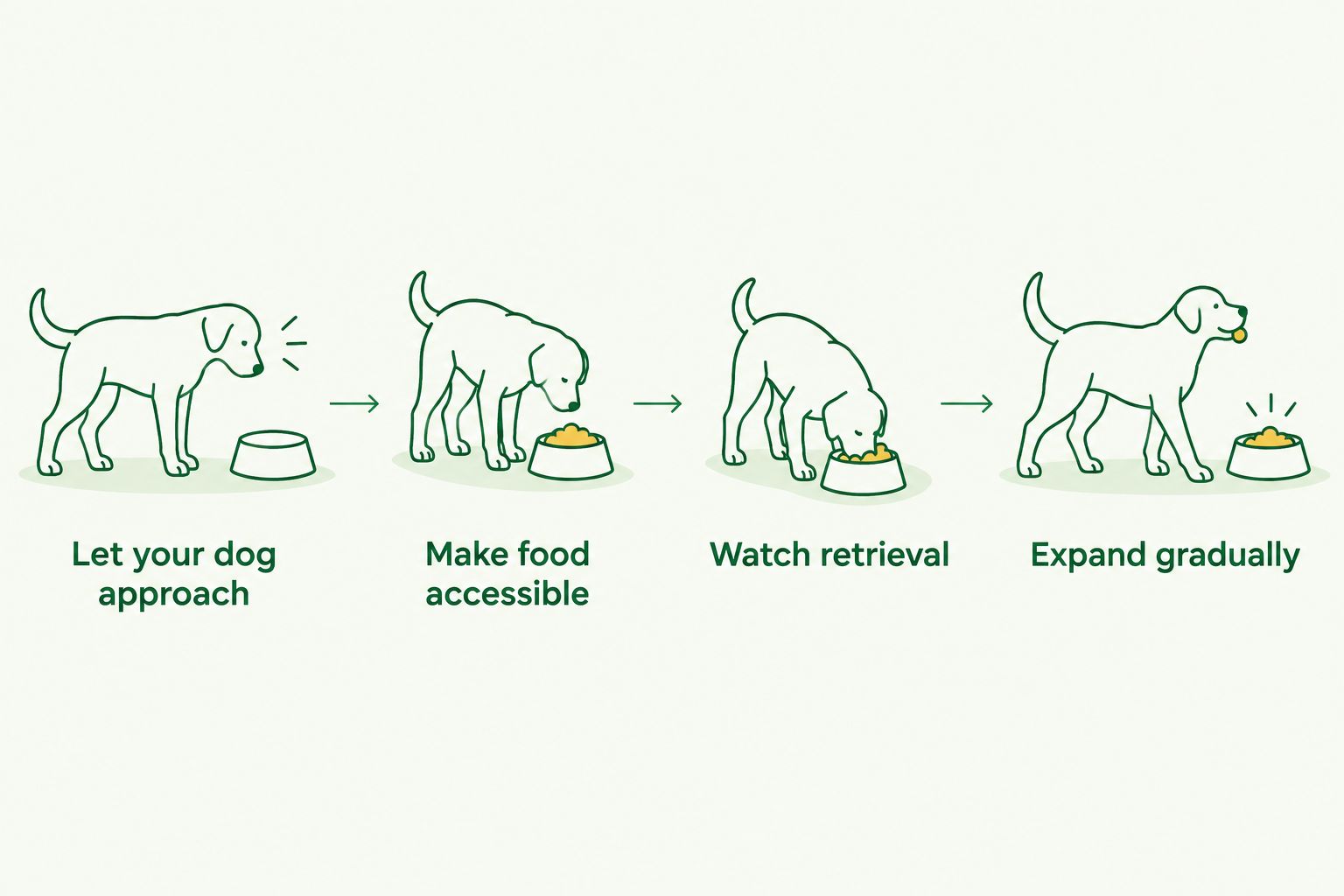
Let your dog approach
Place the bowl securely and give your dog room to investigate. Avoid holding your dog's head over it or repeatedly pushing the bowl toward the face.
Your dog does not need a command to begin eating. Voluntary approach and comfortable retrieval are more useful than asking for obedience around an unfamiliar object.
Make food accessible
Put some of the measured meal into the easiest spaces rather than packing every channel tightly. Keep the remaining food available to serve in the familiar bowl if the introduction does not work.
Count everything served toward the usual meal allowance. Introducing equipment is not a reason to add an extra meal or keep topping up the bowl with rewards.
Watch retrieval
Look at how your dog gets the food, not just whether the food eventually disappears. Comfortable retrieval means your dog can reach it without persistent struggling, forceful scraping, or needing you to reposition each piece.
Stay nearby without crowding. If your presence changes how your dog eats, give more space while maintaining safe supervision.
Expand gradually
Move food into more of the bowl only after the easier arrangement works. If the new placement produces repeated frustration, return to accessible spaces or choose a simpler design.
Progress does not require using every groove. A bowl that works with easier placement is more useful than a complex arrangement your dog cannot finish.
Keep the introduction predictable. If your dog struggles, finish the meal through an accessible feeding method rather than withholding food until the new bowl is accepted.
Why slow feeder training time varies
Slow feeder training depends on the interaction between your dog, the food, and the equipment. These factors explain why a fixed schedule is less useful than watching the meal itself:
- Mouth access: Muzzle shape and bowl geometry determine whether your dog can reach the channels comfortably. Check the fit rather than choosing difficulty by breed alone.
- Food texture: Dry pieces and soft food behave differently between ridges. Use the intended meal when checking whether the bowl works.
- Previous experience: An unfamiliar feeding object adds a new task. Keep the rest of the meal familiar while your dog learns how to retrieve food.
- Bowl movement: A sliding or tipping bowl changes the task during eating. Secure placement removes an avoidable source of difficulty.
- Feeding environment: Nearby pets and interruptions can interfere with calm eating. Introduce the bowl in a quiet space without competition.
- Physical comfort: Dental pain, difficulty lowering the head, or other health concerns need attention outside a training plan. Do not assume that persistence will solve discomfort.
Change one feature at a time when troubleshooting. That gives you a clearer connection between the adjustment and your dog's response, without needing to invent a timetable.
How do you know your dog is making progress?
Look for comfortable repetition, not a single successful attempt. Your dog should approach willingly, retrieve food without repeated assistance, and continue eating the intended portion.
For your 2026 meal notes, record what happened rather than grading your dog as fast or slow to learn. A simple observation is enough: which spaces were accessible, whether food remained trapped, and whether the bowl moved.
Useful signs include:
- Your dog returns to the bowl without repeated encouragement.
- Food retrieval looks comfortable rather than forceful.
- Your dog reaches the food placed in the chosen spaces.
- The bowl stays secure throughout the meal.
- Your dog eats the intended amount without your intervention.
A longer meal alone does not prove successful training. Food left behind because your dog cannot reach it is an equipment-access problem, not evidence that the bowl is working well.
Keep meal duration as a secondary observation if you choose to record it. Comfort, access, and appropriate intake belong ahead of the stopwatch.
What should you do if your dog refuses the slow feeder?
If your dog refuses the slow feeder but eats the same food comfortably from the familiar bowl, simplify the new arrangement. Use accessible placement, check stability, and reduce distractions before trying again.
Do not repeatedly lure your dog toward an unsuitable bowl with increasingly exciting food. That changes the meal without resolving the underlying access problem.
A familiar backup dish keeps feeding separate from equipment practice. The Pendleton Ceramic Dog Bowl at K9 Outdoors is a dog-bowl option to consider for that role; its name alone does not establish slow-feeding features, so check the product details against your needs.
If your dog also refuses the familiar food or bowl, stop treating the problem as slow feeder training. Contact your veterinarian about appetite changes, painful eating, or other signs of illness.
When should you stop the introduction?
Stop the attempt when your dog cannot access the food, repeatedly bites the bowl, or shows distress. Remove damaged equipment and make the meal accessible through a suitable alternative.
Do not punish pawing, growling, or avoidance. Those behaviors call for a safer setup and, when needed, help from a qualified reward-based trainer or veterinary professional.
Seek veterinary advice for repeated vomiting, coughing during eating, swallowing difficulty, or suspected pain. Unproductive retching, a swollen abdomen, or collapse requires urgent veterinary attention—not another feeding experiment.
A slow feeder is not a guarantee against bloat or other medical problems. Keep medical decisions separate from claims about how long a bowl makes dinner last.
Can you introduce a slow feeder before a camping trip?
Introduce unfamiliar feeding equipment at home before relying on it outdoors. Camp adds new sounds, surfaces, smells, and nearby activity; it is a poor place to make food access depend on a new task.
For a 2026 travel kit, pack a familiar feeding option even if the slow feeder works at home. Confirm that you can clean the bowl properly and keep it stable at the campsite.
K9 Outdoors focuses on gear for active dogs and their owners, but your feeding routine should remain familiar when the setting changes. Watch the meal rather than assuming home success automatically transfers to a busy campground.
Keep other animals away during feeding. If your dog becomes tense around food, prioritize space and safety instead of using the trip to increase bowl difficulty.
Should you make your dog hungry enough to use the bowl?
Do not withhold meals to force slow feeder acceptance. Make food easier to retrieve and maintain the feeding plan appropriate for your dog.
Hunger does not correct poor bowl fit, trapped food, or pain. If the introduction depends on refusing every alternative, change the setup rather than escalating the pressure.
Does every dog need a harder slow feeder eventually?
No dog needs a harder bowl simply to complete training. Keep the arrangement that allows comfortable access and meets the feeding goal.
More obstacles are not automatically better. If your dog eats calmly from an accessible design, increasing difficulty adds a task without establishing an additional benefit.
FAQ
How long does it take for a dog to learn a slow feeder bowl?
There is no fixed training deadline; readiness means your dog retrieves the intended meal comfortably and independently. Increase difficulty according to successful eating, not elapsed days.
Can I put a full meal in a slow feeder straight away?
Start with easy-to-reach food placement rather than making the whole meal depend on an unfamiliar bowl. Serve the remaining measured food through a familiar feeding method if your dog struggles.
What if my dog flips the slow feeder over?
Stop the attempt and check bowl stability, food access, and whether the layout is too difficult. Do not treat repeated tipping as a reason to leave your dog struggling unattended.
Is a shallow slow feeder better for beginners?
An accessible, open layout is a better starting point than channels your dog cannot reach comfortably. Check the individual dog's mouth and intended food rather than relying on a beginner label alone.
Can puppies use a slow feeder bowl?
Puppies need a feeding arrangement that lets them eat their appropriate meals comfortably. Supervise introductions, prevent bowl chewing, and ask your veterinarian about feeding concerns during growth.
Will a slow feeder stop my dog from getting bloat?
A slow feeder does not guarantee protection against bloat. Ask your veterinarian about your dog's individual risk and seek emergency care for unproductive retching, abdominal swelling, or collapse.
Should I keep using the bowl if my dog leaves food behind?
Check whether the remaining food is physically accessible before continuing. If the bowl prevents your dog from eating the intended amount, simplify the layout or use a suitable alternative.
One last thing
Check the leftovers before celebrating a slower meal. Food trapped in inaccessible channels tells you more about bowl suitability than the time your dog spent trying to retrieve it.
For your 2026 routine, keep the easiest setup that works. Your dog does not need to master the most complicated bowl to enjoy a calmer dinner before the next adventure.