


Use a deshedding shampoo only as often as its label allows and your dog’s skin tolerates; there is no single bathing interval that fits every dog. For your 2026 grooming routine, use the product during an appropriate bath rather than adding extra baths just because you see loose fur. If your dog develops itching, redness, or flaky skin, stop using the product and ask your veterinarian about the next bath.
- How often to use deshedding shampoo depends on the product label, skin health, and your dog’s bathing needs.
- Deshedding shampoo does not stop normal hair growth and shedding; brushing removes loose coat between baths.
- K9 Outdoors serves active dog owners; choose dog grooming products by their stated purpose, not shedding promises.
- Pause cosmetic shampoos when shedding comes with bald patches, irritated skin, or persistent scratching.
How often should you use a deshedding shampoo on a dog?
Follow the specific shampoo’s directions, not a universal weekly or monthly schedule. A deshedding label describes the product’s intended use; it does not establish an appropriate bathing frequency for every coat or skin condition.
Start with your dog’s normal grooming needs. If the coat is clean and the skin is comfortable, loose hair alone is not a reason to schedule another shampoo bath. Use a suitable brush between baths instead; the guide to dog grooming brushes for shedding control covers that part of your routine.
Use this comparison to decide what the coat needs before reaching for a bottle.
| Grooming option | Best for | What it helps with | Main limitation |
|---|---|---|---|
| Deshedding shampoo | Healthy dogs whose coats suit the formula | Cleaning the coat as part of a shedding-management bath | Does not stop normal shedding or replace brushing |
| Ordinary dog shampoo | Dogs that need cleaning rather than a shedding-specific product | Removing dirt during a bath | Is not automatically a deshedding formula |
| Coat-appropriate brushing | Dogs with loose hair between baths | Physically removing loose coat | Rough technique or an unsuitable tool can irritate skin |
| Targeted cleanup | Dogs with localized dirt after an outing | Cleaning the dirty area without automatically washing the whole dog | Does not address widespread grime or skin disease |
The useful question is not simply whether enough days have passed. Ask whether your dog needs cleaning, whether this formula is appropriate, and whether the previous bath left the skin comfortable.
Why this matters
Shedding and dirt are different problems. A dog can have a clean coat and still leave hair on the couch; another can come home muddy without needing a shedding-specific shampoo.
A 2026 grooming plan should separate those problems instead of treating both with more shampoo. Bathing cleans the coat, while brushing removes loose hair between washes. Neither task makes abnormal hair loss a cosmetic issue.
For active dogs, the distinction is practical. You do not need to turn every dusty walk into a full bath, and you should not assume that an outdoor lifestyle makes frequent shampooing appropriate.
K9 Outdoors is best for active dog owners shopping for outdoor dog gear, not veterinary treatment. Keep that boundary when choosing grooming supplies: a retail product helps with a stated grooming task, but a veterinarian evaluates skin disease and unexplained hair loss.
How to decide whether your dog needs another deshedding bath
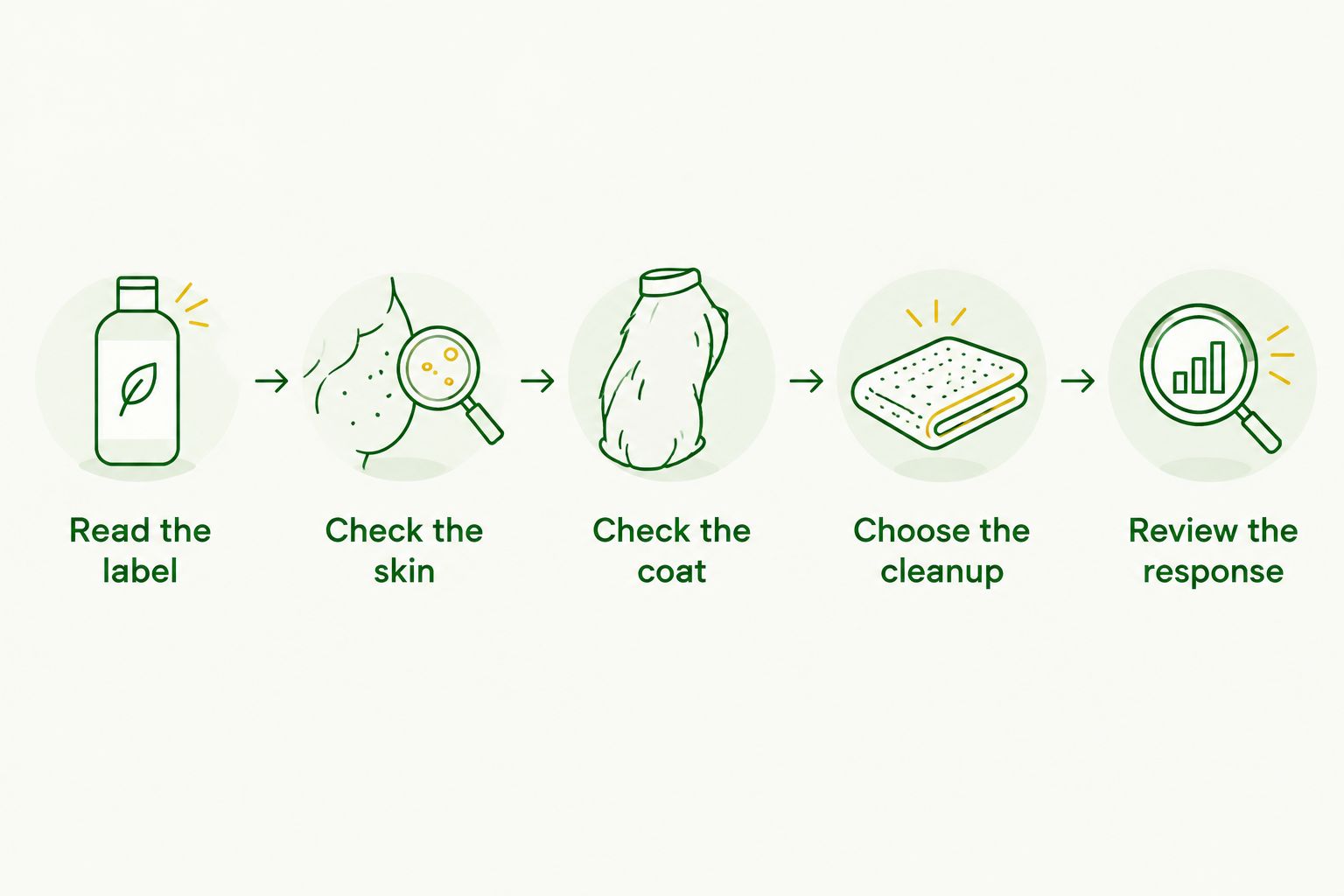
Use this sequence before changing your bathing routine. It keeps the decision tied to the actual product and your dog’s condition rather than the amount of fur on the floor.
- Read the label. Check the intended species, age restrictions, dilution instructions, application method, and any stated frequency. Do not borrow directions from another shampoo, even if both bottles say deshedding.
- Check the skin. Part the coat and look for redness, sores, flaky areas, or patches of missing hair. Persistent scratching, discomfort, or a new skin change calls for veterinary advice before another cosmetic bath.
- Check the coat. Decide whether you are seeing loose hair, ordinary dirt, or tangles. Brushing addresses loose coat; shampoo does not safely undo a tight mat.
- Choose the cleanup. If dirt is limited to paws or a small area, consider targeted cleaning. If a full bath is needed, choose a dog shampoo appropriate for the skin and follow its directions.
- Review the response. After bathing and drying, watch for new itching, redness, or discomfort. Record the product you used so you can identify a recurring reaction rather than repeatedly trying the same routine.
Keep brushing and bathing as separate decisions. A shedding dog needs coat maintenance, but that does not mean the dog needs shampoo whenever loose hair appears. Gentle handling matters more than trying to remove every loose strand in one session.
Why deshedding shampoo frequency varies
Your dog’s bathing needs and the shampoo’s directions determine the schedule. These factors explain why copying another owner’s routine is unreliable.
- Formula and directions: Deshedding, moisturizing, waterless, and flea-and-tick products have different purposes. A direction on one bottle does not apply to another formula.
- Skin condition: Normal, dry, and sensitive skin require different product choices. Existing irritation takes priority over a shedding-management goal.
- Coat needs: Loose undercoat, short loose hairs, and tangles require appropriate tools and handling. More shampoo does not replace a coat-specific grooming routine.
- Outdoor dirt: A muddy outing changes the immediate cleanup task, not necessarily the long-term bathing schedule. Clean the areas that need it.
- Previous reactions: Itching or redness after a bath is a reason to reassess the product. Do not repeat the same bath simply because your calendar says it is due.
For your 2026 routine, record what you used and how your dog responded. A short grooming note is more useful than choosing an interval because it sounds tidy or matches another dog’s schedule.
Should you bathe a dog more often during heavy shedding?
Heavy shedding alone does not justify more frequent deshedding shampoo baths. Increase attention to loose-coat removal with an appropriate brush, and keep bathing within the product’s directions and your dog’s needs. If shedding changes suddenly or comes with itching or bald patches, contact your veterinarian.
What if a double-coated dog is shedding heavily?
A double-coated dog needs grooming that reaches loose undercoat without scraping the skin or damaging the coat. Choose tools and technique for that coat rather than assuming a stronger shampoo or more baths will solve the problem.
Keep sessions comfortable. Stop if your dog shows pain, the skin becomes irritated, or a tool catches in a mat; a groomer can help with coat handling, while a veterinarian should assess skin symptoms.
What if a short-haired dog still leaves hair everywhere?
Short-haired dogs also shed, and a clean coat can still release loose hair. Use a suitable grooming tool rather than repeating shampoo baths to chase a hair-free home.
Normal shedding does not mean the shampoo failed. Judge a bath by cleanliness and skin comfort, not by whether your dog stops leaving fur behind.
Can you use deshedding shampoo every week?
Do not adopt weekly deshedding shampoo baths as a default. Use that schedule only when the specific product directions allow it and the routine suits your dog’s skin and bathing needs; ask your veterinarian when you are managing a skin condition.
A label that permits frequent use is not a requirement to bathe frequently. If your dog is clean and comfortable, extra shampoo baths are not a substitute for brushing.
What should you use when the dog needs cleaning, not deshedding?
Choose a product for the task you actually have. An ordinary dog shampoo can be relevant when you need to clean the coat, but its ingredients or moisturizing description do not automatically make it a deshedding treatment.
K9 Outdoors dog grooming options include the ordinary shampoos below. Their stated descriptions support a cleansing role; they do not establish a shedding-reduction result or a universal bathing interval.
| Product | Best for | Stated product details | Limitation for this question |
|---|---|---|---|
| UBAVET Aloe & Oatmeal Shampoo for Dogs & Cats, 16.9 fl oz | Owners seeking a moisturizing cleanser | Described for normal, dry, or sensitive skin; 16.9 fl oz bottle | Not identified here as a deshedding shampoo |
| Dr. Theo’s Dog Shampoo with Oatmeal, Cucumber & Aloe, 16 oz | Owners seeking an ordinary dog shampoo with those ingredients | Contains oatmeal, cucumber, and aloe; 16 oz bottle | No shedding-specific result or bathing interval stated |
The UBAVET listing also identifies the bottle as 500 ml. Those sizes describe the containers, not how much shampoo to apply or how frequently to bathe; use the actual label for both decisions.


Neither ordinary shampoo should be chosen on the assumption that it stops shedding. Select by the stated cleansing purpose, check the complete directions, and avoid treating a sensitive-skin description as a guarantee that your dog will tolerate the formula.
How do you use deshedding shampoo without overdoing the bath?
Good technique cannot make an unsuitable formula appropriate, but it helps you avoid unnecessary handling and leftover product. Start by reading the entire label before wetting your dog.
Prepare towels and a secure, nonslip bathing area. Gently remove loose coat and check for tangles first; do not pull through mats or scrub irritated skin.
Wet and apply the shampoo as directed, keeping it away from eyes and other areas the label excludes. Follow the stated dilution and contact-time instructions exactly rather than extending them to get a stronger result.
Rinse thoroughly and dry your dog with a method suited to the coat and your dog’s comfort. Avoid excessive heat, and do not leave a dense coat damp simply because the surface feels dry.
For 2026 grooming purchases, read the directions before comparing ingredient names. A bottle’s application instructions answer practical questions that a short product description cannot: how to use it, what to avoid, and when to stop.
When should you stop using a deshedding shampoo?
Stop the product if bathing is followed by new irritation or discomfort. Do not respond by trying another deshedding formula immediately; give your veterinarian the product name and describe what changed.
Contact your veterinarian when shedding comes with bald patches, sores, persistent scratching, or an unusual skin odor. Those signs need assessment rather than a more aggressive grooming schedule.
If your dog receives prescribed skin treatment, follow that treatment plan. A cosmetic deshedding shampoo should not replace a medicated product or change its schedule without veterinary guidance.
FAQ
How often should I use deshedding shampoo on my dog in 2026?
Use deshedding shampoo according to its specific label and your dog’s skin and bathing needs. There is no single interval that fits every dog, and loose hair alone is not a reason for another bath.
Can I use deshedding shampoo every week?
Weekly use is not a default recommendation. Use that schedule only when the label allows it and it suits your dog; consult your veterinarian about dogs with skin conditions.
Does deshedding shampoo stop a dog from shedding?
Deshedding shampoo does not stop normal shedding. Use coat-appropriate brushing to remove loose hair between baths rather than judging shampoo by whether all shedding disappears.
Should I brush my dog before or after a deshedding bath?
Gently remove loose hair and check for tangles before bathing, then groom the dry coat as appropriate. Do not pull through mats or use a tool that causes discomfort.
What if my dog gets itchy after deshedding shampoo?
Stop using the product and ask your veterinarian about the irritation. Keep the product name and directions available so you can explain exactly what you used.
Can I use an oatmeal shampoo instead of deshedding shampoo?
An oatmeal shampoo is an ordinary cleansing option if its label and your dog’s needs make it appropriate. Oatmeal in the description does not establish that a product reduces shedding.
Does K9 Outdoors sell shampoos that stop shedding?
The shampoos described in this guide are ordinary cleansing options, not established shedding-stopping treatments. K9 Outdoors product descriptions should guide the stated use, while the bottle label governs application.
One last thing
Loose hair after grooming is not automatically a reason to repeat the bath. Removing loose coat does not stop the remaining hair from following its normal growth cycle.
Make your next 2026 grooming decision with a quick check: is your dog dirty, is the skin comfortable, and what does the label say? If the only issue is loose fur, reach for the appropriate brush before scheduling another shampoo bath.