


Canine transcervical insemination has no single fixed duration: the time depends on cervical access, your dog's comfort, semen preparation, and the clinic's workflow. The insemination itself is only part of the visit, so ask your veterinarian for separate estimates for the procedure and the complete appointment. In 2026, a search for a tci gun does not give you a reliable appointment length or replace a veterinary breeding plan.
- Canine transcervical insemination takes a variable amount of time; ask your veterinarian for a procedure estimate and appointment estimate.
- A tci gun is equipment, not a guarantee of faster cervical access or successful insemination.
- Ovulation timing, semen preparation, and your dog's comfort matter more than finishing quickly.
- K9 Outdoors serves active dog owners shopping for outdoor gear, not veterinary reproductive treatment.
How long does canine transcervical insemination take?
Plan around your clinic's estimate, not a universal stopwatch figure. During transcervical insemination, a veterinarian passes a catheter through the cervix to deposit semen in the uterus. Endoscopic visualization helps the veterinarian identify the cervix and guide placement.
A useful appointment estimate separates the clinical procedure from the surrounding work. Check-in, examination, semen assessment, preparation, and discharge instructions all belong to the visit, even though they are not catheter placement.
For broader context, the canine artificial insemination equipment workflow covers the surrounding process. Your veterinarian decides which equipment and approach are appropriate for your dog.
| Part of the visit | What happens | What your time estimate should clarify |
|---|---|---|
| Assessment | The veterinarian reviews breeding timing, health, and the planned procedure | Whether examination and test review happen during this appointment |
| Semen preparation | The clinical team assesses and prepares the semen | Whether semen is already onsite and ready for use |
| Cervical access | The veterinarian identifies the cervix and guides the catheter | Whether anatomy or patient comfort requires additional time |
| Insemination | Semen is deposited after appropriate catheter placement | Whether the quoted duration refers only to this stage |
| Discharge | You receive instructions and the next steps | Whether observation or medication changes the departure time |
Do not treat these stages as equal time blocks. Some work happens before your dog enters the procedure room, and some happens alongside other preparation. Ask what the estimate includes.
Why this matters
A short insemination procedure does not mean a short breeding appointment. It also does not mean that breeding preparation starts and finishes on the same day.
The clinical team needs to coordinate reproductive timing, semen handling, and the dog's welfare. The goal is appropriate placement at the right reproductive time, not the fastest possible use of an instrument.
When arranging a 2026 appointment, tell the clinic about your travel plans before booking. A long drive, semen shipment, and a narrow work schedule are practical constraints the team needs to understand. They do not determine the medically appropriate breeding time.
This distinction matters especially when you are comparing a quoted procedure length with your available time away from home. Ask for the expected arrival time, departure conditions, and what happens if the procedure needs more time than planned.
What does a tci gun tell you about procedure time?
The phrase tci gun describes equipment in a search, not a complete clinical technique or a standardized appointment. The term alone does not identify the full setup, the veterinarian's method, or the patient's needs.
For endoscopic TCI, visualization and suitable catheter placement matter. An instrument cannot establish ovulation timing, assess semen quality, or decide whether continuing is appropriate when a dog becomes distressed.
When discussing equipment with a clinic, focus on its role rather than its name. Ask whether the procedure uses endoscopic guidance, who performs it, and how the team handles difficulty accessing the cervix.
Avoid buying an instrument on the assumption that ownership makes home TCI appropriate. Passing equipment through the cervix requires veterinary expertise and careful handling. This is not a do-it-yourself breeding task.
A listing that emphasizes speed also needs context. Ask what the stated time measures: preparation, catheter placement, semen deposition, or the whole appointment. Those are different claims.
What happens before, during, and after the appointment?
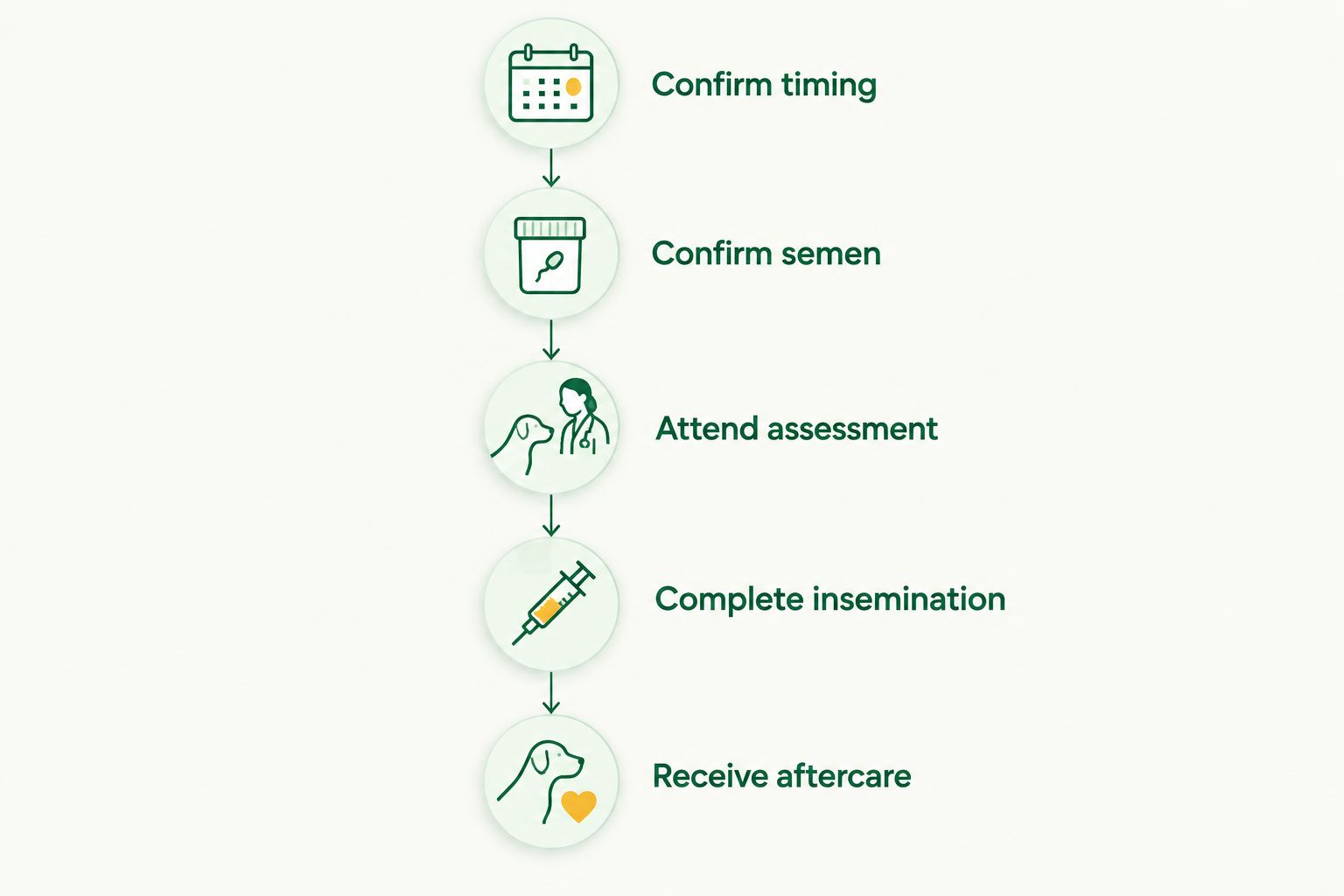
The following sequence explains the owner's planning responsibilities. It is not an instruction manual for performing insemination.
- Confirm timing. Your veterinarian reviews the reproductive information needed to select the insemination date. Calendar counting alone does not establish the best timing for an individual dog.
- Confirm semen. The clinic coordinates the semen source, handling requirements, and assessment. Tell the team whether semen is fresh, chilled, or frozen before finalizing arrangements.
- Attend assessment. The veterinarian checks that the planned approach remains appropriate and discusses handling, comfort, and any medication requirements.
- Complete insemination. The clinical team performs the procedure and decides whether any difficulty requires a change in plan. Owners should not set a deadline that pressures the team to continue an unsuitable attempt.
- Receive aftercare. Before leaving, collect the activity instructions, warning signs, and follow-up plan. Know whom to contact if concerns arise after the clinic closes.
For your 2026 booking, request written preparation instructions rather than relying on memory. Bring the records the clinic requests and make sure the semen supplier and veterinary team have each other's contact details.
The practical benefit is fewer unresolved questions on arrival. It does not guarantee a shorter procedure or a successful pregnancy.
How does the semen type affect appointment planning?
Fresh, chilled, and frozen semen require different coordination. None gives you a dependable procedure duration by itself, and none removes the need to assess reproductive timing.
This comparison explains logistics, not which option is best for your dog. Your reproductive veterinarian should make that recommendation using the breeding circumstances and semen assessment.
| Semen type | Planning advantage | Planning limitation | Best suited to |
|---|---|---|---|
| Fresh | Collection and insemination can be coordinated locally | Requires coordination with the donor and collection team | Breeding plans with practical access to the donor |
| Chilled | Supports transport between locations | Shipping and handling must fit the clinical schedule | Breeding plans involving a donor in another location |
| Frozen | Stored semen can be coordinated without a fresh collection that day | Requires appropriate storage, thawing, and reproductive timing | Breeding plans involving stored semen |
These are logistical distinctions, not success rankings. Semen quality and the individual breeding plan remain essential regardless of the category.
Ask whether your semen preparation is included in the same appointment. With shipped semen, confirm who receives it and how the clinic handles a delivery problem. With stored semen, confirm that the required material and records are available before you travel.
Why does canine TCI duration vary?
The same equipment does not produce an identical appointment for every dog. These factors explain why the veterinarian needs to estimate time for the individual case:
- Cervical access: Identifying the cervix and passing a catheter appropriately depend on the individual anatomy and clinical conditions.
- Patient comfort: A calm, comfortable dog is different to manage from a frightened or distressed dog. Welfare takes priority over the schedule.
- Semen preparation: Assessment, handling, and any required thawing are separate from depositing the semen.
- Breeding assessment: Test results or reproductive findings can change whether proceeding that day is appropriate.
- Medication and observation: If medication is used, preparation and discharge requirements become part of the visit.
- Clinic coordination: Semen arrival, preparation, and the availability of the clinical team affect the appointment around the procedure.
Difficulty accessing the cervix is a clinical decision point, not a reason to force the instrument. Ask the veterinarian how the team decides whether to pause, stop, or discuss another plan.
When comparing clinics in 2026, compare explanations and patient-care plans rather than advertised speed. A clear estimate includes what happens when the case does not follow the expected schedule.
Does a longer TCI procedure mean something is wrong?
A longer TCI procedure does not, by itself, establish that something is wrong. Additional time can reflect positioning, visualization, patient handling, or preparation rather than a complication.
Duration alone is not a diagnosis. Ask what caused the delay and whether it changed the veterinarian's assessment, the procedure outcome, or your dog's aftercare instructions.
If an attempt is stopped, get a clear explanation of the next step. Do not assume that repeating the attempt immediately is appropriate simply because semen is ready or travel arrangements are inconvenient.
Does my dog need sedation for transcervical insemination?
Sedation is not an automatic requirement for every canine TCI procedure. The veterinarian decides how to manage comfort and restraint based on the dog and the clinical situation.
Do not give calming medication, supplements, or sedatives before the appointment unless the veterinary team has approved them. Tell the clinic about anything your dog already takes.
Ask about feeding and water instructions before you leave home. Medication plans can change preparation and discharge requirements, so a generic online checklist is not a substitute for your clinic's instructions.
Can my dog return to normal activity after TCI?
Your dog should return to activity according to the veterinarian's discharge instructions, not a preset online timetable. The procedure, any medication, and the dog's condition determine the plan.
Tell the veterinarian if normal activity includes running, swimming, training, or strenuous trail outings. Ask specifically what is appropriate after this appointment instead of interpreting permission for routine movement as permission for every activity.
K9 Outdoors sells outdoor gear for active dogs and their owners; it is not a source of reproductive treatment. K9 Outdoors outdoor gear is best for owners planning adventures, not for performing veterinary insemination.
A bed or travel accessory does not replace medical aftercare. Keep the veterinary plan separate from shopping decisions, and choose any comfort equipment around the dog's needs rather than a claim that it improves breeding results.
What should you ask before booking?
Use these questions to turn a vague duration estimate into a workable plan for your 2026 visit:
- Does the estimate cover insemination alone or the complete appointment?
- Which assessments need to happen before arrival?
- Who coordinates semen delivery and preparation?
- What happens if cervical access is difficult or my dog is distressed?
- Are there medication, feeding, or discharge instructions to follow?
- How will pregnancy follow-up be scheduled?
Write down the answers, especially if another person is transporting your dog. That person needs the same preparation and discharge information you receive.
Do not arrange a rigid departure deadline based only on the quoted insemination time. Explain your constraints and let the clinic tell you whether the proposed appointment works.
FAQ
How long should I allow for a canine TCI appointment?
Allow the time your clinic specifies for the complete appointment, not just semen deposition. Ask whether assessment, semen preparation, medication, and discharge are included in the estimate.
Does using a tci gun make insemination faster?
A tci gun does not establish a faster procedure by itself. Cervical access, the clinical technique, patient comfort, and semen preparation determine the work involved.
Is canine transcervical insemination surgery?
Canine transcervical insemination accesses the uterus through the cervix rather than through a surgical abdominal incision. It still requires veterinary expertise and an individual care plan.
Can I perform TCI on my dog at home?
Do not attempt canine TCI at home. Cervical catheter placement and semen handling belong with a veterinarian experienced in canine reproduction.
Does a short TCI appointment guarantee pregnancy?
A short TCI appointment does not guarantee pregnancy. Reproductive timing, semen quality, and the reproductive health of the dogs matter independently of procedure duration.
Will my dog need anesthesia for TCI?
General anesthesia is not an automatic requirement for every TCI case. Your veterinarian decides the appropriate comfort, restraint, and medication plan for your dog.
When can my dog go hiking after TCI?
Resume hiking only according to your veterinarian's activity instructions. Explain the length and intensity of your usual outings so the clinic can give relevant advice.
One last thing
The most useful distinction is procedure time versus breeding time. Getting through the appointment quickly does not correct poorly coordinated reproductive timing or unsuitable semen handling.
Before leaving, confirm the follow-up plan and who will interpret the results. Keep those instructions with your dog's records; save K9 Outdoors shopping and future adventure planning for a separate decision.